Skip to content

Iran says it has yet to reply to Vance’s message

Tehran says it has not replied to JD Vance’s message as diplomatic efforts continue amid warnings of possible renewed US strikes.

By Shadi Radi

    2 min read

Iran says it has yet to reply to Vance’s message
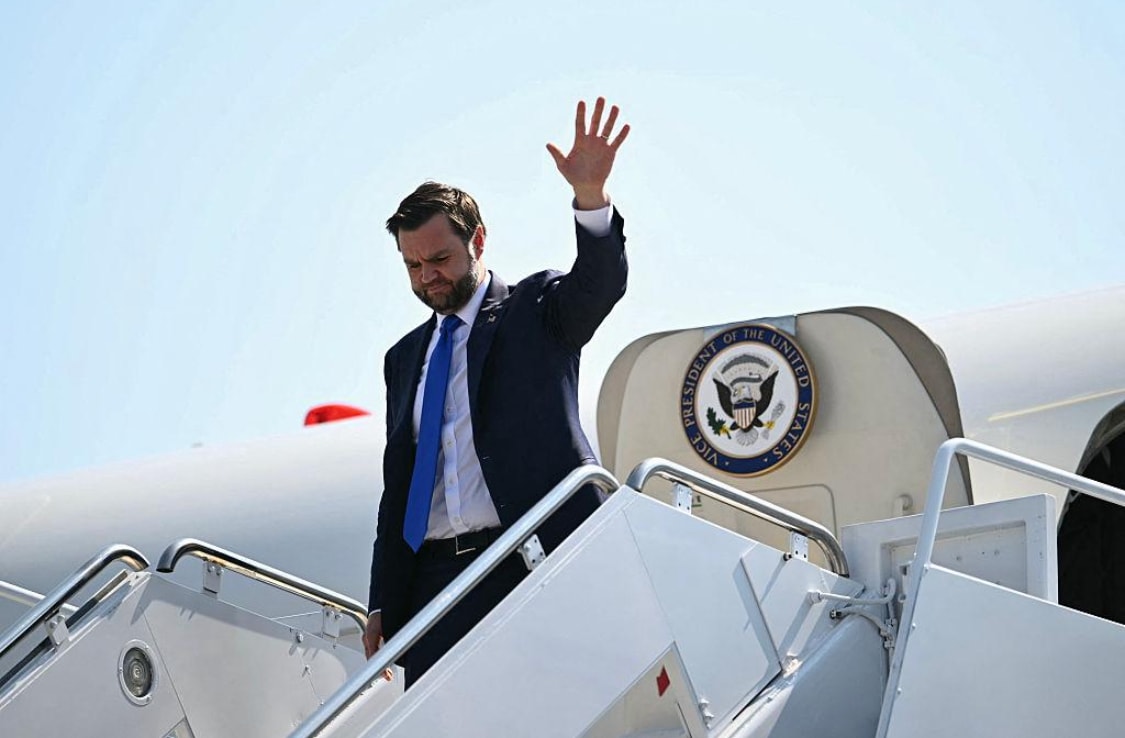
US Vice President JD Vance boards Air Force Two on October 28, 2026, ahead of a campaign rally in Kinston, North Carolina. Tierney L. Cross/Pool via REUTERS

Iran has received a message from US Vice President JD Vance but has not yet responded, Iranian media reported on Thursday, as diplomatic efforts continue amid warnings that Washington could resume military action against Tehran.

The Tasnim news agency reported that Iran had received the message but had not replied. The Fars news agency published a similar account, citing a source familiar with the matter.

Iranian media also said Tehran remained committed to what it describes as seven conditions for dealing with the United States, adding that any position conflicting with that framework would be unacceptable. The reports did not detail the seven conditions.
The message was first reported by The Wall Street Journal on Wednesday. The newspaper said Vance had written to Mohsen Rezaei, secretary of Iran’s Supreme National Security Council and a former commander of the Islamic Revolutionary Guard Corps, in an effort to explore the possibility of restarting negotiations.

According to the Journal, the letter and subsequent exchanges between US and Iranian officials focused on establishing a framework for talks rather than presenting a detailed peace proposal. The initiative was reportedly made with President Donald Trump’s approval.

However, Trump offered a different description of the outreach when speaking to reporters on Wednesday. He said Vance had asked for his opinion before making contact and that he had agreed, characterising the effort as an attempt to help Iran obtain medical supplies.

Al Jazeera reported on Thursday that Iran had not publicly commented on the letter and that an official response was expected. Iranian Foreign Minister Abbas Araghchi, meanwhile, said Tehran continued to give diplomacy a chance.

The diplomatic effort comes amid a prolonged conflict that has disrupted energy supplies and shipping across the Gulf. Since the war began in late February, Iran has sought to restrict maritime traffic through the strategically important Strait of Hormuz, a route that previously carried about one-fifth of global oil and liquefied natural gas supplies.

The United States has maintained a naval blockade of Iranian ports, adding pressure on Tehran’s economy. Disruptions to regional energy shipments have also had wider economic consequences.

The Wall Street Journal reported on Wednesday that Washington had asked several Gulf Arab countries to prepare for the possibility of a “short, intense military campaign” against Iran following the US midterm elections scheduled for 3 November. The newspaper cited people familiar with the discussions, while noting that Trump had not made a final decision.

Iran has warned that any renewed attack would prompt a broader response. Rezaei has threatened strikes against infrastructure linked to the United States, including data centres and facilities associated with artificial intelligence.

The contents of Vance’s message have not been made public, and it remains unclear whether the latest contacts will lead to formal negotiations. The competing public accounts from Washington and Tehran also leave uncertainty over the scope and purpose of the diplomatic initiative.

More from Middle East