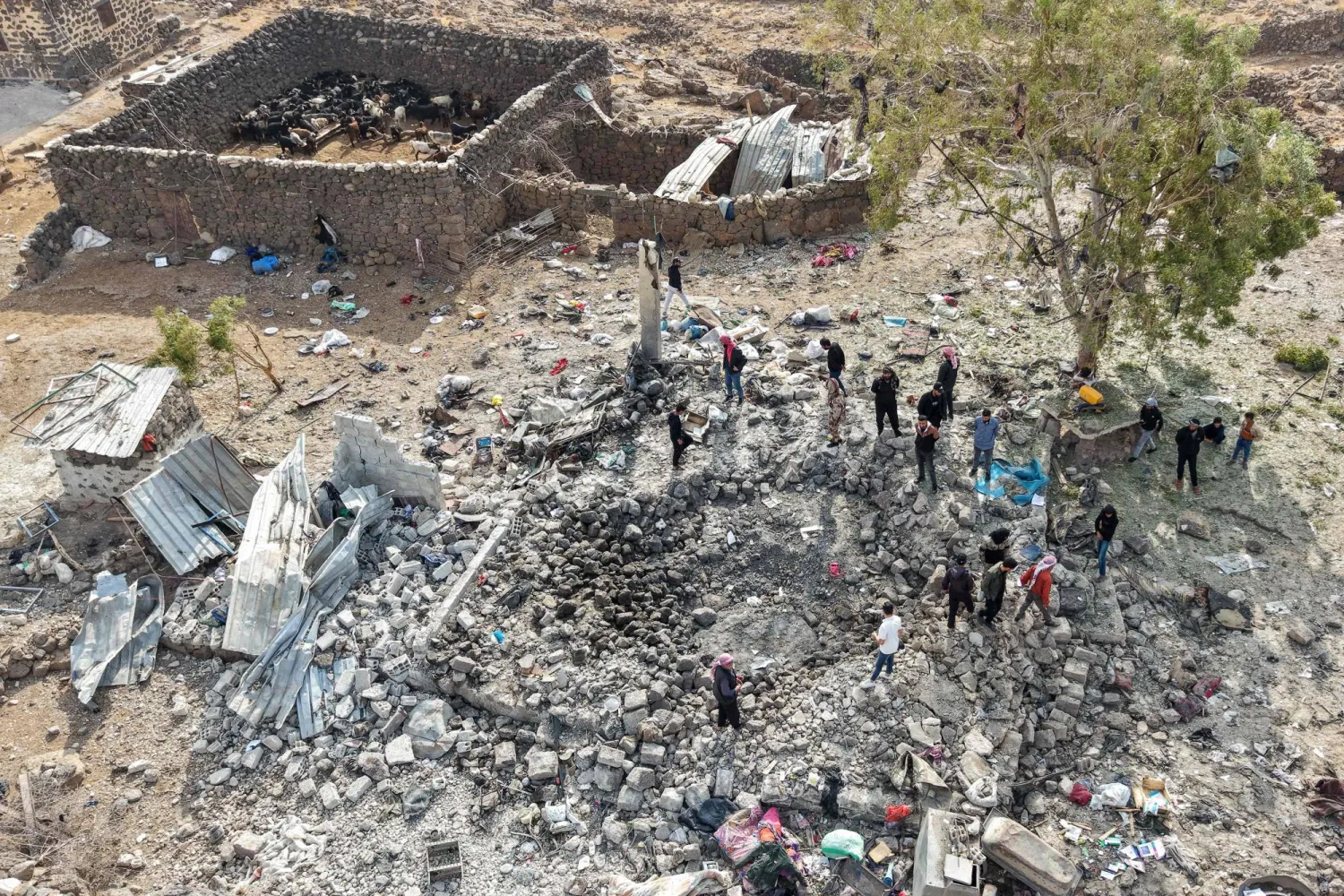
Jordanian airstrikes killed civilians, including children, in southern Syria on 26 October without prior coordination with Damascus, the Syrian government said on 27 October.
The strikes hit locations in Daraa province, including areas in its eastern countryside. Syrian health officials reported civilian deaths and injuries, while Jordan said its aircraft had targeted Islamic State positions linked to threats against its territory.
Syria's government said it had begun investigating the attacks and was communicating with Jordanian authorities to establish what happened and prevent further civilian casualties.
In a statement carried by the Syrian state news agency SANA and reported by Asharq Al-Awsat, Damascus expressed its condolences to the families of those killed and said assistance was being arranged for affected residents.
The Syrian government said the operation had taken place without advance consultation, despite the two countries' existing security relationship.
Jordan, which acknowledged the airstrikes, said they were directed against Islamic State members and facilities following an attack on a church in the southern Jordanian city of Karak.
Jordanian government spokesman Mohammad Al-Momani said the military had acted on intelligence concerning threats to Jordanian security.
According to Jordan's account, preliminary assessments suggested that more than 20 Islamic State members had been killed and a large weapons depot destroyed. Those figures could not be independently verified.
Amman said three Jordanian nationals involved in the Karak attack had connections to the groups targeted across the border in Syria. The information was presented by Jordanian authorities as part of their explanation for the operation.
Jordan also acknowledged reports of civilian casualties and expressed regret over the deaths.
Al-Momani said Jordanian forces had sought to avoid locations where intelligence suggested civilians were present. He maintained that the military had taken precautions to minimise harm during the operation.
The Jordanian government said it valued its relationship with Syria and wanted to maintain cooperation against Islamic State, weapons trafficking and drug smuggling.
Al-Momani described the broader security cooperation between the countries as an established arrangement that had continued for years.
The Syrian government's objection concerned the absence of advance coordination over this particular military operation, rather than a denial that security cooperation existed between the two countries.
The civilian toll has not been established in the accounts available so far.
Daraa health director Khaled Al-Omyan told SANA that civilians killed in the strikes included children and an elderly man. He also reported two people injured in Muzayrib, in western Daraa province.
The Syrian Interior Ministry said its own efforts against armed groups and drug traffickers would continue, but that protecting civilians must remain a priority in dealing with cross-border threats.
Ministry spokesman Nour al-Din al-Baba said officials were working with other authorities to determine the circumstances of the bombardment.
Damascus said communication channels with Jordan remained open and called for closer operational coordination on security measures affecting border areas, while maintaining respect for Syrian sovereignty.
Jordan said it would work with Syria to establish a joint committee to examine the consequences of the strikes and strengthen cooperation against Islamic State.
The proposed committee would address the aftermath of the operation, including civilian protection and security coordination between the two countries.