Syria summoned Jordan's ambassador in Damascus on Wednesday, 28 October, to protest airstrikes in the country's south that Syrian authorities said killed seven people, including children, escalating tensions between the neighbouring countries.
The Syrian Foreign Ministry said it had delivered a formal diplomatic protest over Tuesday's Jordanian air operation, which it said struck civilian locations in Daraa province.
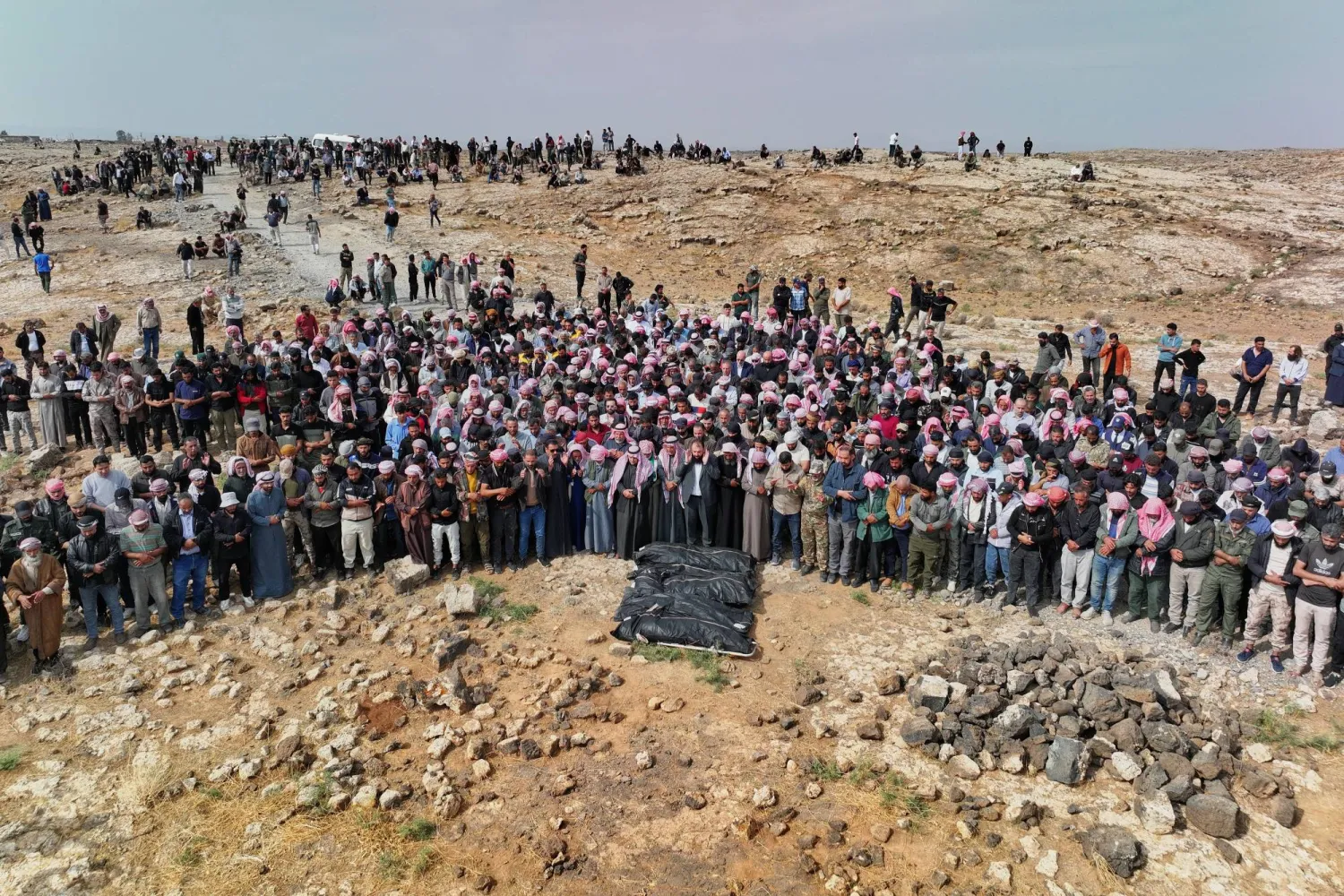
According to Syrian authorities, the strikes killed seven people, including a woman and three children. The Syrian Civil Defence reported that the operation affected three villages in Daraa province and another village in neighbouring Suwayda.
Jordan said its air force had targeted positions belonging to Islamic State (ISIS) militants in southern Syria, killing more than 20 members of the group.
The operation followed a shooting at a church in the southern Jordanian city of Karak that killed nine people and wounded 25 others, according to Jordanian authorities.
Amman said the three attackers, all Jordanian nationals, had links to militant organisations operating from southern Syria.
Jordanian government spokesperson Mohammad Momani said the airstrikes targeted ISIS positions in response to threats against Jordan's national security.
Syria, however, condemned the operation as a violation of its sovereignty and accused Jordan of entering Syrian airspace without prior coordination.
The two governments have presented conflicting accounts of whether Damascus had been consulted before the strikes.
Jordan maintained that the operation had been coordinated with Syrian authorities, while Damascus said no such prior coordination had taken place.
The dispute prompted the temporary closure of the Nassib border crossing, a major route connecting Syria and Jordan. Syrian authorities reopened the crossing on Wednesday, hours before announcing the diplomatic summons.
Despite the tensions, both governments have taken steps to prevent the dispute from escalating further.
Jordanian Foreign Minister Ayman Safadi spoke by telephone with his Syrian counterpart, Asaad al-Shaibani, on Tuesday evening.
In a joint statement issued after the conversation, Jordan affirmed its respect for Syria's sovereignty, territorial integrity and security.
Safadi also expressed sorrow over the deaths of innocent civilians, according to the statement.
The two ministers agreed to establish a joint security committee to examine the circumstances of the recent military operations, assess their consequences and strengthen intelligence and field coordination against militant threats.
The diplomatic dispute represents a significant test of relations between Jordan and Syria following the removal of former Syrian President Bashar al-Assad in December 2024.
Since the change of government in Damascus, the two countries have exchanged official visits and sought closer cooperation on border security.
Jordan has previously conducted operations in southern Syria targeting suspected drug- and weapons-smuggling networks. It also participated in the US-led international coalition against ISIS in Syria and Iraq.
The latest strikes have renewed questions about cross-border military action, civilian protection and the extent of security coordination between the neighbouring governments.
The findings of the proposed joint committee may prove central to resolving the conflicting accounts of Tuesday's operation and determining how the two countries handle future security threats along their shared border.