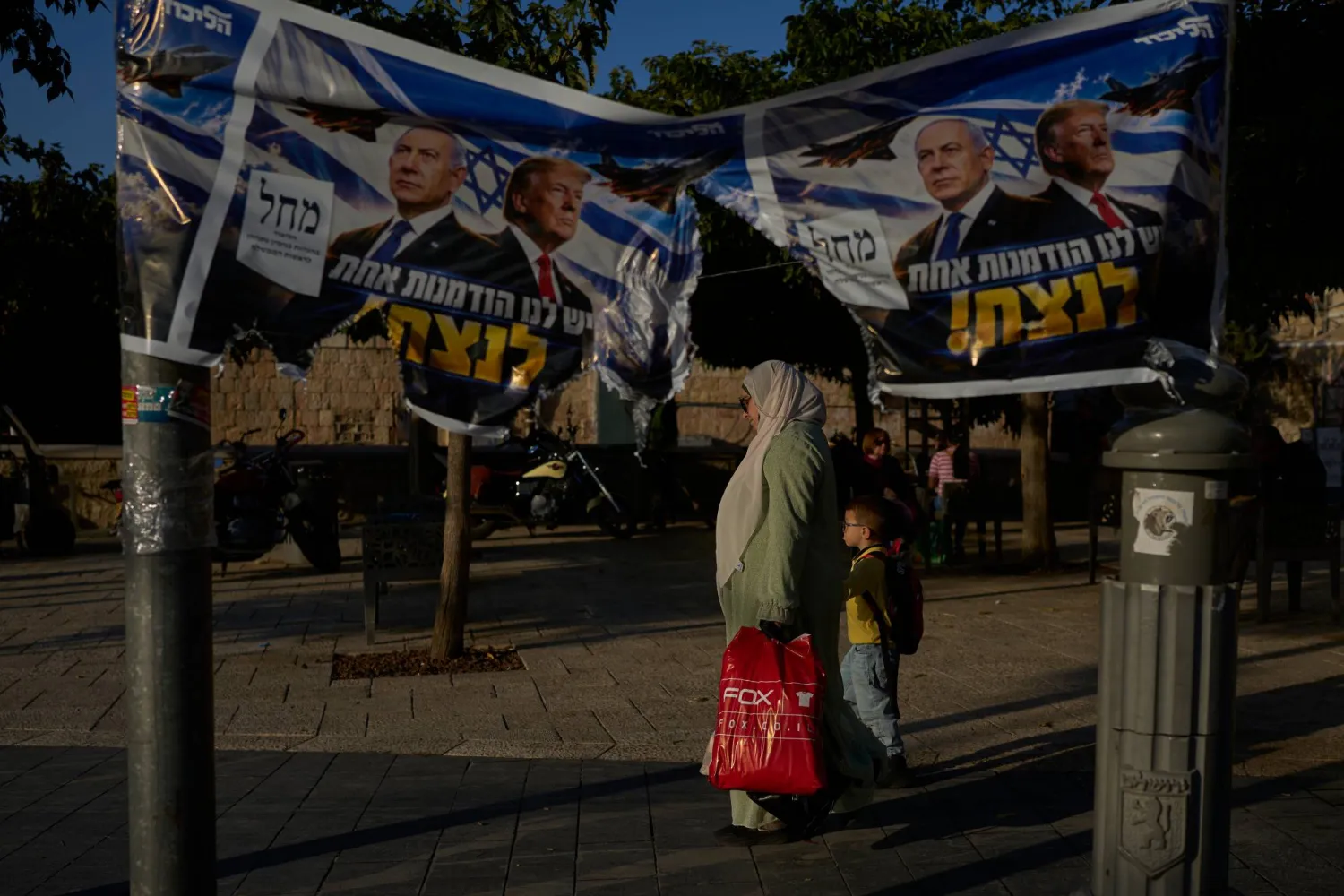
Israeli Prime Minister Benjamin Netanyahu's political bloc was projected to secure 53 parliamentary seats after more than 85% of votes were counted on 28 October, leaving it short of the majority needed to form a government.
The opposition camp led by former military chief Gadi Eisenkot was projected to win 48 seats, while parties representing Arab citizens of Israel were expected to secure 19, according to figures reported by major Israeli television channels.
The projections represent a reversal from early exit polls that had encouraged Eisenkot and his supporters to anticipate an opposition victory following the parliamentary election on 27 October.
Neither of the two main political camps was projected to reach the 61 seats required for a majority in the 120-member Knesset.
The figures leave Israel facing negotiations over the composition of its next government, with Arab political parties potentially holding considerable influence over the outcome.
Netanyahu's bloc, comprising Likud, other right-wing parties and ultra-Orthodox religious factions, was projected to lose seats compared with its previous parliamentary strength.
The governing alliance had held 68 seats before the election, according to Asharq Al-Awsat, meaning the projected result would represent a reduction of 15 seats.
Despite that decline, Netanyahu's political camp remained ahead of Eisenkot's alliance in the partial count.
Eisenkot, a former chief of staff of the Israeli military and leader of the Yashar party, had entered the election as a prominent challenger to Netanyahu.
Initial exit polls suggested a more favourable result for the opposition, prompting celebrations among its supporters.
But subsequent counting produced a different distribution of seats, reducing the projected strength of Eisenkot's camp while improving Netanyahu's position.
The discrepancy has drawn attention to the reliability of election-night polling in Israel.
Pollster Mano Geva acknowledged criticism of the polling industry in comments quoted by Asharq Al-Awsat, although the final election results will be needed to establish the scale of the difference between the surveys and the actual vote.
Arab parties could become central to coalition negotiations.
Their projected 19 seats would give them a substantial parliamentary presence, following what the source described as unusually high participation among Arab voters.
The report estimated Arab turnout at approximately 80%, although that figure was not independently verified.
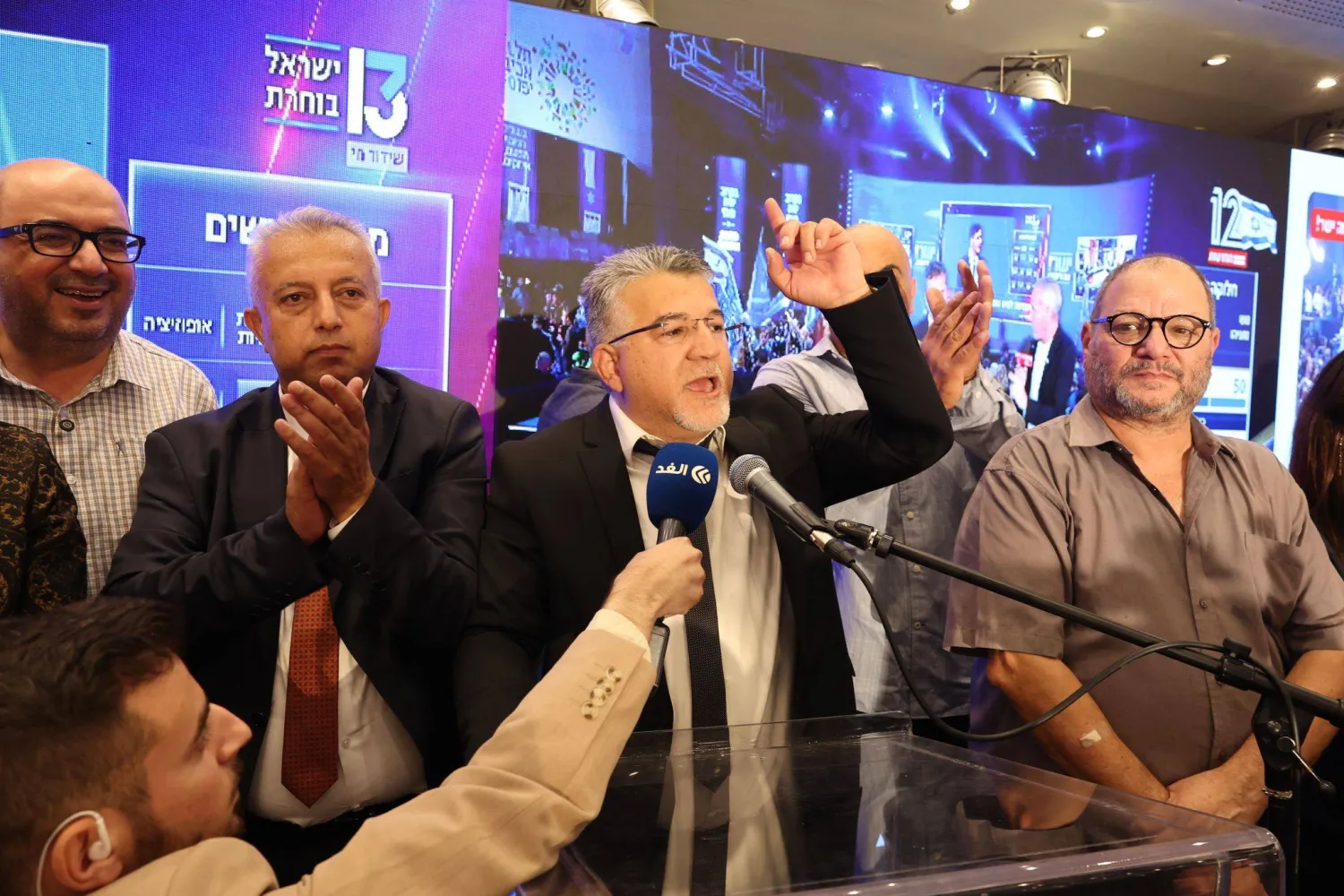
Youssef Jabareen, leader of the Joint List, has indicated that Arab parties are prepared to use their parliamentary strength to help replace Netanyahu's government.
Netanyahu, however, has opposed the formation of a government dependent on Arab parliamentary support.
Eisenkot has also previously ruled out forming a government reliant on Arab parties, according to the source, creating a potential obstacle to cooperation between opposition factions.
Other opposition figures, including former prime minister Naftali Bennett, Yair Lapid, Avigdor Lieberman and Yair Golan, have maintained distinct political positions and electoral organisations.
Their willingness to cooperate with Eisenkot and with Arab lawmakers will be relevant to any attempt to establish an alternative governing coalition.
The electoral process has not yet produced a definitive parliamentary distribution.
Votes cast by members of the military and other ballots counted separately from ordinary polling stations could affect the final allocation of seats.
Once the official results are established, the process of identifying a candidate capable of securing sufficient parliamentary support will determine whether Netanyahu remains in office or another leader can form a government.
Until a new government is established, Netanyahu is expected to continue serving as prime minister.
The final seat allocation remains the immediate outstanding question, with both main camps below the parliamentary majority threshold in the partial results reported on 28 October.