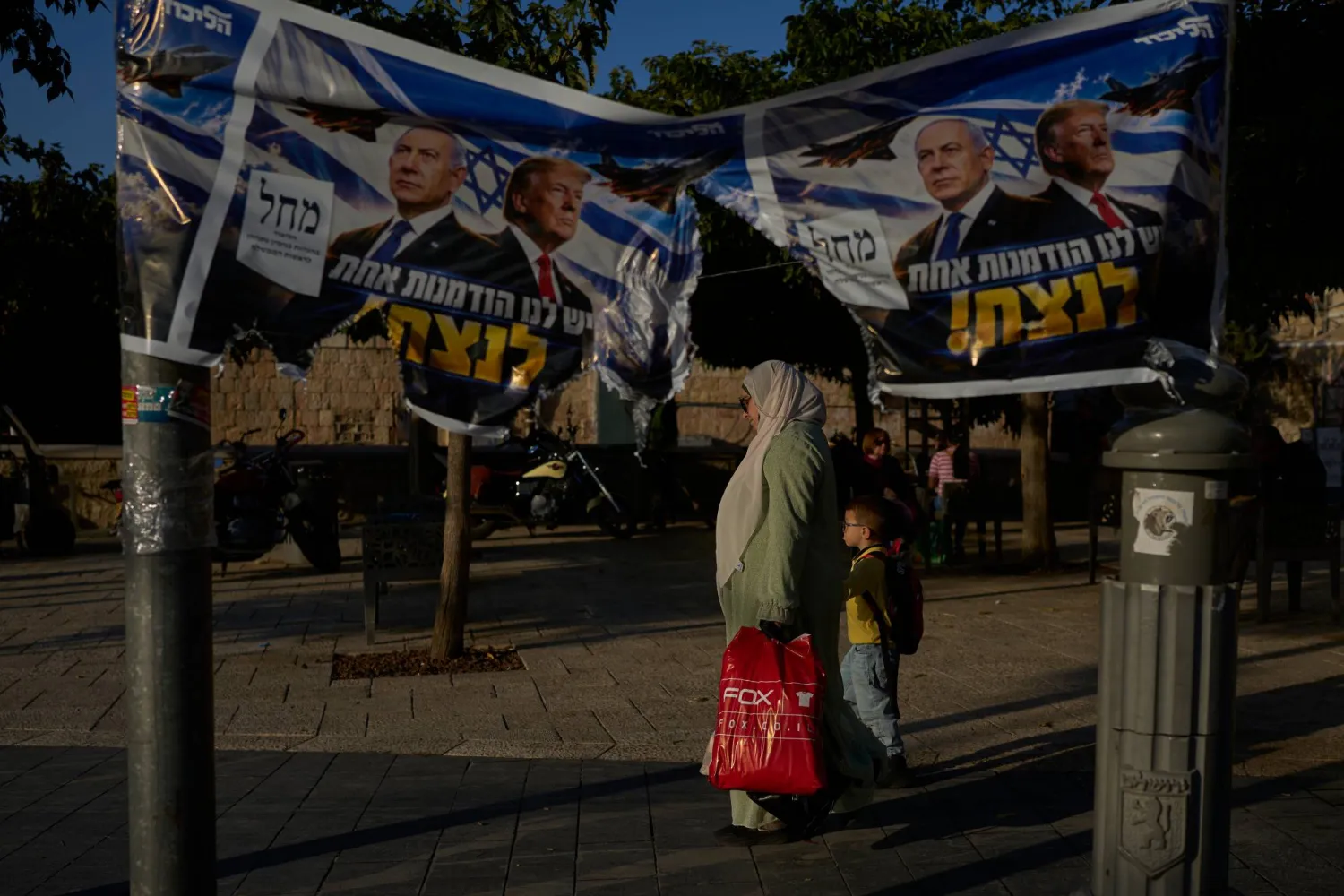
US President Donald Trump urged Israelis to vote for Prime Minister Benjamin Netanyahu ahead of the country's 27 October election, renewing his public endorsement of the Israeli leader.
The appeal came as Israelis prepared to choose their next parliament in a closely contested election, with Netanyahu facing a challenge from former military chief Gadi Eisenkot.
Trump posted his message on Truth Social on 26 October, describing Netanyahu as an exceptional wartime prime minister and urging voters to support him at the ballot box.
"When you go to the polls, remember that Bibi has been an exceptional wartime prime minister," Trump wrote, referring to Netanyahu by his nickname.
The endorsement followed an earlier public expression of support from Trump and came after reports that Netanyahu had privately sought a more prominent American intervention in his election campaign.
Axios reported that Netanyahu had spoken with Trump twice during the preceding three days and asked him to strengthen his endorsement.
The report cited an American source familiar with the matter and an Israeli source with knowledge of Netanyahu's efforts.
According to Axios, the Israeli prime minister also suggested that Trump speak directly with Israeli journalists to express further support for his candidacy.
An American source told Axios that some within the White House regarded Netanyahu's efforts to secure additional backing as a sign of desperation, suggesting concern about his electoral position.
That assessment was attributed to the source and was not presented as an official White House statement.
Trump's public message highlighted his political and military partnership with Netanyahu, portraying their relationship as one that had produced victories for both countries.
He also referred to American military operations against Iran and Venezuela, making several claims about their consequences and the condition of Iran's armed forces and economy.
Those assertions were part of Trump's campaign message and were not independently substantiated in the accounts available.
The US president had previously supported Netanyahu in Israeli elections and had also urged Israeli President Isaac Herzog to grant him a pardon in connection with his corruption proceedings.
Netanyahu faces corruption charges, which he has denied.
The election is the first Israeli parliamentary vote since the Hamas-led attacks of 7 October 2023 and the subsequent war in Gaza.
The campaign has taken place against the background of international criticism of Israel's conduct in Gaza, settlement expansion and escalating violence in the occupied West Bank.
Netanyahu, Israel's longest-serving prime minister, is seeking to retain power in a political landscape marked by deep divisions over security, the war and the country's future direction.
His principal challenger, Gadi Eisenkot, is a former chief of staff of the Israeli military whose political appeal has been presented as a contrast to Netanyahu's leadership style.
Recent polling cited in the source material suggested a close contest between the two candidates, although the results of the election will depend on the distribution of seats among parties and their ability to form a governing coalition.
Approximately 7.3 million people are eligible to vote, including more than half a million first-time voters, according to figures cited ahead of the election.
The campaign has also drawn attention to younger voters, many of whom identify with the political right or centre-right, according to the polling described in the report.
Voting on 27 October will determine the composition of the next Knesset, after which parties will seek to assemble a parliamentary majority capable of forming a government.