Naza’s Shoot and Cry: Ethnic Cleansing into Conscience Cleansing
The film Naza is a calculated "conscience-cleansing" project centering Israeli soldiers' perspectives while erasing Palestinians, deflecting blame onto a "system" rather than Israeli society's genocidal ideology, making the horrors palatable to Western audiences - read more now
By Sobia Quazi, Contributor
·18 min read ·
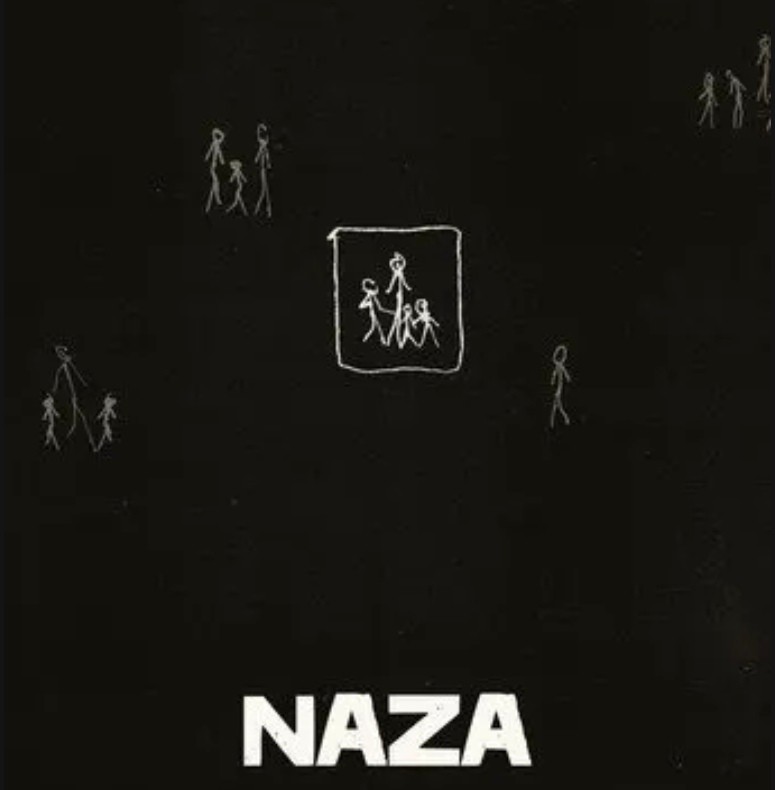
Naza film advertisement. Naza Film distribution materials
The Abuser’s Narrative and the Illusion of Truth
Naza appears to be that rare example of a film deeply critical of “Israel” that somehow made it into the mainstream in a big way; standing ovations at a prestigious Film Festival and screenings across UK cinemas accord it a legitimacy that apparently Palestinians describing their own genocide at the hands of the perpetrators given a voice here, are lacking in.
---
Naza: A Hebrew military acronym for Nezek Agavi which translates to "collateral damage”
---
And although it provoked the inevitable backlash from “Israel’s” representatives, its clearing the hurdles of mainstream institutional prohibitions in a country now at the forefront of defending “Israel” should be viewed with a degree of suspicion.
What is it about Naza that has made it so “acceptable”? Is it that it makes the horrors palatable enough to be rationalized, allowing comparisons to be drawn with the likes of Nazi Germany? Does this rationalization defer individual accountability until it comes to land with the system itself, rather than the society that generated, supported and sustained that system? Does Naza extend other “Israeli” and Western propaganda in how it frames the Palestinian resistance?
---
A note on my conventions: across my essays I use quotation marks for the entity named “Israel” (and its derivatives such as “Israeli”, since I will not accord it legitimacy and this applies also to “IDF” as well as the adopted name “Netanyahu”. Additionally, I use the order Palestine-“Israel” rather than the commonly used Western media hierarchical ordering of “Israel”-Palestine” to reflect what came first chronologically and to also reflect the rootedness and indigeneity of Palestine and the Palestinians.
---
In all the furore surrounding Naza and its “brave” and “honest” whistleblowers, something very important has been concealed; it is the sleight of hand that showcases the obvious while cloaking the actual. Just because Naza has provoked extreme negative reactions from “Israeli” quarters, that in no way means that Naza is wholly genuine and therefore sympathetic to the Palestinian cause.
It’s like an abuser who tells you about the awful stuff they have done, on their terms, thus creating the illusion of honesty and culpability without telling you the full story; you are grateful to them for speaking, for their admissions, and you assume this means they recognize how monstrous they were, rather than considering other possibilities for their speaking out - and to an audience, at that.
The trend of zionists speaking about their crimes against Palestinians is not new though and labelling them whistleblowers is again a favourable interpretative lens for what could just as plausibly be the gloating of the narcissist and the “confessional” of the sinner who wants to expunge his own conscience. “Shooting and Crying”, the Hebrew phrase for it is “yorim ve-bochim”, describes the national tradition of expressing “trauma” and remorse while continuing violent military actions of occupation; critics such as Gil Hochberg argue this serves the purposes of “conscience-cleaning” and image rehabilitation without personal responsibility.
Some critics argue Naza subverts this tradition by showing soldiers confessing without excessive remorse; however, we might argue the element of remorse has been partly displaced into the visual footage of “IDF” operatives looking distraught at their actions – and visual footage is of course more memorable.
In taking control of the narrative as usual, with an “Israeli” directed film that foregrounds the voices of “Israelis” themselves, Naza steers the narrative and therefore defines the limits of the crime; yes, it does depict “Israeli” brutality – it would have to, in order to be plausible – but it also defines the parameters within which we get to interpret its nature and origins. It presents another perspective, but we might also say it imposes another perspective onto the causality of the situation.
Indeed, the question of whether “Israeli” society is even capable of examining its own motivations with any degree of honesty or self-reflection is akin to the question of whether the individual can examine their own conscience with honesty, for our unconscious contains slippage – repression, distortion, deflection.
Naza, as a cultural production, can be argued to represent the collective unconscious of a society, and in fact, a highly insular, collectively dysfunctional and deeply pathological one frequently described as narcissistic (see video below) so how can we expect honesty of perspective to emanate from such a society, and for the lens not to be distorted?
When the directors of Naza are themselves invested in “Israeli” society, we cannot expect them to examine “Israeli” conscience from an outside perspective. It is its own psychological blind spot - and this is why it is critical that a film professing to tell truths about “Israeli” actions towards Palestinians should include Palestinian perspectives.
Naza raises critical questions for me – not those foregrounded by media interviews, but ones in the background, outside the frame, at the meta level:
- What has made this production palatable enough to Western audiences that Naza has been so lauded?
- What is Naza’s aim, as every cultural production has an angle, let alone a production based around such a politically fraught issue?
- What is Naza attempting to foreground and how would Naza have been different if any Palestinians had been involved in its production?
Ink Lines and the Erasure of Palestinian Agency
In Naza, endless strategy drawings create a hiatus of sorts, a feeling of robotic detachment passed onto the viewer, where human suffering and torn bodies are translated into the geometrical drawings of buildings, and the agonies of real human beings are neatly squeezed between inked lines rapidly scribbled by the perpetrators.
Their “distance” from the killing is somehow transposed onto our sense of distance and across those distances human suffering seems to attenuate, screams grow fainter – the disconnect of killing at a distance is plausibly conveyed and yet there is the sense of something omitted, that insulates the viewer and enables them to perhaps understand the feeling of distance that can make people do terrible things.
Cinema experientially reproduces in the viewer here, the sensation of detachment experienced by the killers (for they are killers in the realest sense, let us make no mistake about that); and in doing so it fleshes out the perennial excuse of not really being fully aware of what you were doing, because it was at one remove.
Indeed, in this landscape of muted blacks and whites and greys, the scenes given colour assume a privilege; cinematic choices loaded with symbolic meaning – the image always remains with us, hence the graphic footage of October 7th that the film opens with is part of the “sleight of hand” that draws a shroud over what came before, that eclipses context and a long history of “Israeli” killing and brutality towards Palestinians.
Drew Paul argues in The Conversation that the “visual language and the content of “NAZA” reflect and reveal how knowledge of Palestinian suffering is often mitigated in Israeli culture, politics and daily life” – and indeed, the footage of ordinary city nightlife in Tel Aviv does remind us of how life always carries on as normal for the “Israelis” while they kill Palestinians. Paul is here referring to the depictions of everyday, bustling Tel Aviv city life, the narcissistic bubble.
Paul’s argument is the erasure of Palestinians from the screen, as well as the lack of any depictions of walls, checkpoints and barriers, highlights how seamless and undisturbed “Israeli” life is; the absence of Palestinians, their invisibility as the “Israeli” soldiers talk of their killing at a distance, reinforces the sense of psychological distance of the soldiers and highlights how Palestinians are eclipsed from “Israeli” consciousness and everyday discourse.
But Naza’s choice of footage and how its scenes are juxtaposed, does not help the average Western viewer, who doesn’t have specialized knowledge of the Middle East, to understand the isolation Paul refers to, and that he suggests is somehow implicit in Naza’s choice to foreground “Israeli” life; it doesn’t provide the viewer with the contrast of barricades, checkpoints and walls, and almost 20 years of being under siege, that would have supplied a visual contrast that points the finger right back at “Israeli” society itself.
The Faceless System
“System”.
One of the most frequently repeated words throughout Naza. And its producers would argue of course that this is precisely because it is an exposé of a militarized system that treats human lives as casual statistics thus perpetuating the mechanized killing that is systematized through military protocols like Lavender and Where’s Daddy?
The sense of distance is replicated through repeated footage of soldiers scribbling diagrams of buildings and how they were instructed to treat civilians within those structures – how many floors, how many civilians on each floor, how many was an “acceptable” figure to treat as collateral.
The “system” motif together with the anonymised drawings – all reproduced individually, all indistinguishable and detached in their nature, create the sense of “Israeli” society and its soldiers as just passive cogs in a techno-military apparatus that swept them up against their will and made them a part of it before they were even aware.
Yuval Abraham and Rachel Szor foreground the role of institutional military policy and systems in their film - but any film that attributes “Israeli” brutality to a system is being overly generous to “Israeli” society. Military structures themselves are actively supported and voted for by political majorities. Focusing on larger military systems does not confront the genocidal impulses and ideological forces within “Israeli” society that normalize this kind of destruction in the first place.
Abraham stated, “When everyone else is doing it, it’s easier not to ask questions” which tends to construct a picture of mass compliance within a military environment and obedience to military protocol, rather than the enactment of impulses to murder Palestinians that are underpinned by decades of anti-Palestinian racism.
His statement of “Israeli” society that, “We are in a very dark place right now” suggests such sentiment is new and recent, rather than longstanding and endemic in “Israeli” society. It displaces the fact that maybe it is the society that needs an overhaul and the equivalent of a bleach rinse, to expunge it of its vituperative hatred.
By positioning soldiers as cogs in a faceless techno-military machinery Naza effectively presents an angle for a degree of understanding – we can all behave in extreme ways when pressurized by external forces; people behave in detached ways during war, and so on. Naza’s centring of the narratives of soldiers dovetails with “Israeli” society’s growing alarm at increasing rates of suicide by “IDF” members. It provides us with an account of the “why” – why they did what they did; and a plausible mechanism of the “how” – how they came to be inveigled into this machinery of killing.
The methods used to graphically depict the apparent distance and detachment of the soldiers from their acts also ends up serving as a kind of elaborate justification and in the end, exoneration of what they were doing. It presents them as not fully responsible for their actions; and although it professes to challenge state power through these strategies, it ends up contributing to the removal of individual accountability, as well as presenting the current administration as the problem.
Hence, by the time we witness at the end of Naza, the poignant scene of a Palestinian father searching through the rubble for his children while calling their names, the main concession to the Palestinian perspective, it serves not only as a moment of catharsis that makes us leave Naza, satisfied that Palestinians haven’t been completely erased from Naza – but it positions their predicament firmly as an outcome of the faceless system itself.
Rehumanizing the “IDF”
Film, unlike say text or argument, works at a very fundamental level, bypassing our internal censor and conscious filters before we have the chance to object or even question; images, memes, repeated slogans – all implicitly use this principle of psychological conditioning, and often colour, control and commandeer our thinking without our full consent.
Thus, the interspersed images of “IDF” looking visibly distressed – a female operator appears distraught and unable to continue her intel work midway through – land much more vividly than multiple “IDF” officers telling us about their targeting methods and how many collateral they were “allowed”.
This is the subtle “re-humanization” of “Israeli” society at work, rehabilitation through powerfully curated images carefully interspersed throughout a deliberately built-up narrative of a society at odds with itself, conflicted and in crisis, fighting the impulse for revenge when confronted with the brutality this entails.
In a film where every frame is deliberately chosen, the choice of frames show the “cost” to “Israeli” society is subtly employing the “both sides” narrative that dominates Western and zionist depictions of the Palestine-“Israel” situation – yes, there is asymmetry in military terms, Naza seems to be saying – but in human terms there are two sides.
What it doesn’t portray is the actual reality of a society heavily weighted towards anti-Palestinian racism and almost unanimous in its genocidal intent.
Post on Instagram
Nothing is loaded from Instagram until you choose to. Instagram may then set its own cookies. Open on Instagram
This is societal support for ethnic cleansing and genocide and displays “Israeli” society’s aim of brutalizing and killing Palestinians, a reality Naza never accurately portrays in terms of how it is longstanding policy as well as prevalent sentiment in “Israel”. Anti-“Arab” hate is endemic in “Israeli” society and has been for a very long time.
Video on YouTube
Nothing is loaded from YouTube until you choose to. YouTube may then set its own cookies. Watch on YouTube
Displacing the Blame
Naza is based around nighttime rooftop interviews with 24 “Israeli” intelligence officials and “IDF” members against the backdrop of the Tel Aviv skyline, as they discuss the military strategies used to target “suspected” Hamas members. Not civilians, not civilian infrastructure – but Hamas targets.
Hence, Naza goes further in its attribution of blame, handing the viewer that ultimate palatable zionist agenda on a plate, when it repeats “Hamas” in relation to collateral - the underlying implication being that if it were not for Hamas and October 7th there would be no collateral; that “IDF” accepted collateral during the process of targeting Hamas in buildings. This is the coup de maître, the ultimate zionist triumph: the demonization of Palestinian resistance.
Additionally, what this narrative also omits is that “Israel” has targeted not just buildings – but hospitals, refugee tents, people queuing for bread, children queuing outside a clinic for supplements, children’s playgrounds. Was this all about targeting Hamas? Perhaps a more appropriate word would just be “targeting civilians” – perhaps there is an “Israeli” term for this, and if not, it may be appropriate to have one. It would be a more apt description than “Naza”.
Naza’s presentation of a legitimate origin point for the “retaliation”, is at odds with stated “Israeli” military doctrine; the cowardly Dahiya Doctrine adopted by “Israel” has clearly stated civilian infrastructure will be targeted in retaliation for any attacks by the enemy, “civilian infrastructure” being a useful euphemism to describe what is essentially the killing of ordinary civilians en masse.
The Naza narrative of legitimate anger that rapidly escalated into indiscriminate and disproportionate civilian deaths, a sense of justified retaliation that rapidly outgrew its confines and became something unrecognizable, is contradicted by the facts.
The massacring of Palestinians or the targeting of civilians didn’t begin with AI assisted killing, it didn’t begin with Lavender and Where’s Daddy, it just became more automatized - but that automatization is one of the main threads picked up and developed by Naza, which again points away from “Israeli” society and towards military systems, a framing more palatable for Western audiences than the actual truth: that this is about people and not systems, it is about an extremist society and its supremacist views.
Like Louis Theroux’s BBC documentary Louis Theroux: The Settlers another one allowed free pass by Western media, and that indirectly attributed unhinged and virulent anti-Palestinian genocidal sentiment to fringe minorities, drawing a false distinction between “settlers” and “ordinary” (i.e. “non-settler”) “Israelis”. In actual fact what both these productions fail to highlight is the homogeneously virulent nature of “Israeli” society and just how dangerously racist and aggressive “Israeli” mainstream society is.
Video on YouTube
Nothing is loaded from YouTube until you choose to. YouTube may then set its own cookies. Watch on YouTube
October 7th – the beginning, the origin, the cause and the crux, as the weight of Western media discourse will tell you: in other words, yes, what happened subsequently was disproportionate - but it had a clear cause, as Naza reminds us through the foregrounding of footage of civilians being violently abducted at a music concert. It contextualizes the “Israeli” aggression if not justifying it completely - since we are clearly beyond that at this point.
Nothing is loaded from Instagram until you choose to. Instagram may then set its own cookies. Watch on Instagram
Footage of “Israeli” influencers on social media dressing up as distraught Palestinian mothers who have lost their children, mothers with prams talking about genociding Palestinian infants, even an “Israeli” model recently justifying the murder of Palestinian children.
Video on YouTube
Nothing is loaded from YouTube until you choose to. YouTube may then set its own cookies. Watch on YouTube
These abhorrent sentiments and heinous acts go way beyond a sanitized account of soldiers being drawn into faceless systems of mass extermination through the detachment of a military machine – instead they paint a disturbing picture of a society that is at a collective extreme of maniacal genocidal sentiment that is unprecedented.
Cause and effect is entirely reversed in Naza, the military aggression framed as effect rather than a feature of a settler colonial state and hate filled society that has dehumanized Palestinians for decades and has a military doctrine to target civilians and destroy civilian infrastructure at scale, if there are any acts of aggression against it – and by the way, the question of what constitutes aggression by the occupied is an entirely different one that requires qualification, and that is tied up with the concept of legitimate resistance.
True to Its Name: Naza, the Erasure of Palestinian Perspective
To circle back to my opening questions about the production of Naza and the voices allowed to speak here: it is a fact that who gets to speak first, who gets to speak last and who gets to speak loudest are critical factors in how the “truth” is perceived by the majority, and how facts are framed.
Within Western cultural institutions and society, some voices are privileged – screenings, standing ovations, enthusiastic critical reception – and others are muted in ongoing fashion. The privileging of one voice means that voice will always be the arbiter.
Naza’s critical success – it grossed more than $14 million worldwide in box office and theatrical revenue, none of which has been announced as being donated to any of the Palestinians who find themselves in their death and destruction to directly or indirectly play the role of “muse” to many Western artists and producers – has allowed Abraham and Szor to emerge as heroes, victorious.
A cinematic parallel indeed, to the “shooting and crying” tradition (only in this sense, filmic shooting) allowing Western society also, to collectively purge itself through its attendance and standing ovations, and to admire the honesty, bravery and “risk” taken by the killers on film here, as well as those who “shot” them - and thus gave them new life of sorts, a second chance, a rehabilitation of conscience that allows them to do with it what they will, even if that is to go and kill more Palestinians.
As I watched Naza my fury grew, as did my sense that I wanted to uncover what it is burying through its narrative. Western media has long acted in co-conspiratorial ways with “Israel” – perpetuating its propaganda, framing its “innocence” and justifying its crimes as well as assisting it to clear up the crime scene on its own terms.
For me, Naza was an extension of this narrative: made in “Israel”, stamped by the West and devoid of Palestinian perspectives. The enthusiastic reception of Naza is another mechanism through which “Israeli” society is partially vindicated, the film makers lauded and audiences allowed to feel as if Palestinian suffering has been heard and acknowledged.
Meanwhile - it is just one more instance of Palestinians being made into collateral. Naza has remained true to its name.