Lost Sweet Innocence
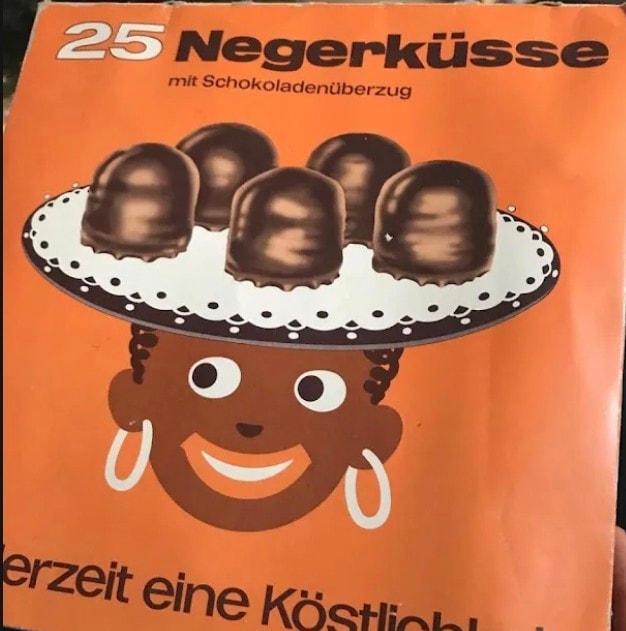
In 1950s Germany, a seven-year old child walks into a shop, their taschengeld, pocket money, clutched in their fist, and at eye level, nestled among the other sweets, a colourful wrapper containing a small chocolate-coated treat. The child points and says, "Einen Negerkuss, bitte" (I want A Negro Kiss). The shopkeeper smiles, hands it over, takes the Pfennigs, the child unwraps it, bites and is happy. Sugar, chocolate, marshmallow, pure pleasure. And with that bite, a lesson is absorbed. The seven-year old doesn't know what the lesson is yet, they only know the sugar.
In Lebanon, another child buys Ras El Abed, in France, Tête de Nègre, the Netherlands, Negerzoen, in Brazil, Teta de Nega. Across the globe, for over a century, children were fed sweets as part of a racial hierarchy ritual, wrapped in chocolate, served with a smile. So how, and importantly why, did different societies come to name a children's sweet after a racialised, and in some places, sexualised slur? The answer lays in the structural logic of capitalism, as the parasite class uses racism to cultivate irrational divides among the exploited classes, so we fight each other and don't unite to overthrow our oppressors.
A Baker's Dozen (of Slurs)
I'm not suggesting a cabal of international confectioners met in a smoke-filled basement at 2am to plot racial divisions, although that sounds like a good start to a screenplay. What I'm saying is far more insidious, it's structural: normative capitalist social relations produces what justifies exploitation. Corporate businesses, pursue profit, adopt names that resonate, and back then racism sold, thereby the system reproduced its own racist hierarchy, which only served capital's interests even more. No one needed to plan this, the system produced it spontaneously, as it's designed to do.
In 1950s Germany, this was particularly visible, as denazification was abandoned by Empire to focus on anti-socialism as part of the Cold War, with the 1949 Amnesty Law pardoning millions of Nazis, without further investigation. Former Nazis then rapidly reintegrated into the civil service, judiciary, economy, NATO and the forerunner to the European Union. The society that moved from the Negerkuss to the Holocaust was never reformed, as the racism that produced both continued. The parasite class in both Germany and America aligned to prioritise anti-socialism over justice, rather than rehabilitating Nazis they got them to serve their convergent interests.
These sweets, including the Negerkuss, functioned as just one weapon in a multilayered network of indoctrination of children, embedded in a white supremacist system of exploitation that requires a racial hierarchy to function. The parasite class has always used racism to split the working class along national and racial lines, Lenin told us this, as when workers see each other as rivals instead of comrades in a shared struggle, they can't see the system that exploits them all, and blame each other instead of the abusers.
A Global Pattern, Not Coincidence
The scale is staggering, across at least 20 countries, see list at the end of this article, confectionery products, many, but not all, chocolate-coated marshmallow on a wafer base were sold, named as racial slurs.
The names emerged from colonial histories like the Trans-Atlantic and Arab slave trades, and global European colonialism, but despite different genealogies and product forms, they share a common function, to reinforce racial hierarchies as normal, freely spoken of, asked for. The parasite class needed an ideological justification for their brutal exploitation, because the dehumanisation of colonised people is Empire's foundation.
These sweets formed part of a wider cultural apparatus to make slavery and empire palatable, literally, to the working classes from the youngest of ages. Commodities obscure the violent history of their production behind a pleasurable surface, Marx showed us that in Capitol, as cocoa is grown on plantations worked by slaves, a system that persisted well after abolition and continues to be exploitative today. The irony was literal, as the sweets were teaching white children to consume blackness, made from slave labour of black people consumed by capitalists.
The Mechanism of Indoctrination
These sweets weren't designed for adults, they were explicitly marketed as "pocket candy" sold at children's eye level, as cheap, portable, fun. A child could buy one with minimal money, would say the name without understanding the meaning, that was entirely the point. It was normalising division, racism and dehumanisation. In Germany, Wolf sold Negerküsse Negroni in the 1960s and 70s under the branding "Wolf-Kinderland" (Wolf Children's Land) with packaging featuring caricatured black children. In France, Tête de Nègre were shaped like African masks, Haribo sold them until 2014. In the UK, Robertson's gave away golliwogs with jam, a collectible for children normalising blackface.
When a child said "I want a Negerkuss," they were repeating racial hierarchy, and repetition is the mechanism for radicalisation and indoctrination. Althusser told us in 'Ideology and Ideological State Apparatuses' the parasite class reproduces its dominance through state, but also everyday institutions, like schools, media, families, as these ideological tools shape how people see the world before they can think critically about or question it.
Maybe one of the most disturbing pieces of evidence of this indoctrination came from a recurring question previously asked by primary school children in Europe to teachers, "Are black people made of chocolate?" Harvard research showed asking this question is "rooted in decades of racism, slavery and ignorance, as children were conditioned at such a young age to associate black people with the product of their labor." The Sarotti mascot, a black servant used between 1918-2004 reinforced this message for 86 years.

When children repeat racial slurs, associated to a pleasurable context for years, that's indoctrination by definition, as it normalises racial language before children can even critically evaluate it, call it what it is, brainwashing. These sweets worked alongside things such as minstrel shows, colonial museums, exhibitions and human zoos, school textbooks and falsely taught history classes, and advertising. Together, this formed the cultural apparatus that made racial hierarchy natural and so self-evident, it required no further elaboration.
Sexual Chocolate
No, not Randy Watson's band in 'Coming to America', but let's confront something more disturbing than names, these sweets were slurs, yes, but some were explicitly sexualised, as children and adults alike were invited to lick, suck and consume products named after body parts: tits, lips, heads, balls. This is a truly bizarre and specific form of white supremacist dehumanisation, combining racial hatred and consumption with sexual objectification, sucking on "Niggerballs" and licking "Black Tits".
But maybe I have this all wrong? Maybe as children in Brazil licked Teta de Nega (Black Woman's Tits) it was a historical lesson reminding them of the material reality of enslaved black women being forced to nurse white children. And as children in Belgium and the Netherlands were sucking on Negerinnentetten (Negress's Tits), the same logic applied: white children sucking on sweets named after black women's breasts could've really been a colonial history lesson about feminist freedom and equality. Perhaps, as children in France were eating Tête de Nègre (Negro's Head), as they bite into a black man's head, they were learning through the ritual of consumption about how their grandfather's would commit colonial violence and display severed heads as trophies on sticks? If so, I can therefore believe in South Africa, when children were sucking on Niggerballs for hours they were learning about the colonial history of forced sterilisation and medical experimentation on black men's genitals, which were systematically targeted for removal.
This is a specific twisted form of psychological conditioning, as it teaches children to perform acts of intimacy contorted with consumption on a race that they're simultaneously taught to despise. How very Epstein of the parasite class, teaching children that black bodies exist for their pleasure, to be tasted, consumed, enjoyed, while also being inferior, as disgust for skin colour fuses with pleasure. This is how the system operates, by making exploitation pleasurable for the oppressor, it's the ideological foundation that makes all our exploitation possible, still, to this day.
Companies didn't stumble on to these names, they chose them because they were profitable, sexualised, provocative, designed to be memorable and transgressive. They exploited taboos to sell products, a commercial strategy the parasite class pursued for over a century. The fact these were marketed specifically to children makes this even more disturbing.
Divide & Chocolate
Capitalists invest so heavily in racial division, because divided people don't fight back, just each other. They require cheap labour and the easiest way to secure that is to convince white workers that black workers are a threat, not their allies in the same struggle. If white workers believe their low wages, poor housing and precarious jobs are the fault of immigrants or black people, they wont direct their rightful anger at the system exploiting them, and us all, by choice. Du Bois calls this the "psychological wage", as white workers accept lower pay, being compensated at lesser rates solely for not being black.
As Marx wrote, "the workers have no country." Nationalism, racism and ethnic division are parasite class tools to prevent international solidarity, and they've always used these in macro and micro levels to maintain control. The sweets were one such tool, delivered in a pleasurable form making resistance psychologically difficult, as children said the slur, they enjoyed the sugar. That's only one part of the mechanism by which societies normalised the language of slavery for 150 years without feeling like they were doing anything wrong. People bought these sweets because they liked them, and liking them was precisely the mechanism that made the racism feel normal.
The evidence these sweets reinforced working-class division appears in the testimonies of those who lived through it. A black father in Germany complained his daughter was being called Negerkuss at school from age two, and the teachers' response was, "There's nothing we can do, it's what the parents teach them." In Occupied Palestine, workers producing Ras El-Abed were quoted as saying, "We would often laugh about how racist the name is." In France, a performer at the "Bamboula's Village" human zoo in 1994 recalled, "We always had to dance topless, we were used to it, we didn't live in the city, we lived where the animals lived." The "attraction" was sponsored by a food company that used racial stereotyped characters in their marketing, directly linking the naming culture to a literal human zoo. In Australia, a 1950s liquorice brand called "Nigger Boy" used the tagline, "it works hard so you work less!", a blunt admission of the logic that blackness is labour, whiteness is leisure.
The historical fact is white workers didn't ally with black workers in any sustained way during this period, despite it being in their material interest to do so, as the US labor movement excluded black workers, European workers participated in colonial exploitation, white workers benefited from the psychological wage. I'm not here to prove sweets caused this division, only that they functioned within and reinforced it.
The Marshmallow Resistance
Changes didn't come from corporate conscience, but from decades of societal struggle and awareness raising. In 1992, France finally renamed Tête de Nègre to Tête de Choco, only after decades of pressure. In 2001, Finland renamed Negro Kisses to Brunberg's Kisses. In 2006, the Netherlands changed Negerzoen to Zoen after pressure from a slavery reparations group. In 2020, following the George Floyd protests, even Nestlé arguably the most evil company on the planet, reviewed its 25,000-product portfolio and renamed some of them, but all these changes were incomplete and performative.
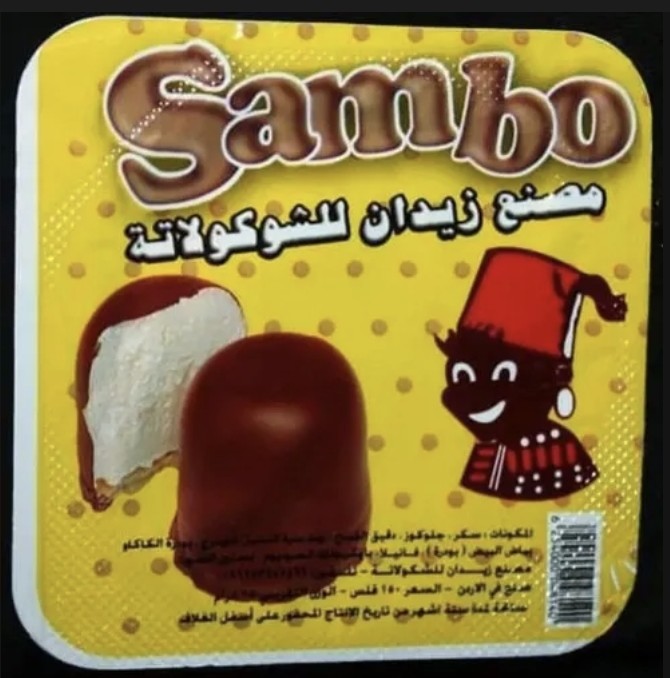
In Switzerland, Dubler still sells Mohrenkopf (Moor's Head), and when the country's largest retailer, Migros, pulled the product in 2020, sales spiked, as people bought them in "solidarity" with the old name, defiance eating to defend their beloved racism, as fascists handed them out to pedestrians as political provocation on the streets of Geneva. In Jordan, the "solution" was arguably worse, as manufacturers renamed Ras El Abed to 'Sambo', a term which originates from a racist 1912 American cartoon character. This wasn't a surprise or an accident, it was part of a competition to rename the sweet. The fact this happened shows the problem isn't individual names, but the system and societies that produce them. One blogger captured the irony, "It's amazing that it somehow became even more racist."
The real story of resistance to change shows the system and its defenders will defend racist symbols as they benefit from the system that produces them. Corporate rebrands aren't a sign of progress just a strategic retreat, to preserve profit making opportunities from moneyed liberals, while changing packaging only.
Milk, White and Dark Chocolate Unity & Internationalism
Renaming a sweet is fine I guess, it removes a daily humiliation, a tool of indoctrination, but it's no way near enough. Rebranding doesn't change the material conditions of black workers on cocoa plantations or the structural racism in housing, education and policing. Gains of any sort have always been incomplete without addressing the economic system that produces racial hierarchy in the first place. The system has shown, repeatedly, it will only concede symbols while preserving profitable structures that abuse our labour. This isn't acceptable, it's useless performance, the system needs dismantling. Entirely.
US civil rights movement's legislative "gains" have been systematically rolled back through voter suppression, mass incarceration and the demonisation of affirmative action. South Africa's anti-Apartheid "victory" didn't end economic inequality, the country remains one of the most unequal in the world, with the racial wealth gap fully intact. Post-colonial "independence" didn't end extraction of wealth, it just changed the mechanisms, from direct colonial administration to debt, structural adjustment and corporate control, managed by Empire's puppets.
Anti-racism is inseparable from anti-capitalism, as Lenin wrote, the proletariat can't become a class-conscious international force without fighting racism. This division of workers along racial lines is the single greatest obstacle to revolution and liberation for us all, and the system knows this, that's why it invests so heavily in division at every level, from early age, in all manner of insidious ways. The only solution is for working-class unity across national and racial lines. Rosa Luxemburg told us colonialism isn't an accident of capitalism, it's a structural necessity. Wealth of imperial powers is built on the exploitation of colonised peoples, and that debt has never been repaid. These abusive sweet names were a small part of the machinery obscuring that debt, making it literally palatable.
The Sweet Divide
Last century, children bought sweets and learned a lesson. Today, the sweet's name have changed, but the lesson persists, as the division is still being taught, just with different packaging. As long as it remains, the system will always produce new ways to divide us. Today it isn't sweets, but false media narratives blaming immigrants for job losses, police violence targeting black and brown communities, housing policies that segregate, and education systems that lie about history.
Racism is invented, not natural, it's manufactured just like the sweets are, and what is made, can be unmade and dismantled. The parasite class still profits from our division, selling us the illusion of superiority, the comfort of otherness, the safety of an in-group. This mechanism of consumption is still sexualised, as where a child used to suck on a Teta de Nega, fusing pleasure and racial hierarchy and normalising dehumanisation, today it appears in pornography, advertising and the hypersexualisation of black and brown bodies online. The packaging has changed, but the racialised logic for division remains.
Our enemy isn't the worker of a different skin colour, it's the system that pits us against each other, and we should unite across borders and against the class that has always used our differences against us. We are brothers from other mothers, relations from other nations. The sweet has changed its name, but the system remains, and that's the real treat the system sells, and it's long past time we stopped buying.
Racist Candy
Germany - Negerkuss (Negro Kiss)
France - Tête de Nègre (Negro's Head)
Netherlands - Negerzoen (Negro Kiss)
Belgium - Negerinnetetten (Negress's Tits)
Finland - Neekerinsuukot (Negro Kisses)
Switzerland - Mohrenkopf (Moor's Head)
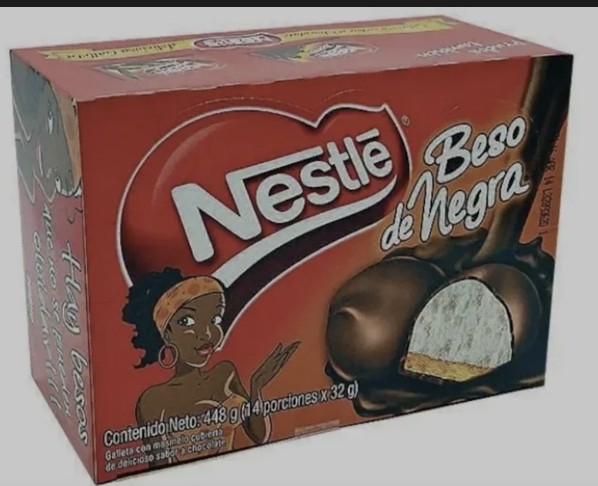
Lebanon/Jordan/Syria - Ras El Abed (Slave's Head)
Palestine - Rosh Kushi (Negro's Head)
Brazil - Teta de Nega (Black Woman's Tits)
Colombia/Ecuador - Beso de Negra (Black Woman's Kiss)
Hungary - Négercsók (Negro Kiss)
Slovakia - Čierny Princ (Black Prince)
Australia - Red Skins, Chicos, Nigger Boy
Austria - Negerküsse (Negro Kisses)
Denmark - Negerkys (Negro Kiss) and Negerbolle (Negro Bun)
Sweden - Negro N-boll (Negro N-ball)
Spain - Negrito (Little Black Person)
Poland - Murzynek (Little Moor)
Chile - Negrita (Little Black Woman) and Tres Negritos (Three Little Black Men)
South Africa - Niggerball
Argentina - Angelito Negro (Little Black Angel)
Ireland - Golly Bar (named after Golliwogs)
Serbia - Negro liquorice (still sold)