Military Reform Meets Religious Resistance
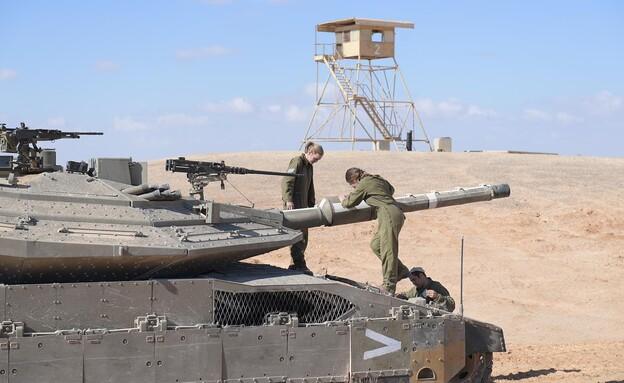
A growing dispute inside Israel’s military establishment has exposed deeper tensions between operational needs, legal obligations, and the influence of religious institutions. At the center of the debate is a pilot program scheduled to begin in November 2026 that will allow women to serve in armored tank units, a move that has sparked significant opposition from parts of the Religious Zionist community.
According to reports from Israeli media, Chief of Staff Lt. Gen. Eyal Zamir recently convened a high-level meeting with senior rabbis from the Hesder yeshiva network, whose students traditionally combine religious studies with military service and make up a substantial portion of Israel’s combat forces.
The meeting included top military officials responsible for legal affairs, manpower planning, and religious services within the army. Yet the absence of representatives from roughly one-third of Hesder institutions highlighted the growing divide. Several of these schools have openly opposed the initiative and have refused to engage with military leadership on the matter.
Balancing Manpower Needs and Social Pressures
Israeli military leaders argue that expanding opportunities for women is no longer merely a question of equality but a strategic necessity. Years of conflict, combined with mounting personnel shortages, have intensified pressure on the army to broaden its recruitment base.
During the discussions, Zamir reportedly emphasized that women constitute an essential component of Israel’s human resources and that the military must create pathways enabling all sectors of society—including women, Religious Zionists, and ultra-Orthodox communities—to participate in national service.
Military officials insist that accommodating different social and religious groups through specialized service tracks remains a cornerstone of their approach, even as demands for broader integration continue to grow.
A Limited Experiment Under Close Scrutiny
The proposed initiative remains highly restricted in scope. Military planners have indicated that, at most, the pilot phase would involve a single all-female tank company, representing only a tiny fraction of Israel’s armored corps.
Army leadership has also stressed that all participants will be required to meet the same physical standards expected of combat soldiers. Officials remain mindful of earlier experimental programs in which female recruits experienced higher-than-expected injury rates during intensive training.
Supporters of the initiative argue that careful testing is necessary before determining whether women can be integrated into armored units on a larger scale.
Religious Concerns Drive Opposition
Opposition from religious institutions centers largely on concerns about mixed-gender service in the confined environment of a tank crew. Critics argue that such conditions conflict with religious standards regarding modesty and social interaction between men and women.
The military has sought to address these objections by promising complete separation between male and female personnel within the pilot program. Army officials maintain that the experimental units will consist entirely of women and that no final decision has been made regarding permanent integration.
Despite these assurances, resistance has intensified. In recent weeks, the number of Hesder institutions opposing the move reportedly doubled, with dozens of schools announcing that they would discourage or prohibit their students from joining armored units in protest.
Legal Pressure and Battlefield Realities
The controversy comes amid increasing legal pressure to expand opportunities for women in combat roles. Earlier this year, Israel’s Supreme Court reaffirmed the principle of equal access to military positions and required the army to move forward with the pilot program during the November 2026 recruitment cycle.
At the same time, the military continues to grapple with significant manpower challenges. Israeli media reports indicate that years of conflict have left the armed forces facing substantial personnel shortages, while efforts to increase enlistment among ultra-Orthodox communities have produced limited results.
These realities have strengthened the argument among military planners that expanding women’s participation is becoming an operational necessity rather than a symbolic reform.
Female Officers Push Back
The debate has also triggered a response from within the military itself. Hundreds of current and former female officers have signed a letter urging military leaders to resist external religious pressure and preserve the army’s authority over personnel decisions.
The signatories argued that female soldiers should not be treated as a subject of negotiation and described women’s service as an established operational reality that contributes directly to national security.
Their intervention reflects a broader struggle over the future character of Israel’s armed forces—whether military policy should be determined primarily by operational requirements and legal standards, or shaped by the concerns of influential religious institutions.
As the November pilot program approaches, the controversy is likely to become a defining test of the army’s ability to balance social divisions, religious sensitivities, and the evolving demands of modern warfare.