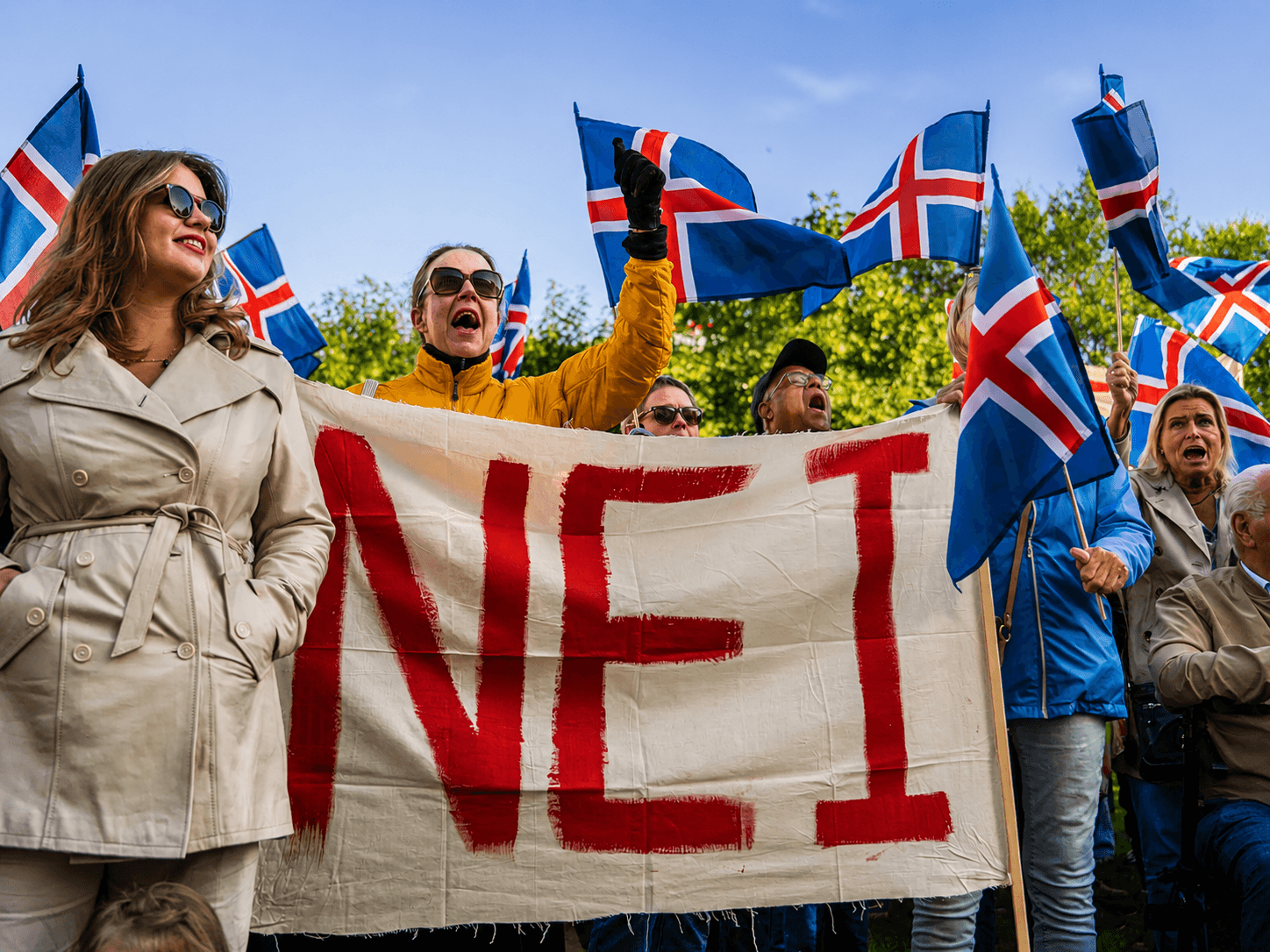
Icelanders have rejected a proposal to restart negotiations on joining the European Union, with 52.8% voting against the move and 47.2% in favour, according to final results reported by Iceland’s public broadcaster RÚV.
Turnout reached 82.5%, reflecting the importance of an issue that has divided Icelandic politics for more than a decade. The referendum was held on Saturday, 29 August, and asked voters whether Iceland should resume accession negotiations with the EU. It was not a vote on EU membership itself.
Prime Minister Kristrún Frostadóttir, who supported reopening the talks, said she hoped the result would not divide the country.
“I don’t feel that there is bitterness,” she told RÚV before the final count. “I know tempers run high for some people, but I have now spent time with a large group of people from all over the country and people are quite open to different outcomes.”
The result leaves Iceland outside the EU and ends the current government's effort to revive accession talks. Only the two constituencies in central Reykjavík recorded majorities in favour of reopening negotiations, while rural areas and the capital's suburbs voted against the proposal.
Fishing was a central issue in the campaign. Opponents argued that EU membership could threaten Iceland's control over its fishing grounds and subject the sector to the bloc's common fisheries policy. The industry accounts for about 40% of Iceland's export revenue, according to Reuters.
Supporters of reopening negotiations argued that closer integration with the EU could help address Iceland's economic problems, including high interest rates and inflation. Some also viewed the euro as a potential source of greater monetary stability.
The vote also took place against a changing security environment in the Arctic. US President Donald Trump has repeatedly expressed interest in acquiring Greenland, prompting debate in Iceland over whether closer European ties could provide additional strategic support. Iceland is already a NATO member, although it has no standing army.
Iceland applied to join the EU in July 2009, following the financial crisis that severely affected its economy. Accession negotiations began in 2010 and were put on hold in December 2013; in 2015, Iceland formally asked not to be treated as a candidate country.
Despite remaining outside the bloc, Iceland is closely integrated with the EU through the European Economic Area, which gives it access to the single market, and through the Schengen area.
The referendum itself was legally advisory, but the government had committed to respecting the result. With voters rejecting a return to negotiations, there is no immediate mandate to restart the accession process.


