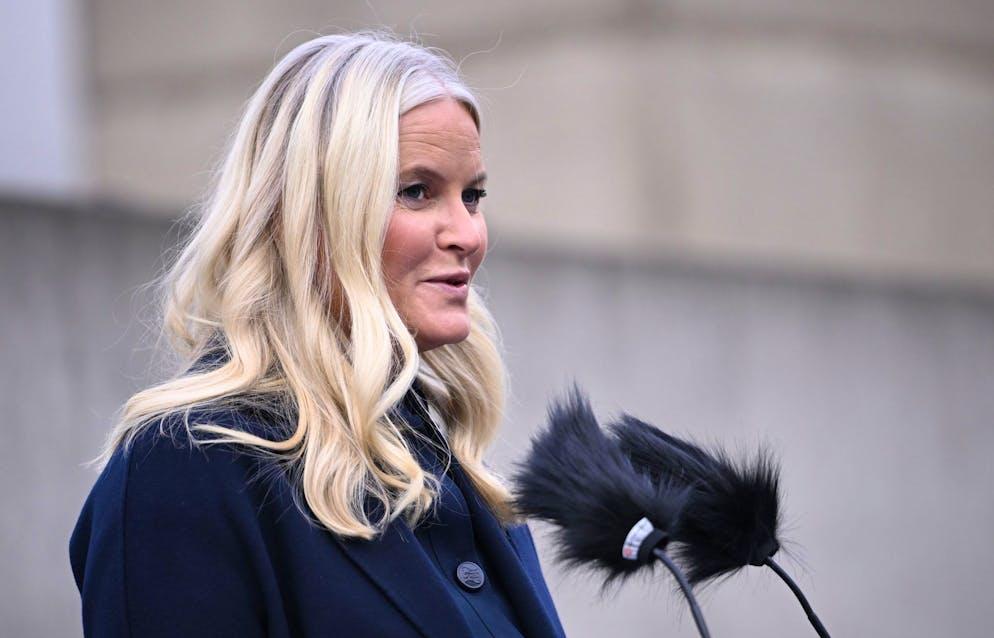
Queen Mette-Marit has entered a new era at the heart of Norway’s monarchy under circumstances few royal families would wish to inherit: the death of a widely respected king, serious health problems, a son convicted of rape and renewed scrutiny over her past friendship with Jeffrey Epstein.
Her husband, King Haakon VIII, automatically succeeded his father, King Harald V, after the 89-year-old monarch died at Oslo University Hospital on 28 August. Haakon formally pledged allegiance to Norway’s constitution before parliament on Tuesday, with his daughter and heir, Crown Princess Ingrid Alexandra, at his side.
Mette-Marit was absent from the historic parliamentary ceremony because of complications following a lung transplant earlier this year. The Norwegian Royal Court announced in June that the transplant had been successful, and said in July that she had been discharged from Oslo University Hospital to continue her recovery.
But her health is only one part of an extraordinary period of pressure surrounding Norway’s new queen.
From single mother to queen
Mette-Marit Tjessem Høiby was born in Kristiansand in 1973. She was a 25-year-old single mother and a commoner when she met Haakon at the Quart music festival in her home city in 1999.
Haakon later recalled being immediately struck by her. The pair dated privately for several months before their relationship became public, triggering intense scrutiny over Mette-Marit’s background and her involvement in Norway’s house-music and party scene.
She publicly acknowledged that period before marrying Haakon in 2001, describing her younger years as a time when she had lived against accepted conventions and crossed boundaries.
King Harald, who had himself overcome resistance to marry a commoner, Sonja Haraldsen, supported his son’s choice.
Mette-Marit gradually developed a public role of her own. She studied ethics and international development and became involved in literature, global health, women’s empowerment and HIV/AIDS advocacy, including work as a goodwill ambassador for UNAIDS.
Her marriage to Haakon produced two children: Ingrid Alexandra, now Norway’s crown princess, and Prince Sverre Magnus. Her eldest son, Marius Borg Høiby, was born before the marriage and holds no royal title or official role.
The Epstein emails
Mette-Marit’s reputation suffered a serious blow in early 2026 after the US Justice Department released documents containing extensive correspondence between her and convicted sex offender Jeffrey Epstein.
The contact continued after Epstein’s 2008 conviction for offences involving a minor. Reuters reported that one released 2011 email showed Mette-Marit acknowledging that she had searched for information about Epstein online and that what she found did not look good.
The revelations triggered a backlash in Norway and prompted unusually direct criticism of her judgement.
Mette-Marit apologised publicly, including to the then King Harald and Queen Sonja, saying she regretted the situation she had created for the royal family.
Weeks later, in an emotional interview with Norwegian broadcaster NRK, she said she wished she had never met Epstein and described herself as having been manipulated and deceived.
There is no allegation that Mette-Marit participated in Epstein’s crimes.
The controversy nevertheless had a measurable political and reputational impact. Reuters reported that support for retaining the monarchy fell to 60% in a February Norstat poll, from 70% a month earlier, before recovering somewhat to 64% in May.
Her son convicted of rape
At the same time, Mette-Marit was confronting an even more damaging scandal involving her eldest son.
Marius Borg Høiby was sentenced by Oslo District Court on 15 June to four years in prison after being convicted of two counts of rape, domestic violence and numerous other offences.
He was found guilty on 34 of 40 charges. The court acquitted him on two other rape counts. His convictions also included violence against a former girlfriend and drug-related offences.
Høiby had denied the most serious allegations while admitting some lesser offences.
His lawyer said he would appeal the verdict, while prosecutors also decided to challenge the sentence. The appeals mean the legal process remains unresolved, but contrary to some reports circulating this week, Høiby has already been convicted at first instance and is not merely awaiting an initial verdict.
The case has attracted exceptional attention in Norway because Høiby grew up around the royal family, although he has never held a royal title or undertaken official duties.
A monarchy entering a difficult transition
King Harald had remained one of the Norwegian monarchy’s strongest sources of public support throughout the turmoil surrounding his family.
He reigned for more than 35 years and became known for modernising the institution while emphasising national unity and tolerance. His death therefore leaves Haakon and Mette-Marit responsible for carrying the monarchy through one of its most testing periods in decades.
Haakon, 53, has taken the regnal name Haakon VIII and adopted the traditional royal motto “Everything for Norway”.
His succession was automatic under Norway’s constitutional system. There is no coronation ceremony, although the new king formally swore his constitutional oath before parliament on 1 September.
Mette-Marit, meanwhile, begins life as queen while continuing her recovery from major surgery and facing scrutiny over events that predate her husband’s accession.
For a woman who entered royal life 25 years ago amid controversy about whether a single mother from outside the aristocracy belonged in the palace, her elevation to queen represents a remarkable transformation.
But unlike the controversies surrounding her youth, the questions facing Norway’s new royal household now concern criminal convictions, Epstein-era disclosures and whether a younger generation of royals can preserve public confidence in an institution long associated with stability.


