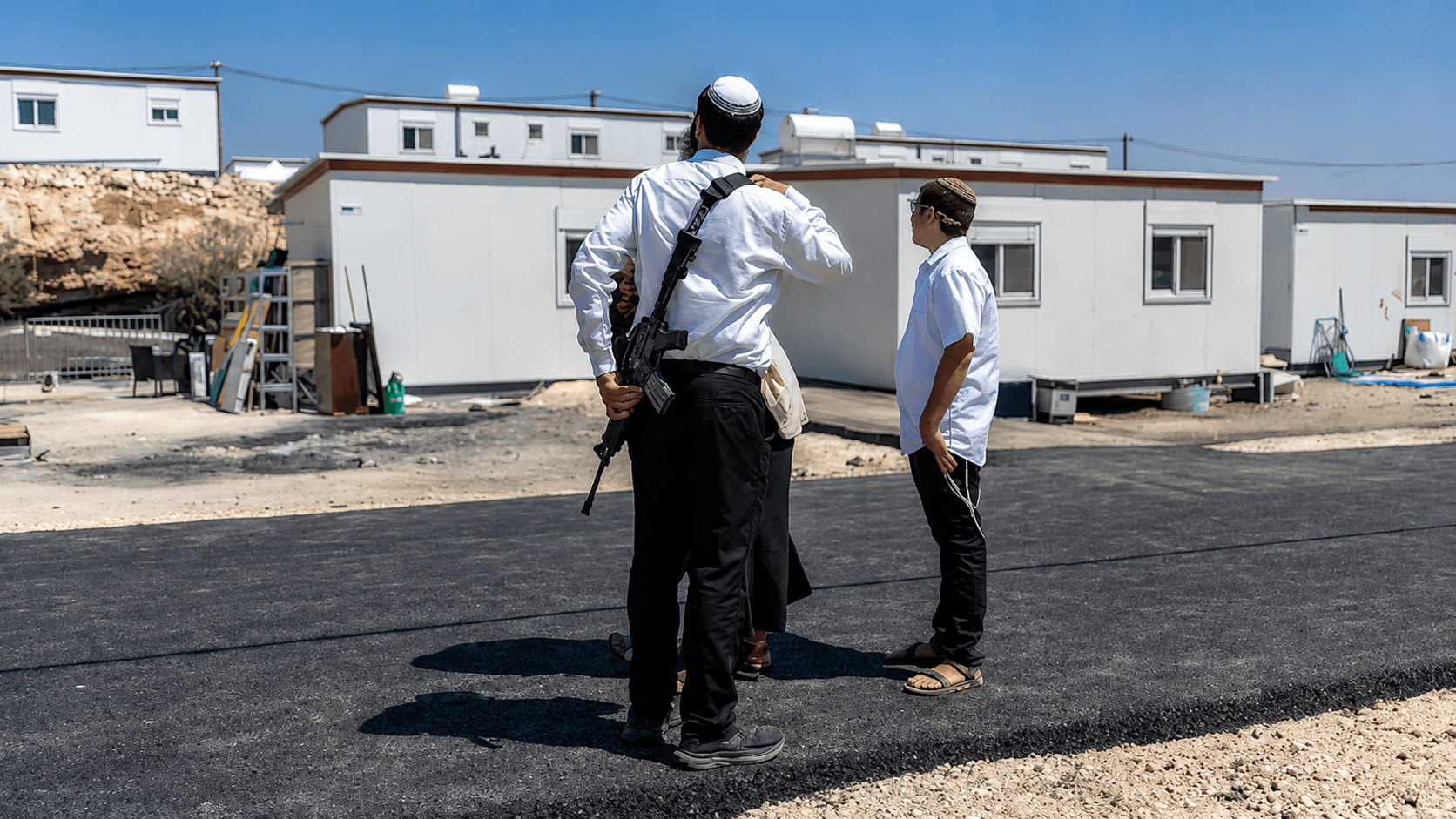
Israel has opened bidding for 1,234 homes in the strategically sensitive E1 area east of Jerusalem, moving a long-delayed settlement project towards implementation as the government accelerates construction, infrastructure spending and the creation of new settlements across the occupied West Bank.
The tender, published on 18 August, covers seven residential complexes and is part of a wider plan for 3,401 housing units in E1. Bids are due by 19 October, eight days before Israel's scheduled parliamentary election on 27 October.
E1 occupies a narrow corridor between East Jerusalem and the settlement of Ma'ale Adumim. Its development has been particularly contentious because the area sits across one of the main north-south routes through the West Bank.
The United Nations has warned that construction there could sever the connection between the northern and southern parts of the territory. On 19 August, Secretary-General António Guterres was described as "deeply alarmed" by the latest tenders, with his spokesperson saying development in E1 would pose an "existential threat" to the two-state solution.
The concern is not new. In September 2025, Prime Minister Benjamin Netanyahu signed an agreement advancing expansion around Ma'ale Adumim and said: "There will never be a Palestinian state. This place is ours." The statement was made at a ceremony linked to the expansion project, including development in E1.
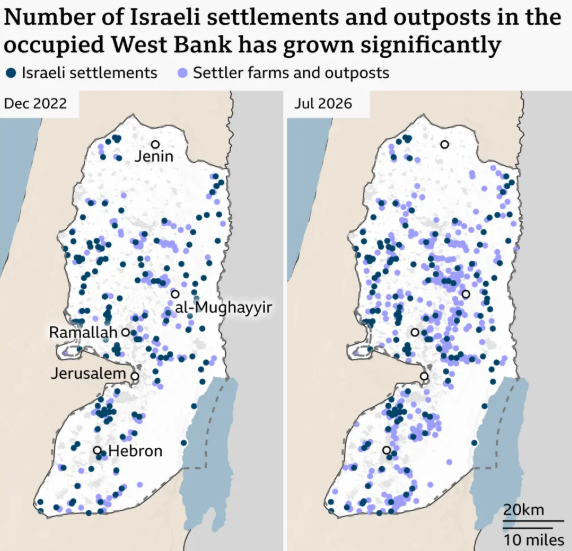
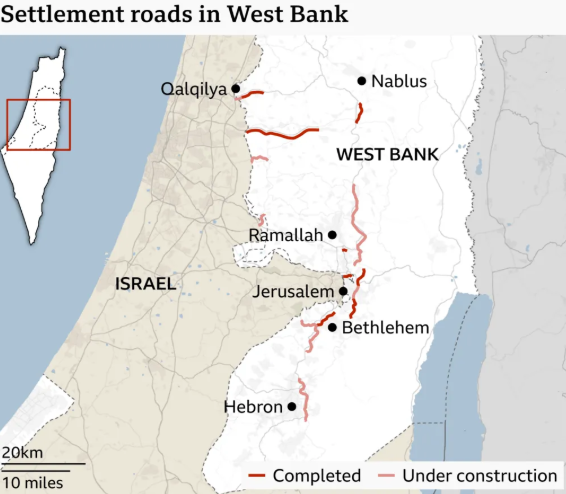
Israel's settlement policy has expanded substantially since Netanyahu's current coalition returned to power in late 2022. In July, the security cabinet approved 1.3 billion shekels ($434 million) to establish 34 new settlements, while a further 1.075 billion shekels was earmarked for roads serving new settlements. Reuters reported that the measures would bring the number of settlements initiated under Finance Minister Bezalel Smotrich's tenure to 103.
The infrastructure programme is important because roads are increasingly being developed alongside settlements. In May, the government announced an additional 1.075 billion shekels for settlement roads for 2026-28, on top of previously allocated funding.
The changes also extend beyond new housing. Since 2023, civilian planning and settlement-related powers in parts of the West Bank have increasingly been placed under structures overseen by Smotrich, who also serves as finance minister. Amnesty International's review of the changes found that authority over settlement planning and approvals was transferred to Smotrich in his role as an additional minister in the Defence Ministry, reducing several layers of military and political oversight.
The scale of the settlement population has also grown. UN figures published in 2025 put the number of Israeli settlers in the West Bank and East Jerusalem at more than 737,000, while Palestinian statistics based on 2024 data put the figure at 778,567. The different totals reflect differences in methodology and coverage.
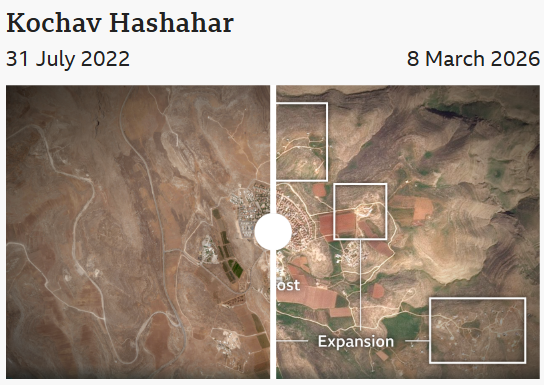
The expansion has included the creation of unauthorised outposts. Amnesty reported that 363 such outposts existed in the West Bank by the end of April 2026, with 212 established since the current Israeli government took office. It also recorded 102 settlements declared by the government since January 2023, including outposts later granted recognition under Israeli law.
E1 has attracted particular opposition because of its potential geographical effect. An Associated Press report on an Israeli road project near al-Eizariya found that dozens of Palestinian shops were demolished to clear land for a road system linked to the wider E1 area. Israel said the road was intended to improve traffic and serve Palestinian communities, while Palestinian officials and rights groups said it formed part of a separate road network serving Israeli settlements.
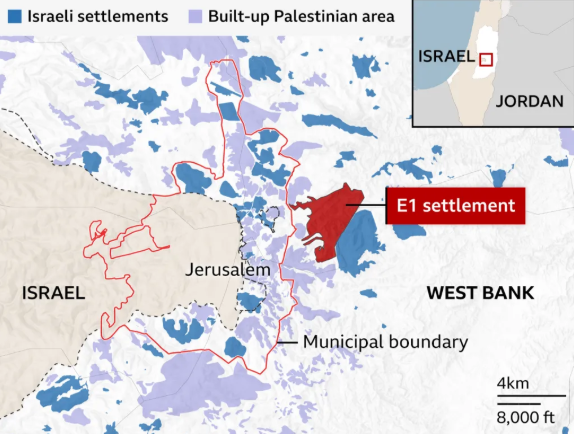
International opposition has intensified following the latest tender. On 21 August, France, Germany, Italy, the United Kingdom, Canada, the Netherlands and Norway described the decision to publish construction tenders as "unacceptable", warning that E1 would drive a division through the West Bank and damage the territorial continuity of Palestinian territory. They called on Israel to withdraw the plans and warned companies against bidding because of possible legal and reputational consequences.
Palestinian President Mahmoud Abbas welcomed the statement and called for concrete measures to stop the project, saying that separating the northern and southern West Bank and isolating East Jerusalem would undermine the possibility of establishing an independent Palestinian state.
The tender remains subject to legal proceedings, but its October deadline means contracts could potentially be advanced before Israel's election. Peace Now, which has challenged the plans in court, said the government was seeking to sign agreements with contractors before the vote in order to make cancellation by a future government more difficult.
For now, the immediate development is the opening of bids for the first 1,234 homes within the wider E1 scheme, with the deadline set for 19 October.


