Skip to content

West Bank Palestinians expect little change after Israel vote

Residents interviewed by Al Jazeera say a change of government is unlikely to alter Israeli policy, while Arab-led parties won 19 seats.

By Shadi Radi

  2 min read

West Bank Palestinians expect little change after Israel vote
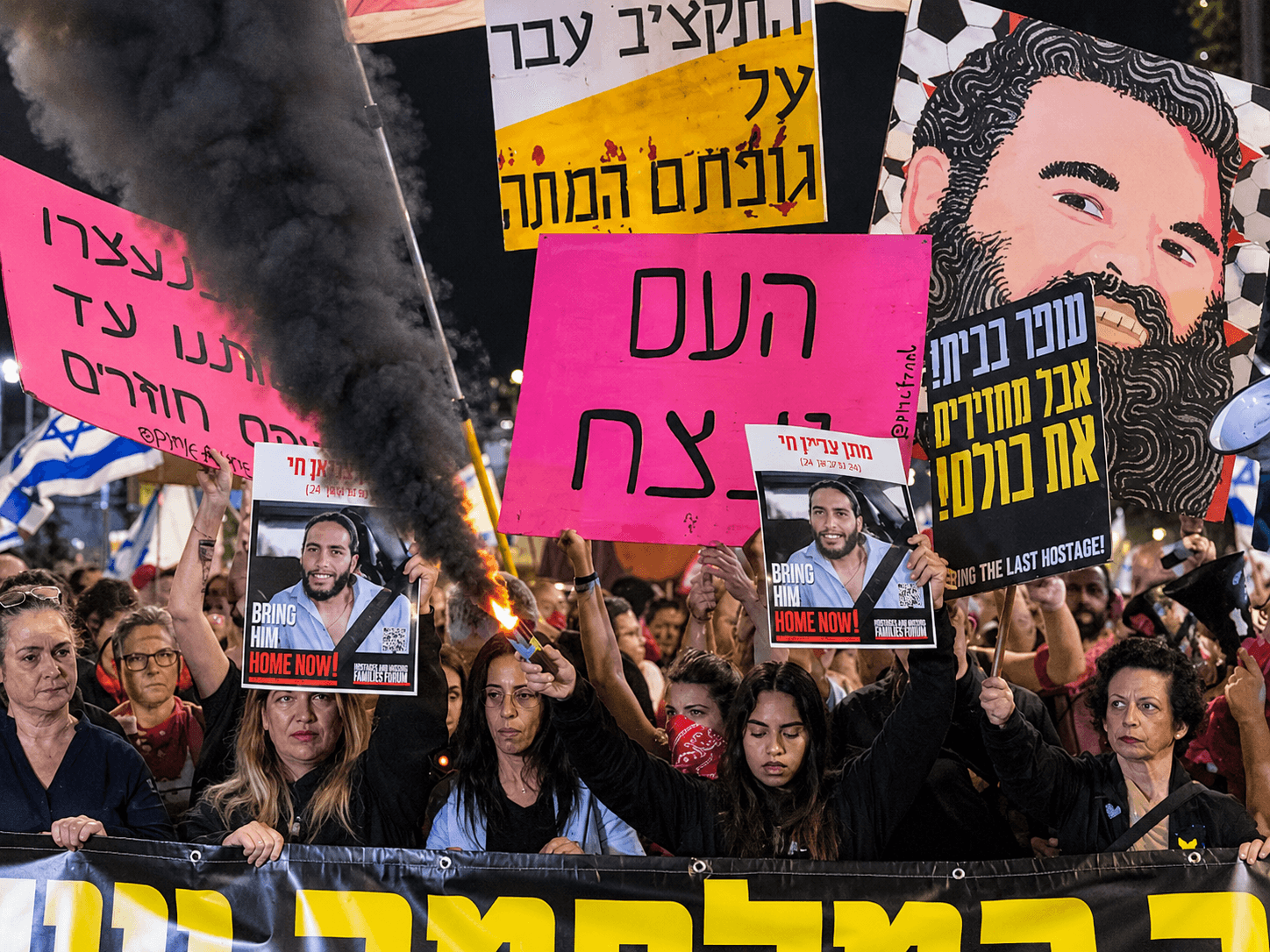
Photograph of Israeli protesters taking part in a demonstration related to the parliamentary elections, expressing their political positions and views on the country’s future government. Al Jazeera.

Israel’s election has left Benjamin Netanyahu’s bloc short of a parliamentary majority, while Arab-led parties secured 19 seats, according to final results reported by The Times of Israel on 30 October.

The results gave Netanyahu’s bloc 53 seats in the 120-member Knesset, compared with 48 for the main opposition bloc led by Gadi Eisenkot. Neither side has the 61 seats required for a majority, leaving the Arab-led parties with a potentially influential position in coalition negotiations.

For Palestinians in the occupied West Bank, however, the election outcome has done little to raise expectations of a change in Israeli policy. Residents interviewed by Al Jazeera said they expected the approach towards Palestinians to remain largely unchanged whoever leads the next government.


“In the end, this is an occupation, and it will remain an occupation. Nothing will change, and whoever comes will not be better than the one who leaves,” one resident told Al Jazeera in Arabic.

Several interviewees said they viewed the main Israeli parties as broadly similar on Palestinian issues. They also expected Israeli military operations and the war in Gaza to continue, Al Jazeera reported. Some questioned whether Eisenkot, Netanyahu’s principal challenger, would offer a substantially different course.

“Practically, there is no fundamental difference between the two,” one respondent said in Arabic, referring to the two politicians. Others argued that Palestinians should judge Israeli leaders by their positions on Palestinian rights, the continued occupation and settlement expansion.

The interviews also showed interest in the increased representation of Arab parties in parliament. One respondent said the larger number of Arab lawmakers could eventually give them enough parliamentary influence to affect government policy.

The Joint List won 11 seats and Ra’am secured eight, bringing the Arab-led parties’ total to 19, according to The Times of Israel. Their combined representation is a record and almost double the 10 seats they held in the outgoing Knesset.

The election produced no clear parliamentary route to a new government. The Associated Press reported that Netanyahu remains prime minister while party leaders consider possible alliances. Eisenkot’s bloc would need support from Arab-led parties to assemble a majority, but some opposition politicians have ruled out such cooperation.

The Central Elections Committee reported turnout of 77.9%, with 5,716,665 votes cast, The Times of Israel reported. The final results are due to be submitted to President Isaac Herzog on 4 November.

For the West Bank residents interviewed by Al Jazeera, the parliamentary arithmetic has not altered their central expectation: that a change in Israel’s governing coalition, if one emerges, will not by itself bring a different policy towards Palestinians. The new Knesset is scheduled to be sworn in on 10 November.

More from West Bank