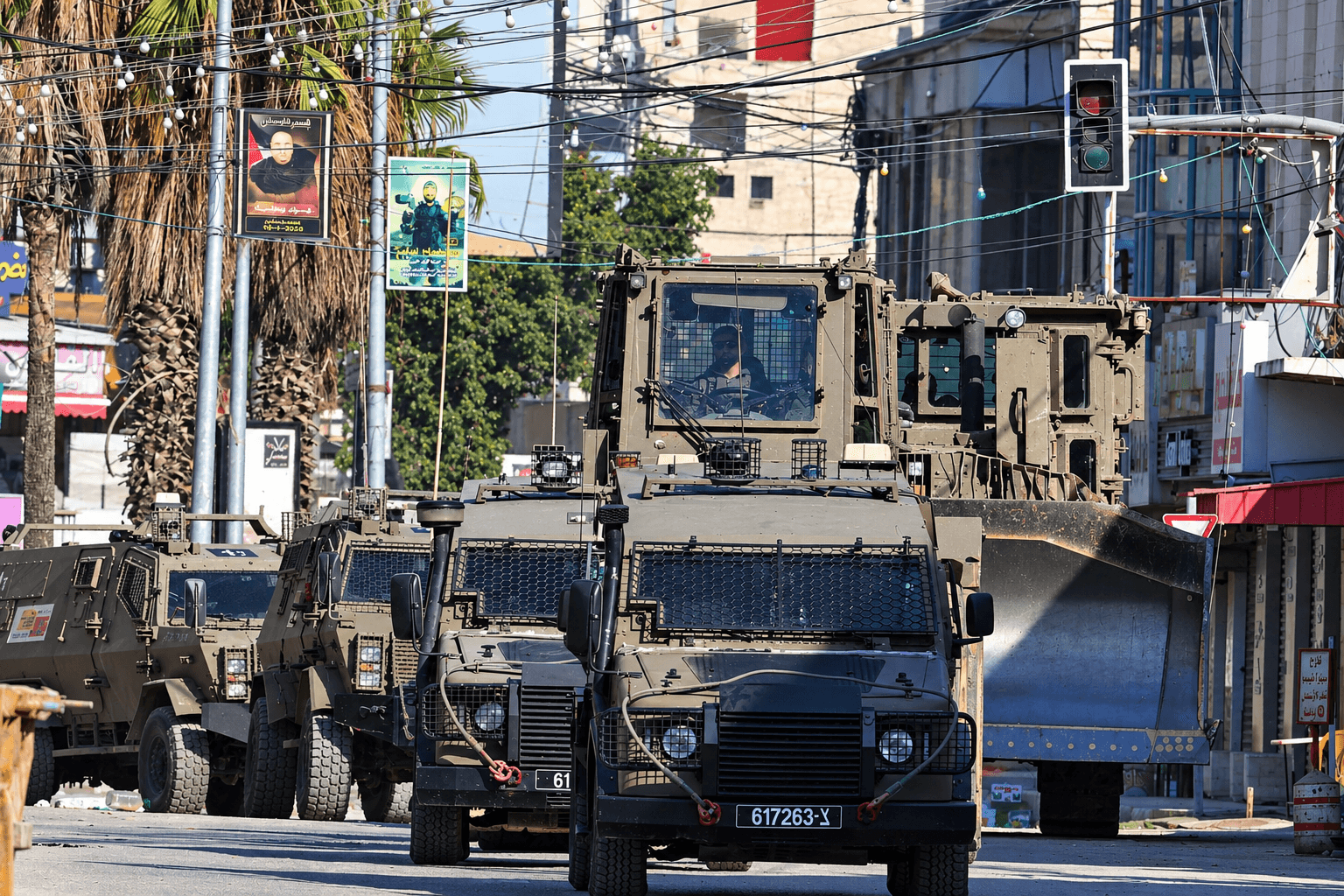
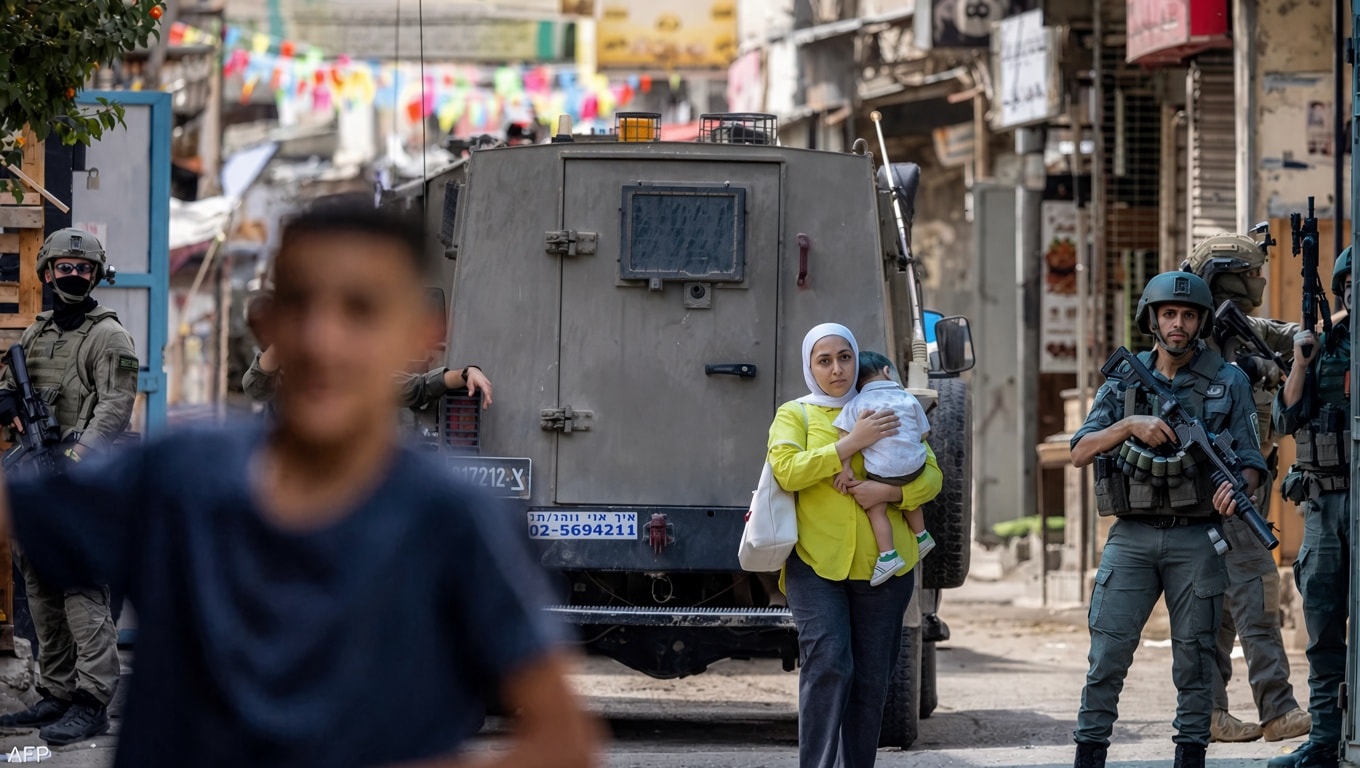
Israeli forces forced 25 Palestinian families from their homes near Tulkarm refugee camp on 4 November, turning some houses into military positions, according to the official Palestinian news agency WAFA.
The evictions took place in the western area adjoining the Al-Hadaideh neighbourhood. Residents were reportedly allowed to take only a small number of personal belongings before leaving their homes.
The latest displacement adds to the prolonged disruption around Tulkarm and Nur Shams refugee camps. WAFA reported that more than 5,000 families had been displaced from the two camps during the ongoing Israeli military operations, which have also caused extensive damage to infrastructure and residential property.
The Palestinian Prisoners' Club said Israeli forces had arrested at least 45 Palestinians in several West Bank governorates. Those detained included five women and two journalists.
One of the journalists was Hazem Nasser, whom Israeli authorities re-arrested two weeks after releasing him, the organisation said. Most of the arrests took place in Nablus and Hebron, with others reported in Qalqilya, Tulkarm and Bethlehem. Israeli forces also questioned residents in Jenin before releasing them, the club added.
The organisation said the cumulative number of arrest cases in the occupied West Bank, including East Jerusalem, had exceeded 26,000 since October 2023. The figure is based on its own documentation and includes arrests across the period, rather than the number of people currently held in detention.
In Jerusalem, Israeli forces demolished a house in the Al-Bustan neighbourhood of Silwan, south of Al-Aqsa Mosque, according to the Jerusalem Governorate. The property measured about 80 square metres and had been built 25 years ago.
The governorate identified the owner as Suleiman Abu Sbeih, who lived there with his wife. It said he had undergone an amputation of one leg and had particular health needs. Before the demolition, bulldozers damaged roads and uprooted trees to create access to the property, the governorate said.
In the town of Tuqu, south-east of Bethlehem, Israeli forces demolished an inhabited house in the centre of the town, WAFA reported.
The agency quoted Tuqu municipality director Tayseer Abu Mufreh as saying that the house, which measured 170 square metres, was located in the Khirbet al-Deir area. He said Israeli forces had closed the area and restricted movement during the operation.
Abu Mufreh added that several residents suffered from tear gas inhalation after forces pursued people and fired tear gas and stun grenades. He said authorities had issued demolition or stop-work notices for about 60 houses in the town since the beginning of 2026, with four inhabited homes demolished during that period.
Further north, Israeli bulldozers began demolishing residential and agricultural structures in the northern Jordan Valley. Mehdi Daraghmeh, head of the Al-Maleh village council, said the properties belonged to three Palestinian residents and included facilities used for livestock farming.
The land measures affected by a separate Israeli declaration were also at issue near Ramallah. The Palestinian Commission Against the Wall and Settlements said Israeli authorities had designated 2,536.44 dunams across Beitillu, Al-Mazra'a al-Qibliya and Deir Ammar as “government property” in a declaration issued on 3 November.
The declaration, numbered הכ/08/26, covers land around the settlement of Kerem Re'im and cites Israeli Military Order No. 59 of 1967, which concerns government property.
The commission said the classification could strengthen links between settlements in the Talmonim bloc, including Kerem Re'im, Neria and Nahliel. It warned that the designation could restrict Palestinian access to agricultural land and increase pressure on the surrounding villages.
The declaration allows people claiming rights to the affected land to submit objections within 45 days of its publication, according to the commission.