
Palestinian farmers in villages east of Qalqilya are raising concerns over access to their olive groves as the 2026 harvest approaches, with settlement expansion, outposts and previous restrictions making it uncertain whether some landowners will be able to reach their fields.
Bassem Jumaa, a farmer from Kafr Qaddum, told Ma'an that settlement outposts and settlers are present across agricultural areas in the Joura Amra area east of Qalqilya, making access to farmland difficult. He said farmers were about two months away from harvesting and did not know how they would reach their land and collect their crops.
The concerns come as Palestinian farmers in the northern West Bank continue to face restrictions on agricultural access. In June 2026, the Palestinian Agriculture Ministry documented damage to 254 olive trees in Qalqilya during a reporting period covering 24 May to 4 June, alongside damage to agricultural infrastructure and other crops.
In March, WAFA reported that Israeli forces had closed around 12 agricultural gates around Qalqilya for six consecutive days, preventing more than 100 farmers from reaching land behind the separation barrier, according to the governorate's agriculture directorate.
Access problems have also been documented during previous olive harvests. The UN Office for the Coordination of Humanitarian Affairs said access to agricultural land near Israeli settlements and settlement outposts was severely restricted during the 2025 harvest. In northern areas including Qalqilya and Tulkarm, access to land in the area behind the barrier was allowed only between 20 October and 6 November, excluding Fridays, Saturdays and Sundays.
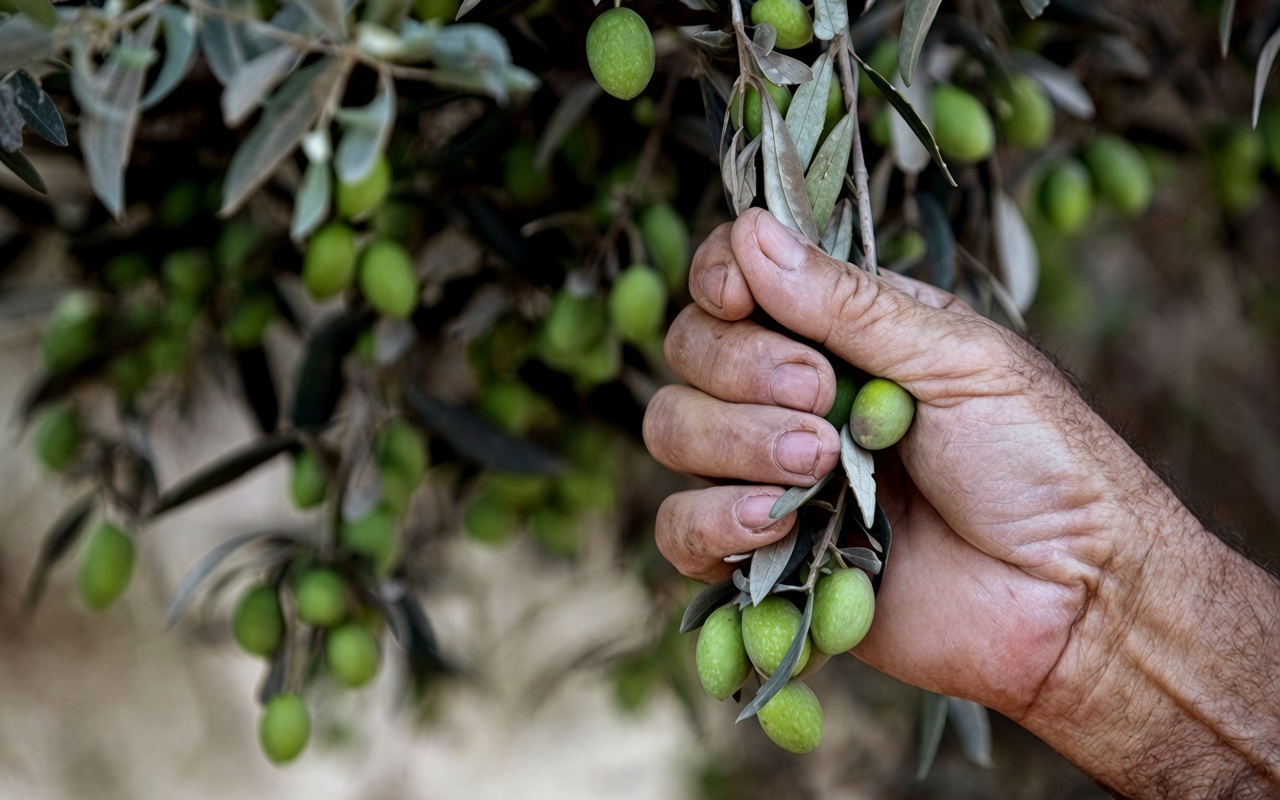
OCHA also recorded 150 olive-harvest-related settler attacks between 1 October and 3 November 2025 across the West Bank. The incidents included attacks on farmers, theft of crops and harvesting equipment, and damage to olive trees; about 140 Palestinians were injured and more than 4,200 trees and saplings were vandalised during that period.
The problem is particularly relevant in Qalqilya, where farmers have reported losing access to olive groves near settlements. In June, WAFA reported that around 50 dunums of agricultural land in Jinsafut, planted with old olive trees, had become inaccessible since October 2023, affecting about 45 farmers, according to local accounts.
The Palestinian Agriculture Ministry said in July that the West Bank and Gaza together have about 13 million olive trees across roughly one million dunums. It also said about 20% of last year's crop could not be harvested properly, while citing 91,000 cases of damage or attacks affecting olive trees in the West Bank during 2025.
The 2026 harvest is expected to begin around October, according to recent reporting, leaving farmers in Qalqilya preparing for the season while uncertainty over access to some groves remains.
No comments yet. Be the first to share your thoughts.