
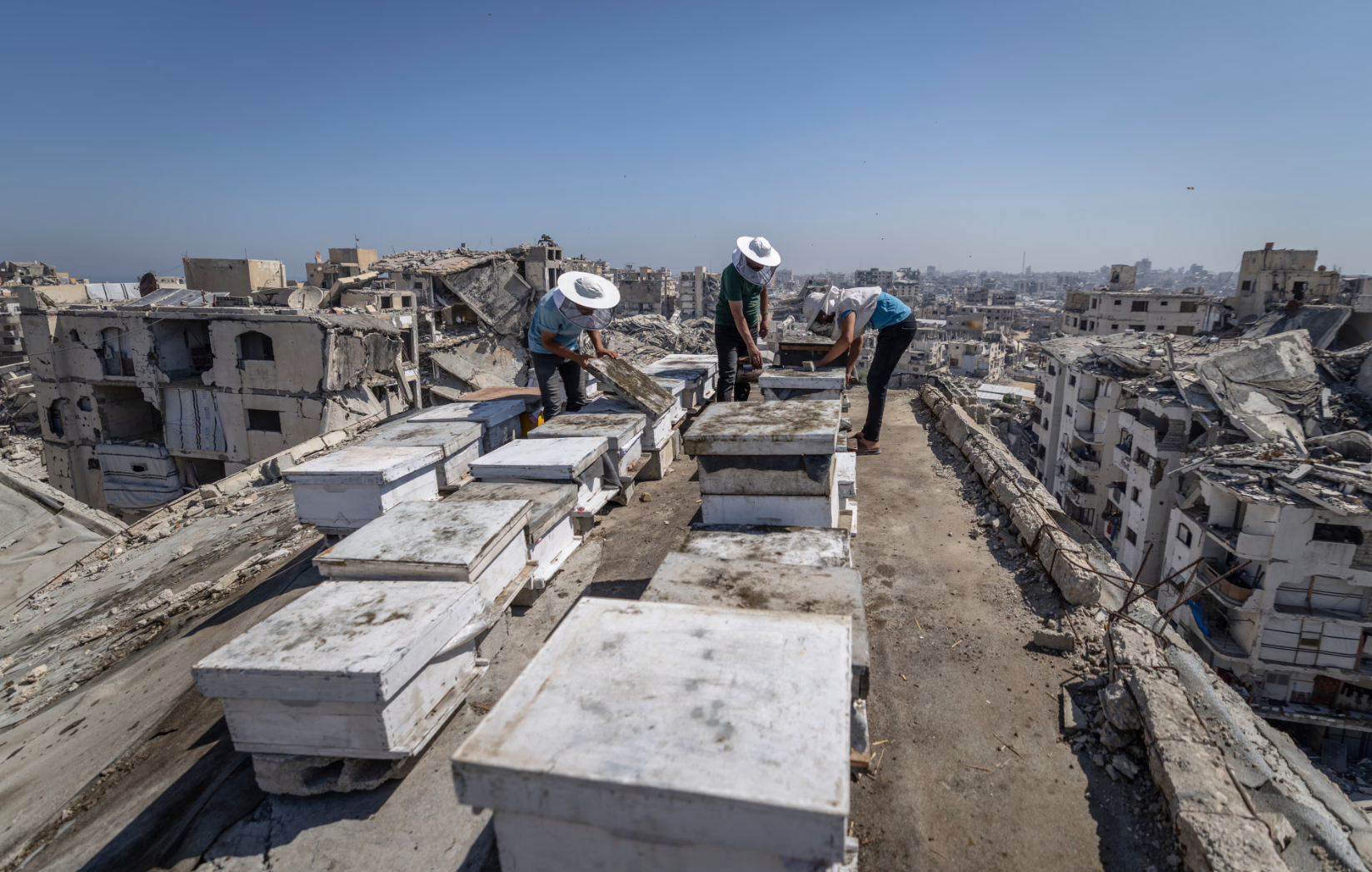
Every morning, 49-year-old Ibrahim Naji al-Dabba climbs to the roof of a damaged residential building in Gaza City's Tal al-Hawa neighborhood, where his beehives stand among concrete rubble and the remains of war.
Before the war, al-Dabba owned more than 400 beehives across eastern Gaza. His apiaries, equipment, storage facilities and four-wheel-drive vehicle supported a thriving beekeeping business that provided for his family of seven children.
“Beekeeping is not just a business. It is my family’s only source of income. It is our life, livelihood and future,” he says.
Al-Dabba, who also heads Gaza’s Cooperative Beekeepers Association, says beekeeping was his passion before becoming his profession. Over the years, he specialized in honey production, queen rearing and developing bee strains adapted to Gaza’s climate.
The war changed everything. Bombing and displacement prevented him from reaching his apiaries, while his home, more than 400 beehives, honey-processing equipment, storage facilities and most of his beekeeping tools were lost. He estimates his financial losses at more than $350,000.
“The hardest moment was realizing that everything I had spent years building was gone. I lost not only the hives, but also my home, equipment and only source of income,” he says.
Like hundreds of thousands of Palestinians in Gaza, al-Dabba was repeatedly displaced with his family throughout the war. After conditions became relatively more stable, he searched for other work but found nothing.
Instead, he returned to the profession he knew best.
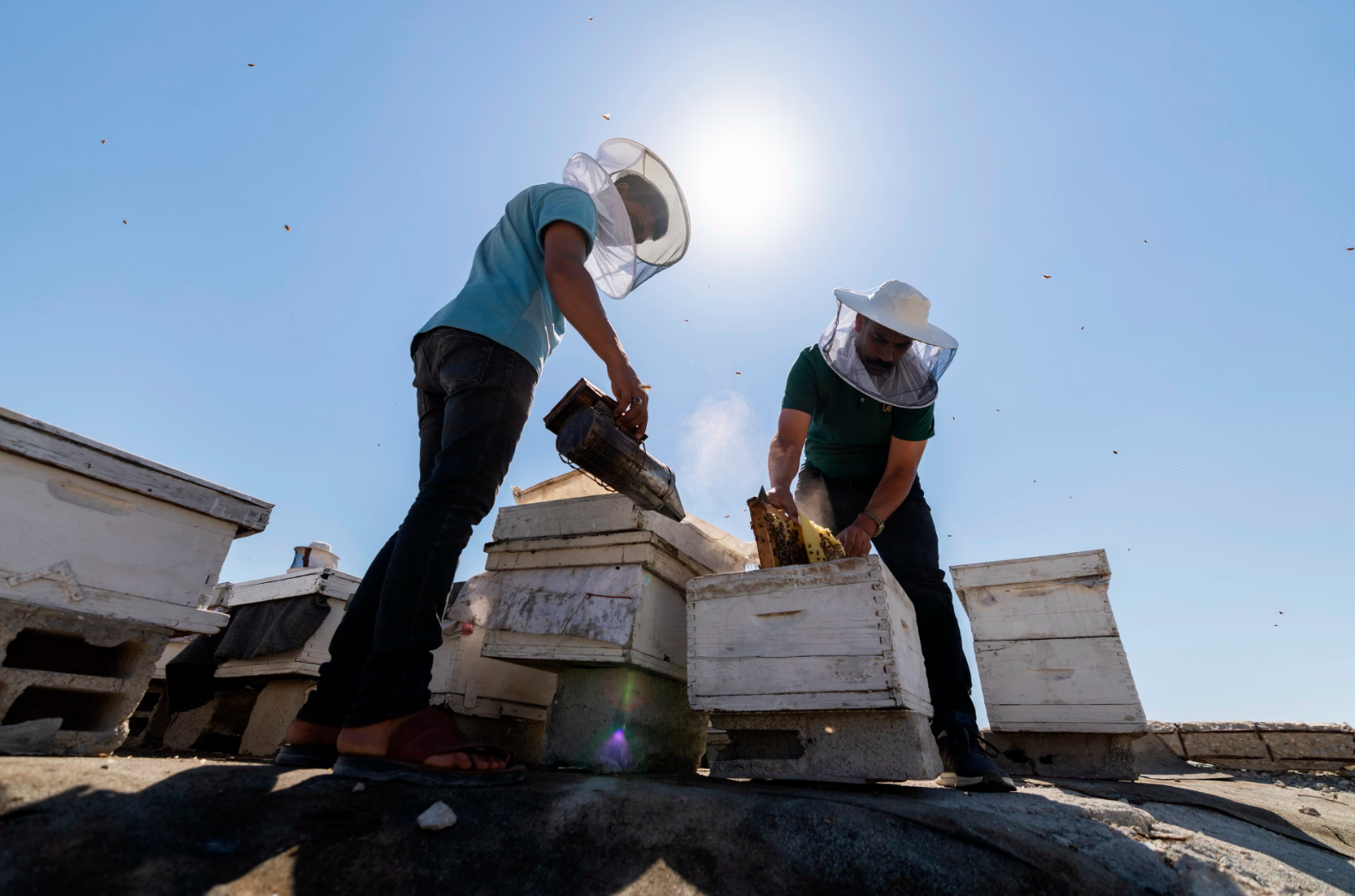
Using his savings, he bought three beehives for more than $3,000, a significant investment under Gaza’s current conditions. With movement between agricultural areas dangerous and transporting hives nearly impossible, he placed them on the roof of a severely damaged residential building.
He knew the risks. The building itself had been damaged, while the wooden hive boxes could be stolen by people desperate for firewood or construction materials. Still, he believed the rooftop offered the best chance of protecting what remained.
“I wanted the bees to adapt to these harsh conditions, just as we have been forced to adapt,” he says.
Together with his sons, he gradually expanded the three hives to 35. Although honey production remains limited, every successful harvest represents far more than income.
“I don’t feel that I am simply taking care of bees. I am trying to preserve part of the life I lost because of the war,” al-Dabba says.
The challenges continue every day. Essential supplies such as medicines, foundation wax, supplemental feed and beekeeping equipment have become scarce or prohibitively expensive. Rebuilding an apiary is financially impossible for many beekeepers, while rising packaging costs have made selling honey increasingly difficult.
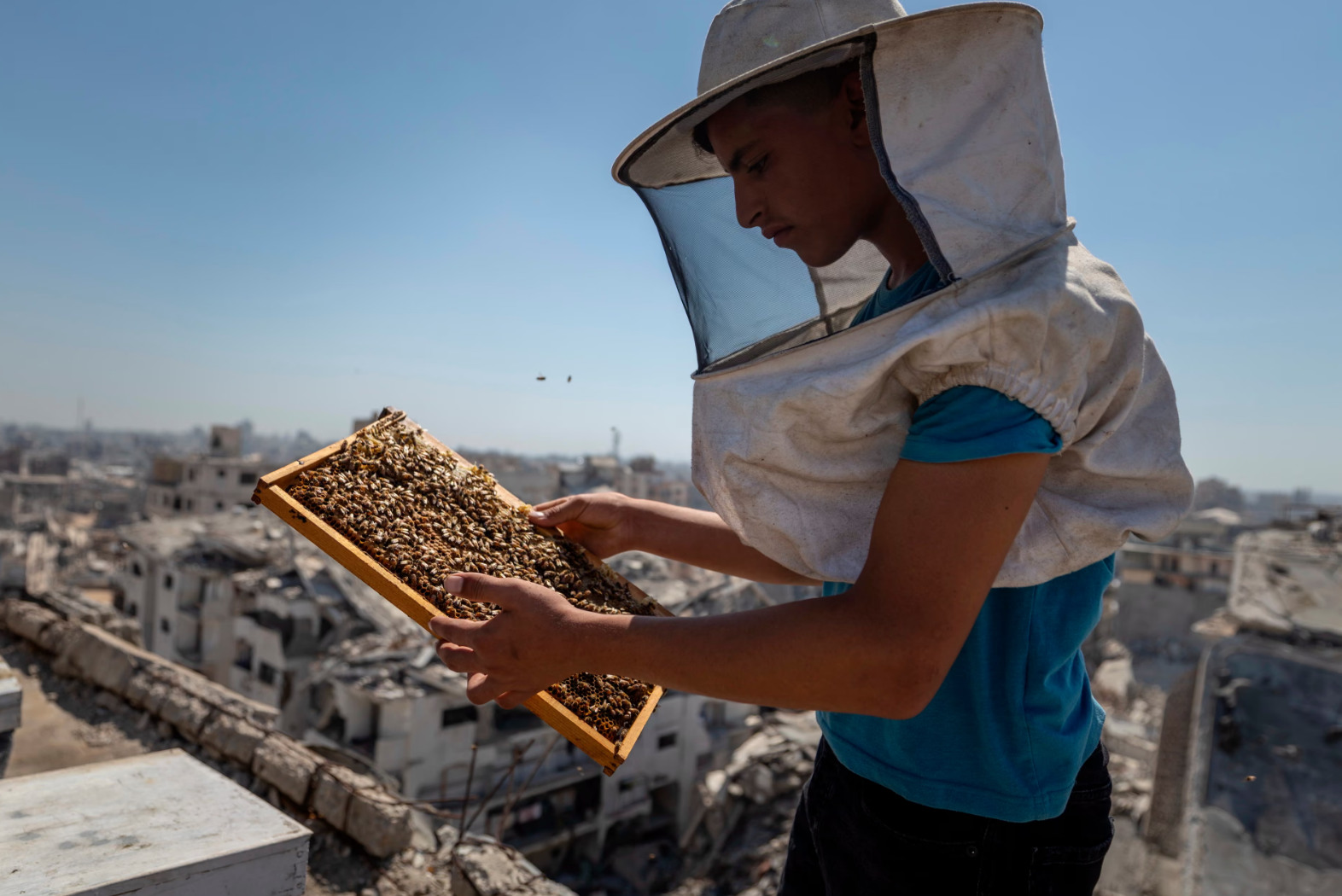
Despite these obstacles, al-Dabba believes beekeeping remains essential not only for honey production but also for supporting agriculture.
“There can be no sustainable agriculture without bees. Supporting beekeepers means supporting food production and the livelihoods of thousands of families,” he says.
Standing among the hives on the damaged building’s rooftop, al-Dabba says the bees remind him of the people of Gaza.
“Bees are like the people here. They keep working despite hardship, and they always find their way back to the hive.”
For him, every surviving hive carries a message that goes beyond honey production: “As long as there is one hive and one beekeeper holding on to this profession, there is hope that life can begin again.”
No comments yet. Be the first to share your thoughts.