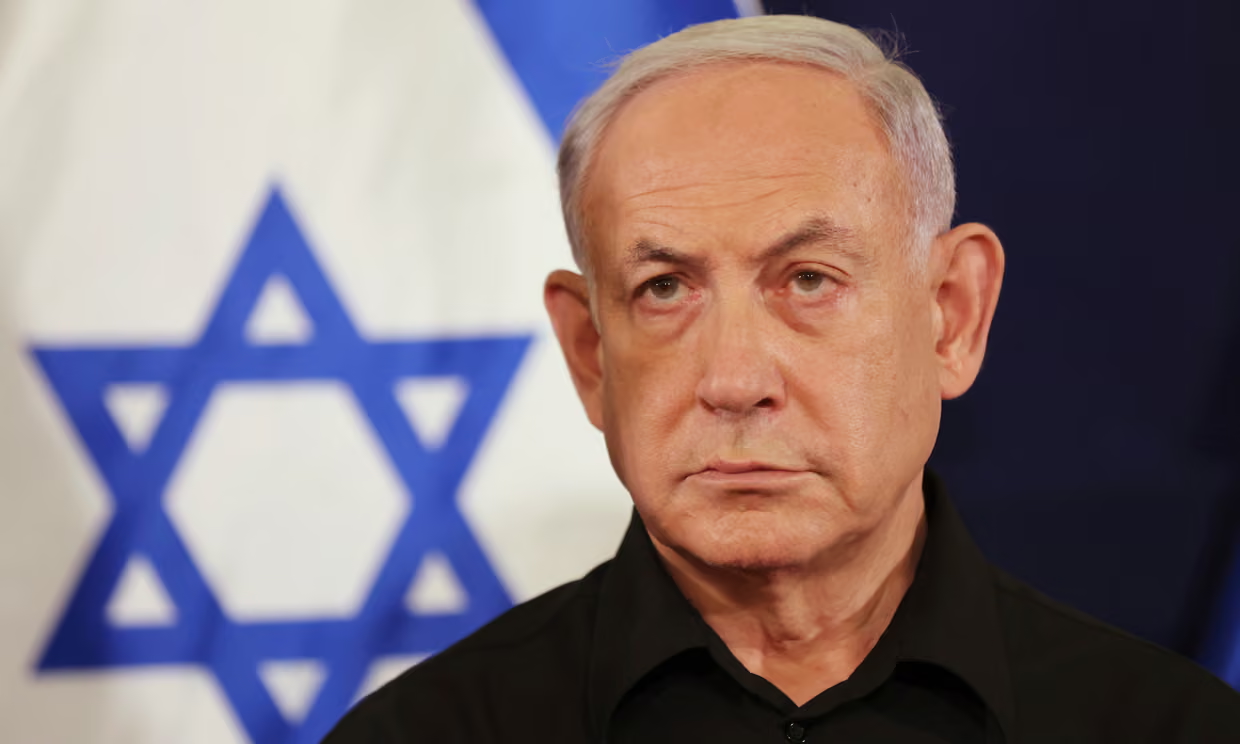
Israeli Prime Minister Benjamin Netanyahu allowed a proposed Gaza hostage agreement to collapse in July 2024 despite initial backing from both sides, journalist Nahum Barnea alleged in an opinion column published by Ynet.
Barnea’s account links the negotiations to an approach by hostage families to Karim Khan, then prosecutor of the International Criminal Court, seeking relief from prospective proceedings against Netanyahu and then defence minister Yoav Gallant.
The account does not establish that the court approved an arrangement. Its references to cancelling arrest warrants also require a distinction: according to Associated Press reporting, judges issued warrants against Netanyahu and Gallant on 21 November 2024, months after the negotiations described by Barnea.
Barnea wrote that Netanyahu and Hamas leader Yahya Sinwar had accepted the proposed deal in principle. He said Israeli negotiators supported it and that an arrangement involving sensors and an Egyptian commitment had addressed the dispute over the Philadelphi Corridor along Gaza’s border with Egypt.
According to his column, the Hostages and Missing Families Forum approached Khan to help facilitate an agreement. Barnea alleged that Khan was willing to pursue relief for Netanyahu and Gallant, with corresponding relief envisaged for Hamas leaders.
The legal framework sets conditions on decisions to halt proceedings. Article 53 of the Rome Statute allows the prosecutor to decide against proceeding on grounds involving the interests of justice, taking account of the gravity of the crimes and victims’ interests.
A decision based solely on those grounds becomes effective only if confirmed by the court’s Pre-Trial Chamber. That provision does not establish an automatic entitlement to a pardon for participating in peace negotiations.
Separately, Article 16 allows the UN Security Council to request a renewable 12-month deferral of an investigation or prosecution through a resolution adopted under Chapter VII of the UN Charter.
AP reported that the November 2024 warrants concerned alleged war crimes and crimes against humanity, which Israeli officials denied. Netanyahu condemned the court’s decision, while Gallant also rejected it.
Neither the statutory provisions nor the later issuance of warrants independently confirms Barnea’s account of what Khan offered during the hostage negotiations.


