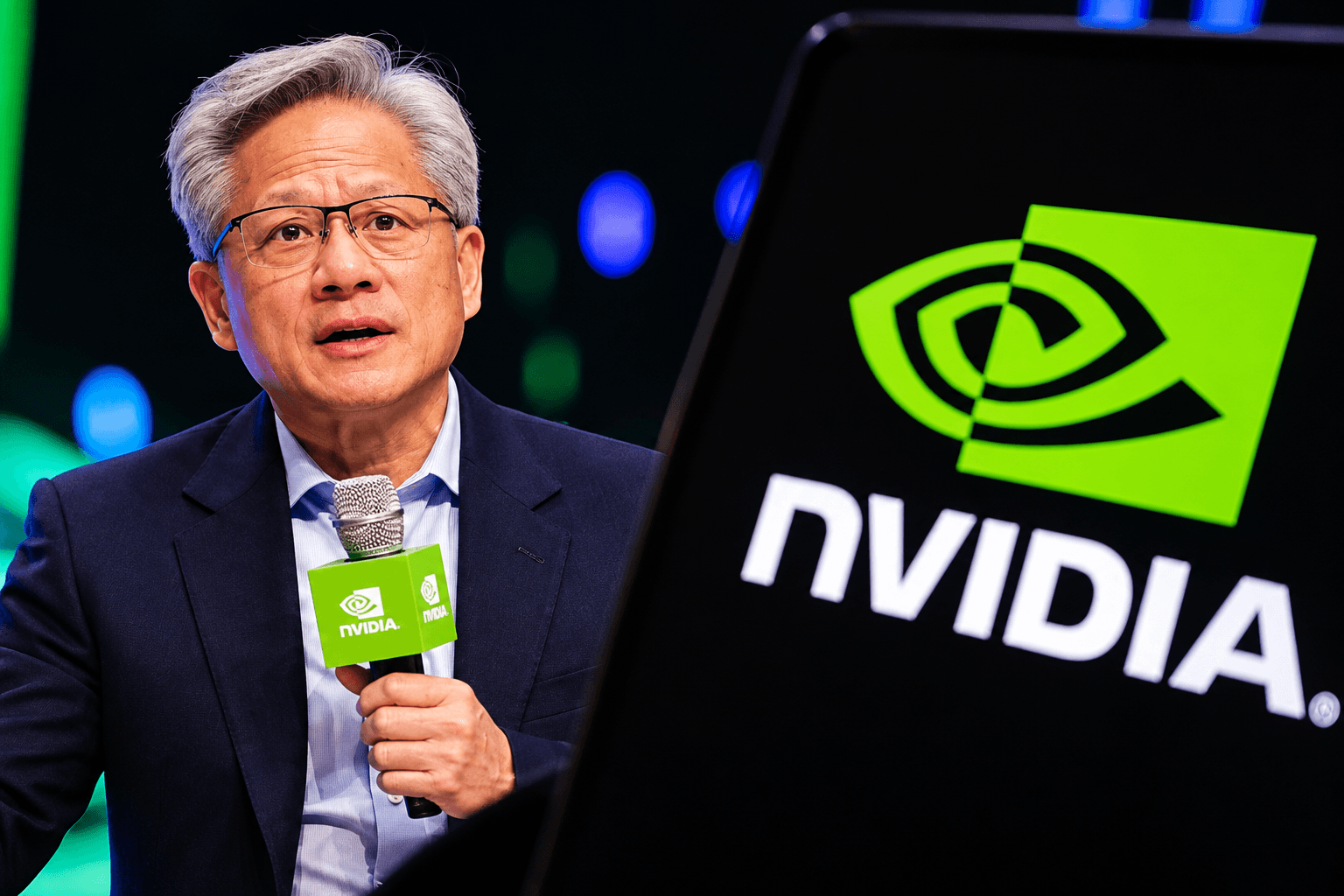
Nvidia's leadership crisis is drawing scrutiny from US lawmakers and investors over the future of artificial intelligence financing and exports of advanced computer chips to China.
The company's shares have lost more than $1.8 trillion in market value since reaching a record high on 6 October, falling by more than 30%, according to Reuters. The decline has coincided with growing concerns about the company's leadership, business relationships and exposure to export-control investigations.
The US chipmaker's board accepted the resignation of co-founder Jensen Huang as president and chief executive on 11 November, according to a filing with the Securities and Exchange Commission. Chief Financial Officer Colette Kress was appointed interim chief executive, while Harvey C. Jones became the company's first board chairman.
The departure followed revelations about Huang's extramarital relationships, including one with Alice Huang, a former executive at Singapore-based technology company Megaspeed International. US authorities suspect Alice Huang of working for Chinese intelligence, but the allegation has not been independently verified by Reuters. China has rejected the accusation.
Huang acknowledged infidelity and apologised to his family and colleagues. Nvidia's independent directors have commissioned an investigation by law firm Wachtell, Lipton, Rosen & Katz, Reuters reported.
The controversy extends beyond corporate leadership to the financial arrangements supporting the expansion of artificial intelligence infrastructure.
Nvidia has invested in companies developing AI systems and infrastructure that subsequently purchase its processors. The arrangement, sometimes described as circular financing, has attracted criticism because the chipmaker can help finance demand for its own products.
Reuters reported that Kress and members of her finance team had challenged some of Huang's investment commitments, including arrangements involving OpenAI and AI infrastructure companies such as Lambda.
A proposed $250 billion plan to support an OpenAI data centre project in Ohio was subsequently reduced to $120 billion, Reuters reported. The disagreements exposed different approaches within Nvidia to financing customers and expanding the market for its technology.
Kress, who joined Nvidia in 2013, will now oversee the company while its board searches for a permanent chief executive. Reuters reported that investors and industry analysts remain divided over whether her financial background can preserve the technological ambition that characterised Huang's leadership.
Washington's response could have consequences for other companies operating in the AI sector.
Congressional committees are seeking testimony from Huang and Commerce Secretary Howard Lutnick over the company's business dealings and possible diversion of advanced chips to China. The House Foreign Affairs Committee, the House Select Committee on China and the House Intelligence Committee requested a closed-door interview with Huang on 1 December.
Senate Banking Committee Chairman Tim Scott has also requested testimony from Huang and Lutnick. Republican and Democratic lawmakers have called for greater scrutiny of exports to Chinese companies and the enforcement of existing restrictions.
The Associated Press quoted Lian Jye Su, chief analyst at technology research firm Omdia, as saying: "The scandal, in many ways, encapsulates the rivalry, where concerns around national security, export control, and foreign policy get intertwined."
The US investigation into Megaspeed centres partly on allegations that advanced Nvidia processors were redirected to Chinese customers in breach of American export restrictions. The company has been accused of circumventing those controls, allegations it has denied.
The dispute has also brought renewed attention to Washington's policy on semiconductor exports. President Donald Trump previously authorised sales of Nvidia's H200 processors to China, although the company has argued that access to the Chinese market is important for maintaining the competitiveness of American technology.
Chinese officials have rejected the espionage allegations and warned Washington against using them to introduce additional restrictions. Foreign Ministry spokesperson Mao Ning said the United States should stop using what she described as an unsubstantiated spy narrative as a justification for technology restrictions, according to the Associated Press.
The consequences for the wider AI industry could emerge through several channels. Tighter export controls could limit access to advanced processors, while greater uncertainty surrounding investments could make financing large data centre projects more difficult.
Nvidia's position is particularly important because its processors are widely used to train and operate advanced AI systems. A sustained reduction in its investment activity could also affect companies that depend on its financing and computing infrastructure.
However, the current evidence does not establish that the company's crisis will trigger a sector-wide collapse. Reuters reported that concerns about circular financing had already been developing before Huang's departure, while the company's leadership transition has added another source of uncertainty for investors.
Nvidia is scheduled to publish its third-quarter fiscal 2027 financial results on 17 November. The figures will provide investors with another opportunity to assess the company's performance as it begins operating under interim leadership.