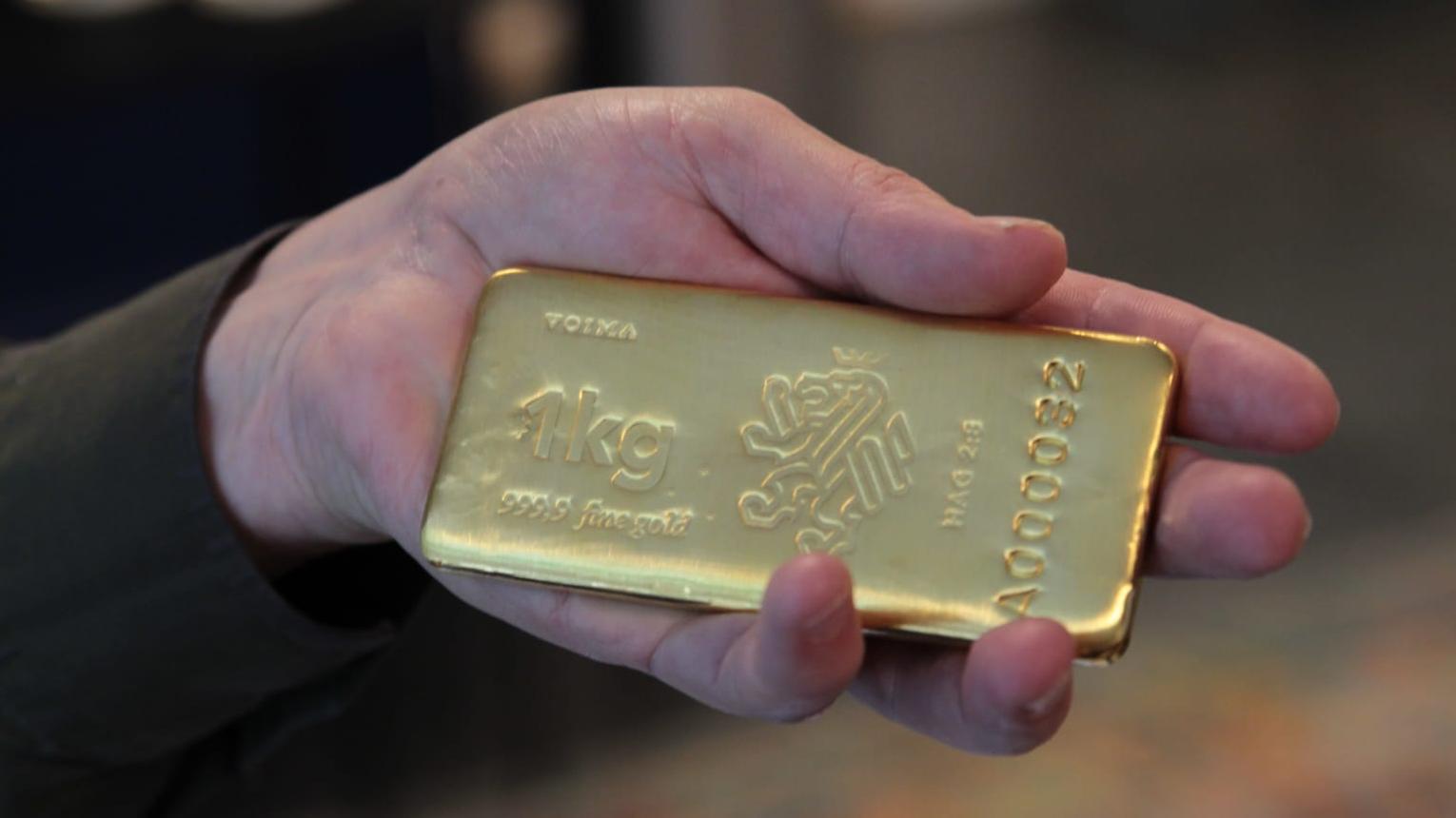
Gold has fallen sharply from its January record despite the Iran war, while the dollar and Swiss franc have strengthened as investors reassess which assets can protect them during market turmoil.
The precious metal was trading near $4,175 an ounce on 20 October, well below its January peak of $5,595, according to Reuters. The dollar, by contrast, has gained approximately 4% since the conflict began in late February.
The contrasting performances come as technology shares face renewed selling pressure over artificial intelligence valuations, energy costs remain elevated and investors grow increasingly concerned about government borrowing.
Traditional safe havens have offered uneven protection, leaving investors to distinguish between assets that respond to geopolitical shocks and those better suited to financial instability.
Gold's protection comes under scrutiny
Gold has historically attracted buyers during wars, inflationary periods and financial crises because it is not tied to the creditworthiness of a government or company.
Its performance during the current conflict has been less straightforward.
Investors sold gold after the escalation involving Iran in February, partly to raise cash and cover losses elsewhere in their portfolios.
A study published in the journal Economics Letters in June examined gold, Bitcoin and energy commodities during the initial escalation. It found that gold offered, at best, limited safe-haven protection during the period studied, while Bitcoin failed to demonstrate robust defensive qualities.
Oil provided the clearest short-term protection against that particular shock because the conflict directly threatened energy supplies.
The findings do not establish how these assets will behave during future crises, but they illustrate why an investment's reputation as a safe haven does not guarantee positive returns.
Gold subsequently recovered some ground in August as concerns over inflation and US monetary policy intensified.
Central bank purchases have continued to support demand, while higher interest rates make non-yielding gold less attractive relative to interest-paying assets.
Julius Baer analyst Carsten Menke told Reuters that long-term demand could benefit from central bank purchases and concerns over the growing cost of servicing US debt.
Dollar gains face a technology test
The US dollar has benefited from elevated American interest rates, economic resilience and the country's position as a major energy producer.
But its strength may also expose it to changing investor sentiment towards US technology shares.
Large capital inflows into American equities have supported demand for dollars, particularly during the expansion of investment in artificial intelligence.
A sustained withdrawal from those investments could weaken one source of currency demand.
Societe Generale currency strategist Kit Juckes told Reuters that the dollar might be approaching the later stages of its upward cycle, although he considered a sustained decline difficult to justify while the energy crisis persisted.
The US national debt, which exceeds $40 trillion, remains another concern for investors assessing the currency's longer-term prospects.
Swiss franc attracts European demand
Europe's political and fiscal uncertainty has strengthened demand for the Swiss franc.
The currency has gained more than 2% against the euro since the beginning of October, putting it on course for its largest monthly advance since late 2023.
ABN Amro strategist Georgette Boele attributed the appreciation to concerns about French public finances and election uncertainty in France and Spain, according to Reuters.
Switzerland's interest rate of 0% has traditionally made the franc attractive for carry trades, in which investors borrow in a low-interest currency to purchase higher-yielding assets.
Those transactions can reverse rapidly during financial stress, adding to demand for the currency when traders close their positions.
German and short-term bonds find favour
Government bonds have also produced mixed results as rising debt and inflation concerns push borrowing costs higher.
Earlier in October, 10-year bond yields in the United States and France reached their highest levels in 24 years. German bond yields declined during the same period, meaning their prices rose.
Investors have treated Germany's AAA-rated government debt as a relatively dependable European asset during the turmoil.
Bundesbank President Joachim Nagel said Germany would remain an anchor of stability in European financial markets.
Some investment managers are also favouring shorter-maturity government debt over longer-term bonds.
Shorter maturities generally carry less interest-rate sensitivity, reducing the scale of potential price losses when yields rise.
Rory McPherson, chief market strategist at Wren Sterling, told Reuters that concerns about government debt and deficits had discouraged his firm from buying longer-dated bonds.
The difference between these assets matters: currencies can fluctuate with capital flows, gold can be sold to raise liquidity, and even highly rated bonds can lose value when interest rates increase.
Their recent performance shows why the effectiveness of a safe haven depends on the source of market stress, the investor's currency and how long the asset is held.