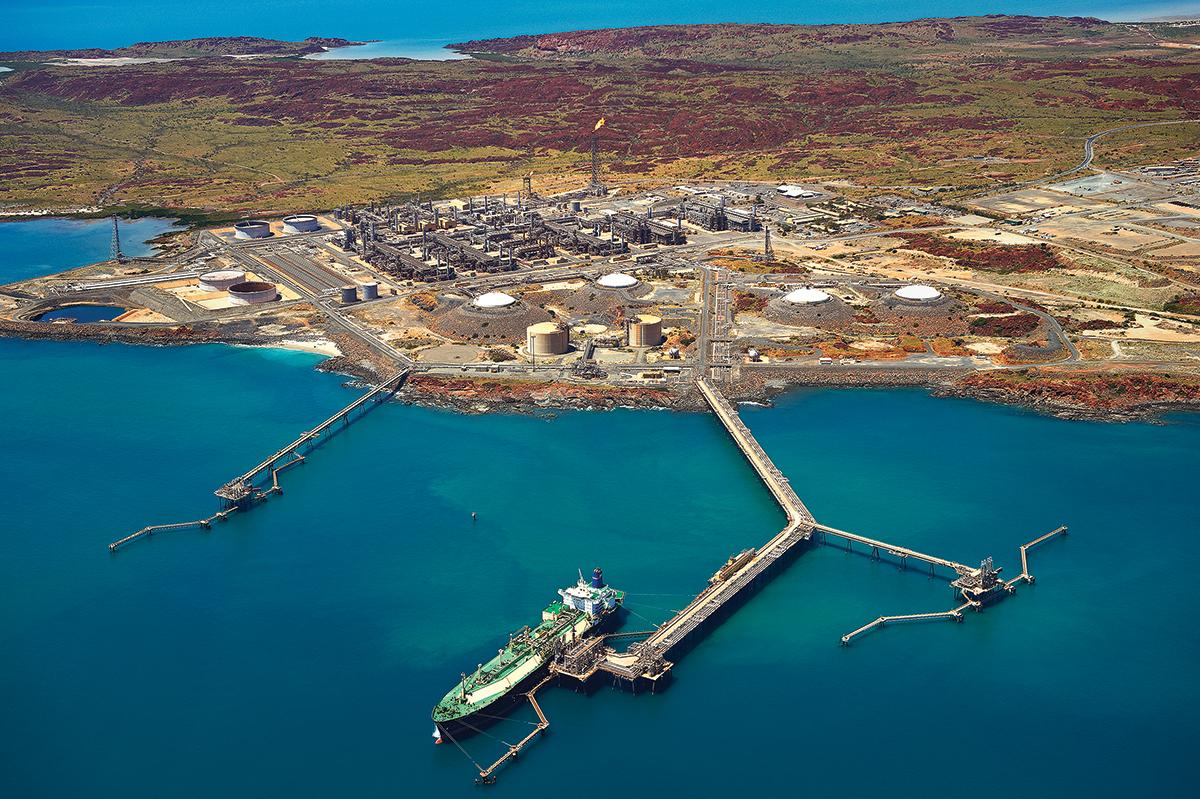
Woodside Energy has abandoned a long-term emissions target and plans to spend $5 billion on new energy and lower-carbon projects by 2030, shifting its focus towards oil and gas after reporting a 7% rise in first-half profit.
Chief executive Liz Westcott said on Tuesday that the Australian energy group would also conduct a strategic review of its Beaumont New Ammonia project in Texas as it narrows investment priorities and targets $350 million in cost reductions from 2028.
“These targets were established in a different market context,” Westcott said.
Woodside will retain its commitment to reducing its direct operational emissions and said it remained on track towards its 2030 target, but it is dropping its longer-term Scope 3 emissions objective covering emissions generated when customers use its products.
Westcott told Reuters that Woodside had tried to build a commercially viable portfolio of clean-energy investments but had struggled to secure sufficient demand.
Referring to H2OK, a proposed green hydrogen project in Oklahoma that Woodside cancelled in 2025, she said customers had not emerged to support the investment.
“We’re looking at the market and we do not see a line of sight to investing that $5 billion by 2030,” she said.
Profit beats expectations
Woodside reported underlying net profit after tax of $1.33 billion for the six months ending 30 June, up 7% from the same period last year and slightly above the $1.32 billion consensus estimate compiled by Visible Alpha.
The company's average realised price rose to $74 per barrel of oil equivalent from $61.70 a year earlier, helped by higher energy prices and its decision to redirect cargoes towards more profitable markets during disruptions linked to the Middle East conflict.
Woodside said it expected further trading gains from those shifts.
The company raised its interim dividend to 57 US cents a share, from 53 cents a year earlier.
It maintained its 2026 production forecast of between 174 million and 185 million barrels of oil equivalent and reaffirmed planned capital expenditure of between $4 billion and $4.5 billion.
Woodside's shares were down about 1% at A$33.45 during Tuesday trading, while Australia's benchmark S&P/ASX 200 index was sharply higher.
Beaumont project under review
The strategy puts fresh attention on Woodside's Beaumont New Ammonia project, which it acquired from OCI Global for $2.35 billion in 2024.
The 1.1-million-tonne-a-year plant in Beaumont, Texas, produced its first ammonia in December 2025. Woodside had presented the development as an important part of its lower-carbon strategy, with plans to produce lower-carbon ammonia using hydrogen paired with carbon capture and storage.
Woodside's own project material describes Beaumont as potentially supplying ammonia for power generation, shipping and industrial applications.
Lower-carbon production has been targeted for the second half of 2026, dependent on the supply of lower-carbon hydrogen and the start of ExxonMobil's associated carbon capture and storage operations.
Westcott did not announce a sale or closure of the project on Tuesday, saying instead that it would be subjected to a strategic review.
MST Marquee analyst Saul Kavonic told Reuters that Woodside's sharper focus on its core oil and gas operations was positive but warned that disposing of Beaumont could prove difficult.
Retreat from earlier transition plans
Woodside's $5 billion clean-energy investment ambition was established under former chief executive Meg O'Neill in 2021, when large oil and gas producers faced increasing investor pressure to demonstrate how their businesses would adapt to a lower-carbon energy system.
Shareholder dissatisfaction persisted despite those plans. In 2024, 57.8% of votes cast rejected Woodside's Climate Transition Action Plan, with critics arguing that its strategy did not go far enough in reducing emissions.
Other major oil companies have also scaled back parts of their renewable-energy ambitions in recent years, including BP and Shell, while emphasising profitability and conventional energy production.
Energy security has gained additional importance this year as the Iran war and disruption to shipping through the Strait of Hormuz have tightened oil and liquefied natural gas supplies and lifted prices.
Woodside has benefited from that environment because a large part of its LNG portfolio remains linked to oil prices. Reuters reported that about 75% of the company's LNG portfolio will remain oil-linked through 2028.
The company said its strong first-half performance was supporting shareholder returns while it continued work on major oil and gas growth projects.