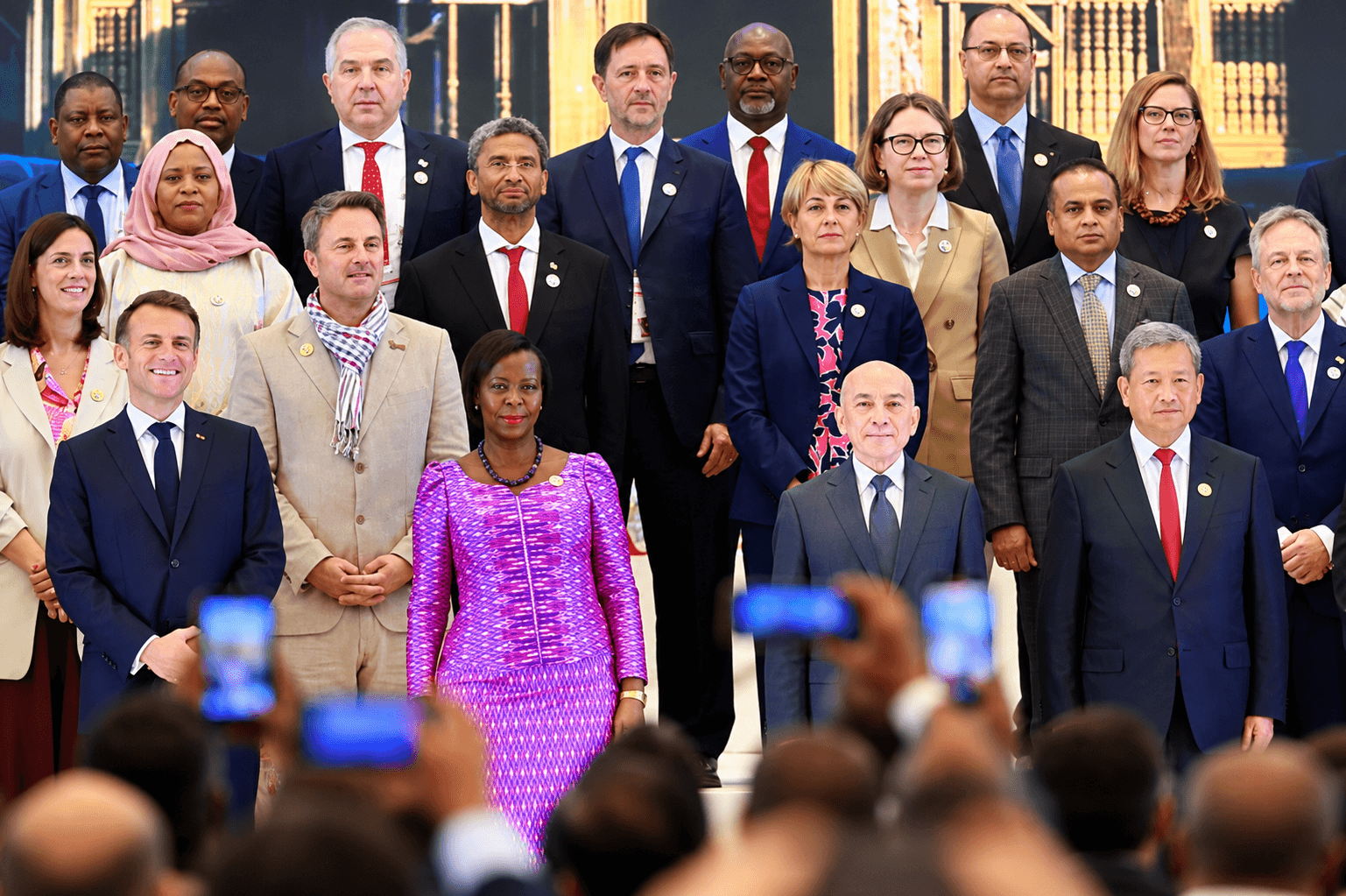
The International Organisation of La Francophonie has postponed its leadership election until 2027 after a diplomatic dispute between Rwanda and the Democratic Republic of Congo prevented agreement at its summit in Cambodia on 16 November.
The decision gives incumbent Secretary-General Louise Mushikiwabo another 12 months in office while member states reconsider the organisation's electoral procedures. The election had been scheduled to take place during the 20th summit in Phnom Penh.
The Cambodian presidency proposed the extension as a compromise after negotiations failed to produce agreement on either a candidate or a vote. The organisation's official statement said the proposal was accepted by the heads of state and government.
The Democratic Republic of Congo's Foreign Minister Thérèse Kayikwamba Wagner described the outcome as a "wise compromise" intended to preserve unity within the organisation, according to the Associated Press.
The dispute centred on Mushikiwabo's bid for a third consecutive term and opposition from Kinshasa, which had nominated former culture minister Juliana Amato Lumumba.
The other candidates were former Mauritanian minister Coumba Bâ and former Romanian prime minister Dacian Cioloș. Negotiations reportedly considered Cioloș as a possible consensus candidate, but no agreement emerged.
The Congolese government had threatened to withdraw from the organisation if Mushikiwabo secured another term. Such a departure would remove one of the organisation's most important members. The Democratic Republic of Congo has 57.3 million French speakers, making it the world's second-largest French-speaking country after France, according to figures cited by the Associated Press.
Kinshasa's opposition is closely connected to its wider dispute with Kigali. The Congolese government accuses Rwanda of supporting the M23 armed group, which operates in eastern Congo. Rwanda denies backing the group. The United States and United Nations experts have also accused Rwanda of supporting M23.
The disagreement has exposed divisions within an organisation that brings together countries and governments sharing the French language. It currently comprises 92 members and participating governments, including 53 full members with voting rights, five associate members and 34 observers.
The election postponement has also prompted questions about the organisation's commitment to its own rules. Regulations adopted in March 2022 specify that the secretary-general should be elected by consensus or, if agreement proves impossible, through a vote requiring a simple majority of members present and voting.
The procedure also provides for a secret ballot. Despite that provision, leaders opted to delay the election rather than proceed with a vote.
Political analysts quoted by Rwanda's New Times questioned the decision, arguing that the organisation should have followed the established electoral procedure. The OIF's official account confirmed that the Cambodian proposal was adopted as a compromise.
France also played a role in efforts to resolve the disagreement. President Emmanuel Macron had urged Rwanda and Congo to find a mutually acceptable candidate before the summit. His office welcomed the postponement, saying it would help overcome divisions and preserve unity.
France remains an influential member of the organisation. It was the largest contributor to the OIF's 2026 budget, providing a significant financial stake in its future, according to the Associated Press.
The leadership dispute also comes after Mali, Niger and Burkina Faso announced their withdrawal from the organisation in March 2025, following their suspensions after military coups.
Mushikiwabo, who has led the OIF since 2018, said she respected the collective decision and would carry out the responsibilities assigned to her. During the transition, she is expected to help clarify the electoral rules before leaving office.
The organisation's next summit is scheduled to take place in Ottawa, Canada. A new secretary-general is expected to be elected during 2027.