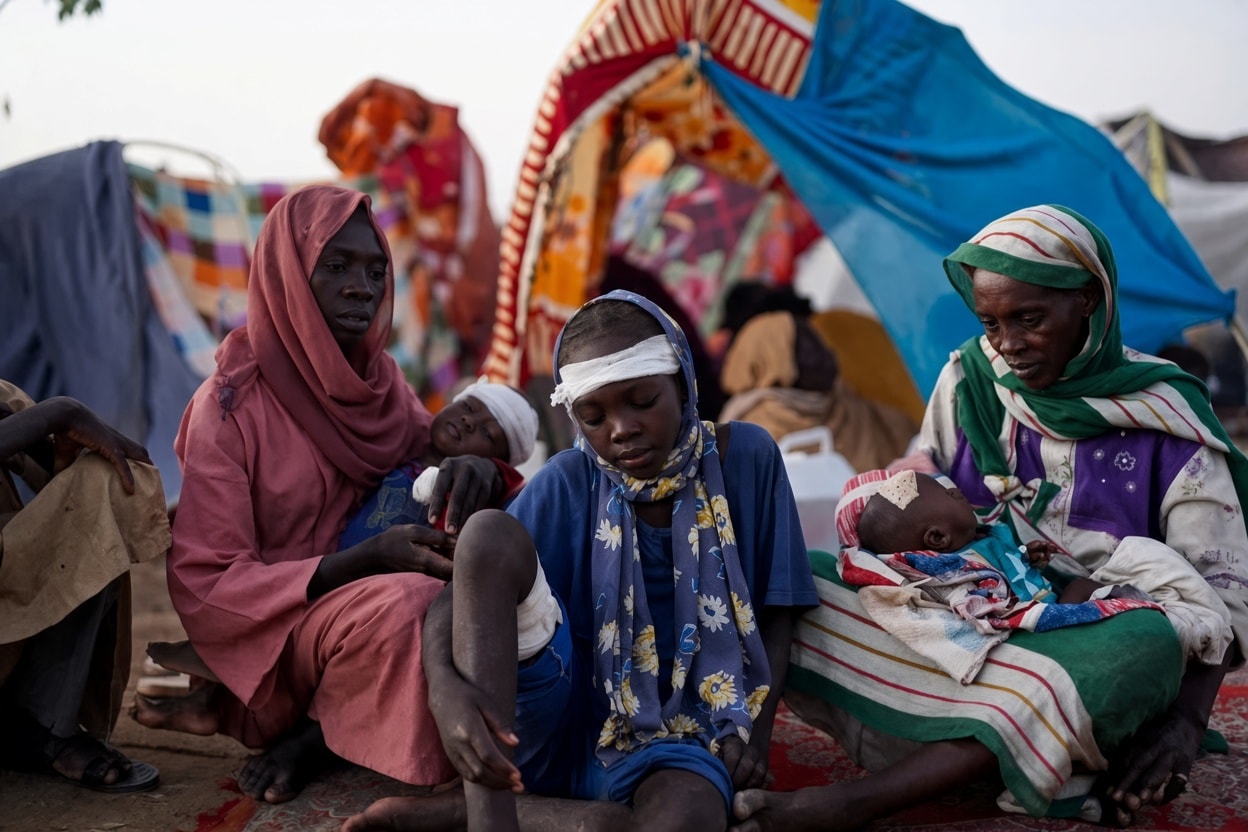
North Darfur’s health ministry has announced a six-point emergency plan to provide healthcare to people displaced from El Fasher, where the collapse of medical services has left thousands dependent on facilities in safer parts of Sudan.
The plan includes expanding basic healthcare, reducing malnutrition, increasing routine childhood vaccinations, strengthening maternal and child health services, providing psychological support and sending medical convoys to areas where services are lacking. It also prioritises life-saving medicines for people with chronic illnesses, according to North Darfur’s director-general of health, Mutasim Ibrahim Yahya.
Yahya said the state ministry had coordinated with federal authorities to provide healthcare for displaced people in host states. He also said authorities had developed an early-recovery roadmap with humanitarian partners to restore services once security conditions allow.
The plan is being introduced against a far larger displacement crisis than the initial figures cited in the announcement suggest. The International Organization for Migration estimated that 138,194 people, or 30,159 households, had been displaced from El Fasher and surrounding villages between 26 October 2025 and 1 March 2026. About 66% remained within North Darfur, including more than 66,000 people in El Fasher locality and about 11,500 in Tawila locality.
UNICEF reported that more than 106,000 people had fled El Fasher and surrounding villages in the month following the escalation of violence in October 2025. Many settled in Tawila, where rapidly expanding informal sites placed additional pressure on already limited services. Children in overcrowded sites faced rising cases of measles, suspected cholera and dengue, alongside shortages of shelter, medical supplies and safe water.
The health ministry's longer-term plan covers the period after the restoration of stability in North Darfur. It includes building new health facilities, rehabilitating damaged ones, supplying medical equipment, retraining health workers, expanding preventive programmes and maintaining reliable supplies of medicines.
Yahya identified access difficulties, shortages of medicines and medical consumables, electricity cuts and a lack of health workers as major obstacles. He called on international and regional organisations to increase urgent support for North Darfur's health sector.
The health system in El Fasher suffered a devastating collapse after the Rapid Support Forces (RSF) seized the city in October 2025. The Saudi Maternity Hospital, which had been the city's only partially functioning hospital, was attacked repeatedly before reports emerged of mass killings there on 28 October.
The World Health Organization said more than 460 patients and their companions were reportedly killed at the hospital and that six health workers were abducted. It said the facility had been attacked for the fourth time in a month two days earlier, killing a nurse and injuring three other health workers.
More recent investigations have further documented the scale of abuses surrounding the fall of El Fasher. Amnesty International said in July 2026 that its investigation, based on 247 interviews and open-source evidence, concluded that RSF forces committed crimes against humanity during the siege and capture of the city, including murder, forcible transfer, torture and sexual violence.
The RSF continues to control El Fasher, according to a July 2026 UK government assessment of territorial control in Sudan. The city has also remained exposed to violence: local reports in August said drone strikes hit parts of El Fasher, although casualty figures from those attacks could not be independently verified.
For displaced families, the immediate challenge remains access to functioning healthcare while host communities and humanitarian organisations operate with limited resources.


