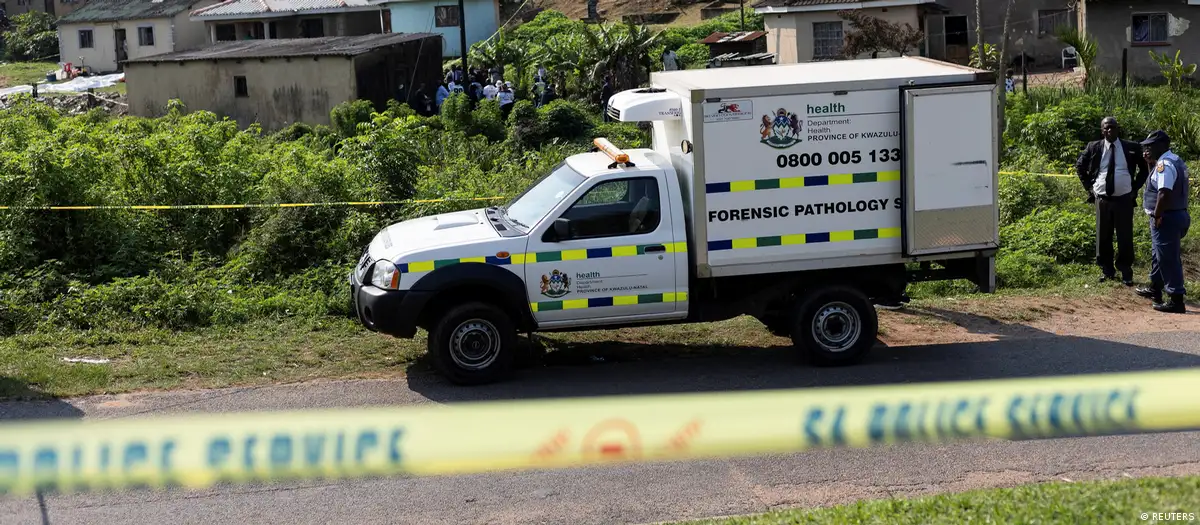
Nigeria confirmed an Ebola case in its capital, Abuja, on 20 October, with health authorities identifying 44 potential contacts as the outbreak spreads across Africa, Health Minister Muhammad Ali Pate said.
The patient, a woman who recently travelled through Uganda, is receiving treatment in isolation after testing positive for the virus at a private hospital.
"She is in isolation, and she is receiving quality medical care," Pate told Nigeria's public broadcaster NTA, adding that contact tracing was under way.
The diagnosis brings the outbreak to Africa's most populous country as health authorities confront the rapid spread of the Bundibugyo strain of Ebola, which first emerged in the Democratic Republic of the Congo in May.
According to the Associated Press, the woman began experiencing symptoms on 7 October and was admitted to a private hospital in Abuja on 11 October. Her exact arrival date in Nigeria has not been established.
Uganda's Ministry of Health disputed suggestions that the patient had contracted the virus within its borders.
The ministry said the woman had visited eastern Congo for business before passing through Uganda without symptoms in early October.
"Travel through Uganda does not establish that infection occurred here," the ministry said, according to Reuters.
Ugandan officials said the location of exposure remained under investigation and that the country had no active confirmed Ebola cases.
Uganda previously recorded infections linked to the outbreak but was declared free of the virus by the World Health Organization in August.
Pate said Nigeria had the public health experience and infrastructure needed to respond, citing the country's containment of an earlier Ebola outbreak in 2014.
Nigeria established an Ebola task force in June and increased surveillance after infections were detected in Kenya earlier this month.
Across the region, the outbreak has continued to expand.
The US Centers for Disease Control and Prevention reported 9,552 confirmed cases and 4,602 deaths in the Democratic Republic of the Congo as of 20 October.
Its figures put the wider outbreak at 9,582 confirmed infections and 4,605 deaths across the countries included in its published surveillance totals.
Kenya reported its ninth infection on 20 October, with the latest patient identified as a close family member of the country's first confirmed case.
Kenyan Director-General for Health Patrick Amoth said all nine infections belonged to one cluster, with no evidence of transmission beyond that group.
Authorities had placed 134 of 135 identified contacts in quarantine, according to the Kenyan Health Ministry.
The Africa Centres for Disease Control and Prevention has warned that the outbreak poses an exceptionally serious regional health threat.
Its director-general, Jean Kaseya, described the Bundibugyo outbreak as the most geographically extensive in Ebola's history, affecting countries across three African regions.
The World Health Organization has classified the outbreak as a public health emergency of international concern.
Unlike the Zaire strain of Ebola, the Bundibugyo virus has no licensed vaccine or specific approved treatment. Early supportive medical care can improve patients' chances of survival.
The outbreak has placed additional pressure on health services in eastern Congo, where armed conflict, population displacement and difficult access to medical facilities have complicated disease surveillance and treatment.
Nigeria's immediate response remains focused on isolating the confirmed patient, identifying potential exposures and preventing further transmission among the 44 contacts already identified.