
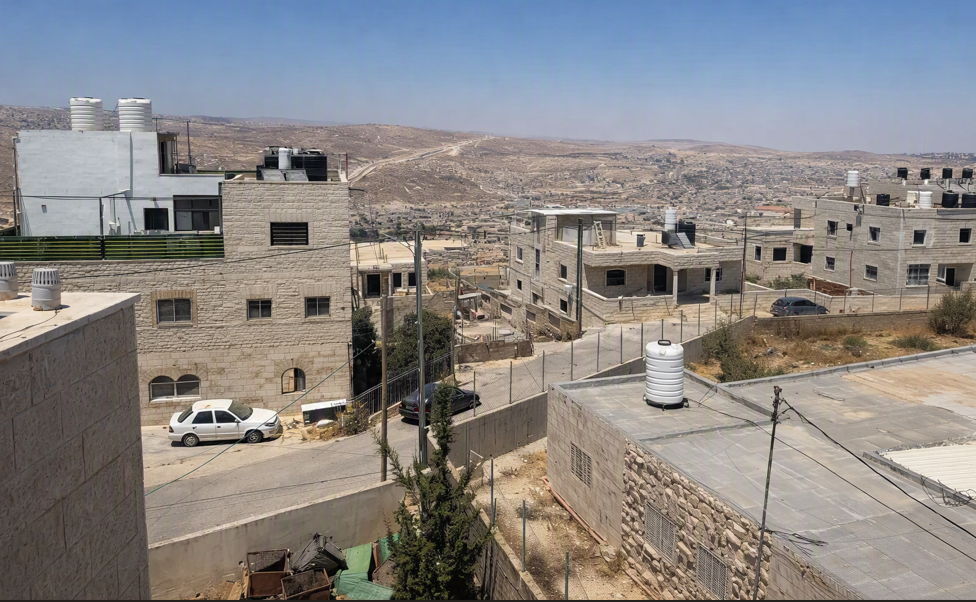
Jerusalem - The situation in Jaba village north of Jerusalem continues to worsen as residents face Israeli demolition operations and land seizure decisions, which they say have reduced available areas for urban development and surrounded the village with settlements, military bases, commercial facilities, and settlement-related roads.
On July 21, an Israeli military order was issued to seize nearly six dunams of land belonging to the village, amid warnings that the project linked to the decision would isolate additional areas and limit residents' ability to expand their communities.
The decision comes as Jaba faces increasing geographical restrictions due to its surroundings, including Israeli settlements, military installations, commercial facilities, and roads serving those areas, further reducing the remaining land available to residents.
No Space for Urban Expansion
Jaba village council head Taha Basharat received the order from the Palestinian-Israeli coordination office, an official body responsible for coordination with the Israeli side. The order stipulates the seizure of land plots with a total area of 5.8 dunams near the Jaba checkpoint.
Basharat said the confiscation is intended to serve a road that was opened to support the route of the Israeli separation barrier toward the Neve Yaakov settlement.
He explained that the issue is not limited to the seizure of nearly six dunams, but also concerns the road itself, which has affected lands located on both its eastern and western sides.
"The land there has effectively become unusable," Basharat said, noting that the road has prevented residents from benefiting from large areas surrounding it.
He added that Jaba has become surrounded from several directions, with the Adam settlement located east of the village on its lands, while a road was constructed and expanded in the village plain. To the north is the Rami Levy settlement-linked commercial store, while settlements in the west include quarries and an Israeli military base.
Continued Restrictions and Isolation
According to Basharat, the village council had hoped to expand construction and urban development in the area and enlarge the village's structural plan. However, he said the new road has eliminated opportunities for expansion from all sides.
He stated that these measures are increasing the isolation of the village and altering its geographical reality, adding that northern Jerusalem areas are witnessing what he described as a "strong campaign" due to their proximity to the city.
Basharat said that Jaba originally covered an area of around 23,000 dunams, but only about 2,000 dunams remain today. He explained that approximately 700 dunams of the remaining land are classified as Area B, which is under Palestinian administrative control according to the Oslo Accords, while the rest is classified as Area C, which remains under Israeli security and administrative control under the same agreements.
Despite the restrictions, Basharat stressed that residents will continue to remain on their land, saying: "We will continue to stand firm, as we have no option but to remain steadfast."
No comments yet. Be the first to share your thoughts.