
CEUTA / FNIDEQ — Spain and Morocco launched a coordinated security response on Friday after an unprecedented wave of irregular migration brought thousands of people into the Spanish enclave of Ceuta within 24 hours, overwhelming local authorities and leaving at least 18 people dead during crossing attempts.
Madrid reinforced Ceuta's border with additional police officers and military personnel, while Moroccan security forces expanded patrols, deployed water cannons, and tightened controls around the nearby border town of Fnideq in an effort to prevent further crossings.
Authorities said many migrants reached the enclave by swimming around coastal barriers or crossing through sections of the border that were unable to contain the sudden influx. Reception facilities in Ceuta were quickly overwhelmed as hundreds of new arrivals gathered across the city awaiting processing.
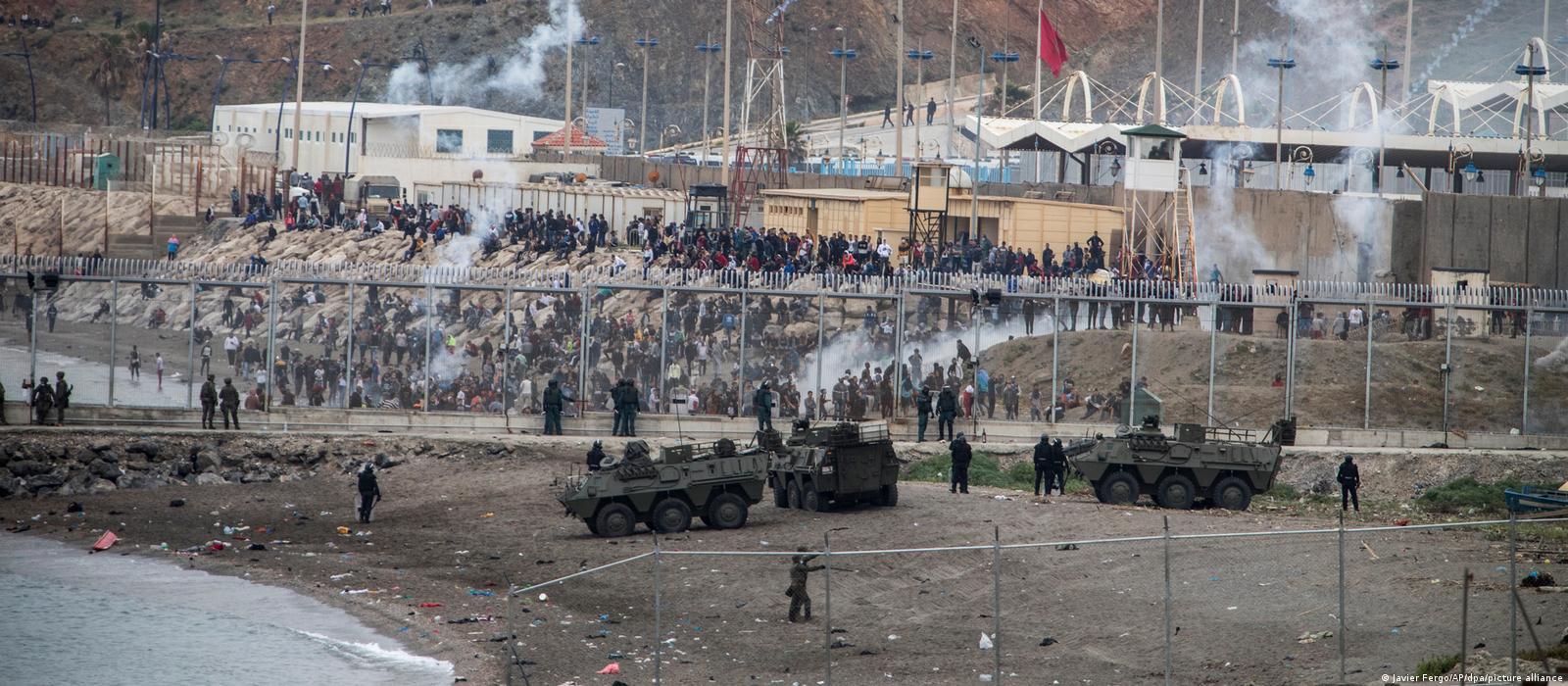
The exact scale of the crossings remains uncertain. Spain's Department of National Security briefly published an estimate suggesting that more than 49,000 people had entered Ceuta illegally within a single day before removing the statement without explanation. Although alternative estimates indicate a significantly lower figure, officials acknowledged the incident as one of the largest migration surges ever recorded at the enclave.
Prime Minister Pedro Sánchez traveled to Ceuta alongside Interior Minister Fernando Grande-Marlaska, pledging to restore control over the border and accelerate the return of migrants who entered irregularly while ensuring Spain's response complies with national court rulings and international legal obligations.
Spanish officials said the surge may have been influenced by a recent Supreme Court ruling restricting the immediate return of migrants intercepted at sea while attempting to reach Ceuta or Melilla. According to the government, human trafficking networks exploited the legal decision to encourage more migrants to attempt the dangerous crossing.
The developments sparked immediate political reactions across Europe. France announced increased checks along its border with Spain, while Italian Prime Minister Giorgia Meloni said Rome was prepared to consider extraordinary measures, including seeking restrictions related to Spain's participation in the Schengen free-travel area. Spanish Foreign Minister José Manuel Albares dismissed the criticism, calling instead for European solidarity in addressing the migration challenge.
Ceuta and Melilla, Spain's two autonomous cities on Morocco's Mediterranean coast, represent the European Union's only land borders with Africa and remain key gateways for migrants attempting to enter Europe. Although both territories regularly experience attempted crossings, officials described the latest influx as exceptional in both speed and scale.
Despite reinforced security operations, groups of migrants continued gathering along Morocco's northern coastline on Friday, searching for alternative routes toward Ceuta. Spanish authorities said coordination with Rabat would continue in the coming days to manage the situation and facilitate the return of those found to have entered the enclave irregularly.
No comments yet. Be the first to share your thoughts.