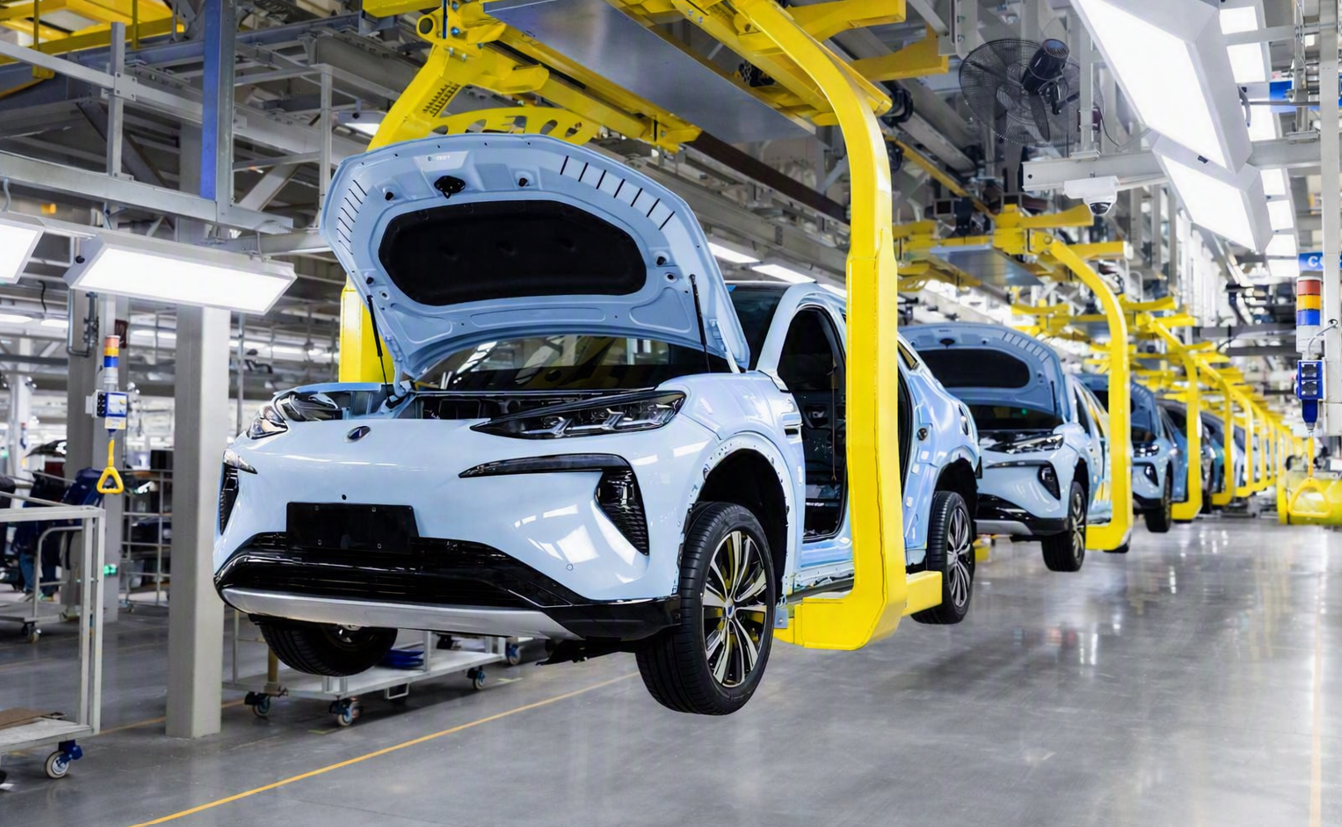
Chinese companies are deepening their presence in Europe’s automotive industry, moving beyond vehicle exports to acquire parts suppliers, expand local production and build distribution networks across the continent.
The Financial Times reported on 11 August that Chinese companies had acquired more than 130 European automotive-parts businesses since the mid-2000s, mainly in Germany and France, citing consultancy Rhodium Group. The acquisitions have raised concerns among European policymakers and carmakers about the growing role of Chinese suppliers in the region’s automotive supply chain.
The expansion is not limited to individual components. Chinese manufacturers are also increasing their vehicle sales in Europe at a time when domestic demand in China is weakening. Reuters reported on 11 August that Chinese vehicle exports rose 88.2% year-on-year in July to 923,000 units, while domestic sales fell 21.1% to 1.47 million.
The figures underline why overseas markets have become increasingly important to Chinese manufacturers. Europe is among the markets where the shift is most visible.
From exports to local production
Chinese companies have used several routes to establish themselves in Europe: exporting finished vehicles, acquiring European companies, forming joint ventures and investing in production facilities within or close to the EU market.
The acquisition of Volvo Cars by Geely in 2010 remains one of the most prominent examples. Geely completed its purchase of the Swedish carmaker from Ford for $1.8 billion.
More recently, Chinese manufacturers have expanded their European dealer and manufacturing networks. BYD said in July that it had signed its 200th dealer agreement in Germany, up from 26 locations at the start of 2025.
The strategy also helps companies navigate European trade barriers and local-content requirements. The Financial Times reported that some Chinese suppliers have used European acquisitions and joint ventures to establish a stronger local manufacturing presence and reduce their exposure to trade restrictions.
Electric cars gain ground
Chinese brands are making particularly rapid gains in electric vehicles.
Chinese-branded battery-electric vehicles accounted for 14.2% of sales across western European markets in the first five months of 2026, equivalent to roughly one in seven battery-electric cars, according to Schmidt Automotive Research data reported by the Guardian. Their share was nearly five percentage points higher than in the same period a year earlier.
The increase has come despite EU countervailing duties on battery-electric vehicles made in China. The rates vary by manufacturer, reaching 35.3% for SAIC and other non-cooperating companies, while BYD faces 17% and Geely 18.8%. The measures were introduced after an EU investigation concluded that Chinese battery-electric vehicle production benefited from subsidies that threatened economic injury to EU producers.
Chinese manufacturers have also been increasing their presence in plug-in hybrids, which currently face different treatment under EU trade rules. The Guardian reported that analysts expect Chinese companies to put greater emphasis on plug-in hybrids while they remain outside the additional duties applied to battery-electric vehicles.
The wider European market is moving rapidly towards electrified vehicles. ACEA data showed battery-electric cars accounted for 20.7% of new EU registrations in the first half of 2026, compared with 15.6% a year earlier. Plug-in hybrids represented another 9.8%, while hybrids accounted for 37.3%.
Pressure on European manufacturers
The rise of Chinese brands is adding to pressure on established European manufacturers, which are also dealing with high production costs and weaker competitiveness in some segments.
Volkswagen chief executive Oliver Blume has warned that European plug-in hybrids are struggling to compete with cheaper Chinese alternatives. The German carmaker is also undergoing a major restructuring, with reports that potential reductions could eventually reach 100,000 jobs worldwide.
The European Commission’s latest trade data illustrates the broader imbalance between the two economies. The EU recorded a €98 billion goods trade deficit with China in the first quarter of 2026, its highest quarterly deficit since the third quarter of 2022. Machinery and vehicles were among the product groups contributing to the gap.
Chinese companies therefore face a European market that is becoming more open to their vehicles while simultaneously tightening scrutiny of their supply chains and imports. The EU has already imposed duties on Chinese electric vehicles, and its trade policy remains focused on reducing the risks associated with excessive dependence on foreign supply chains.

No comments yet. Be the first to share your thoughts.