
Getty Images photographer Alex Pantling has described how preparation, access and split-second judgement shaped some of his most memorable photographs from the 2026 FIFA World Cup, including images of Lionel Messi, Cristiano Ronaldo and Spain’s title celebrations.
Pantling, who has spent more than a decade photographing major sporting events, told Euronews Culture that planning matters, but football rarely unfolds as expected. “You can plan, you can have ideas in your head, but you've got to react when those ideas change in the moment,” he said.
His route into sports photography was not initially deliberate. Pantling said he had considered studying architecture before turning to photography and later attending Nottingham Trent University. A connection through one of his tutors led to work experience at Getty Images, where he eventually built a career covering football, Formula One, the Olympics and other major events.
At the World Cup, Pantling said photographers had to adapt constantly to changes in light, weather, team direction and player movement. The tournament also offered access that could produce images unavailable during a typical domestic league match, including positions close to the pitch and inside players’ tunnels.
One of his favoured images showed Austria’s David Alaba standing in the tunnel at Kansas City Stadium. Pantling said he had tried similar compositions at several matches before the combination of the tunnel, lighting and Alaba’s pause finally produced the frame he wanted.
He also planned a low-angle photograph of Messi taking a corner for Argentina. Working near pitch level, Pantling waited for the right movement after an earlier corner was played short. He said the lower viewpoint changed the effect of the image and allowed the stadium architecture and floodlights to become part of the composition.
For Ronaldo, Pantling took a different approach after deciding the lighting inside a tunnel was too cluttered for the picture he had imagined. He moved outside and framed the Portugal captain among photographers and supporters holding up phones, using the surrounding attention to make Ronaldo the visual centre of the scene.
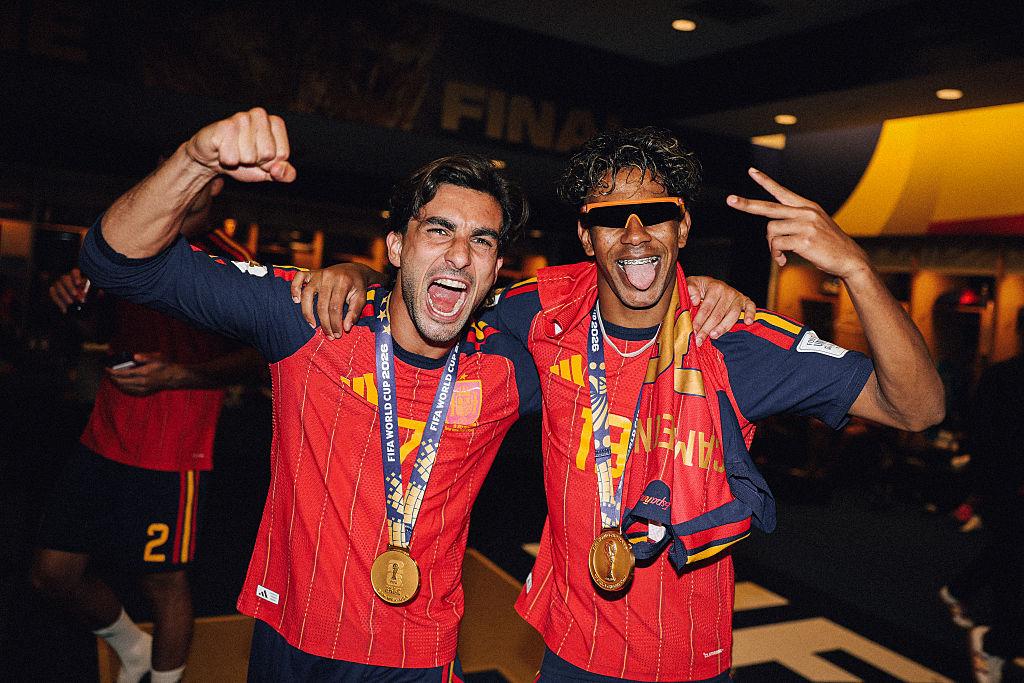
Pantling also photographed Lamine Yamal alone on the pitch during Spain’s campaign and later entered the dressing room after Spain won the tournament. He described the post-final celebrations as unusually difficult to photograph because several scenes were unfolding at once.
FIFA confirmed that Spain beat Argentina 1-0 after extra time in the final on 19 July, securing the country’s second World Cup title and becoming the first champions of the expanded 48-team tournament.
Pantling said the pressure of photographing football’s biggest names has eased with experience but has not disappeared. He recalled being particularly nervous during the 2022 World Cup final in Qatar, when he feared missing Messi’s penalty and the celebration that followed.
For Pantling, the difference between an ordinary football assignment and a World Cup is not the basic task but the significance surrounding it. The same technical decisions remain, he said, while the emotion of the teams, supporters and tournament gives the photographs a different weight.
No comments yet. Be the first to share your thoughts.