Skip to content

Two Interpretations of a Striking Gesture: What Did Hossam Hassan Mean by Crossing His Arms Against Argentina?

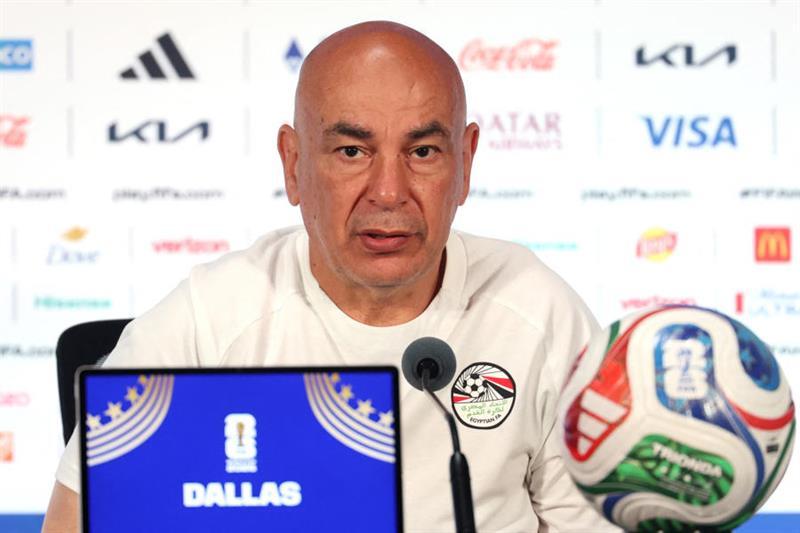
Egypt coach Hossam Hassan’s crossed-arm gesture during the tense World Cup clash with Argentina sparked debate, with interpretations ranging from protest to invoking FIFA’s anti-racism protocol.

By Gazatte Staff

  2 min read

Two Interpretations of a Striking Gesture: What Did Hossam Hassan Mean by Crossing His Arms Against Argentina?

The closing minutes of Egypt’s Round of 16 match against Argentina were dramatic, not only because of the 3-2 defeat but also due to a major refereeing controversy. Amid the tension, cameras captured Egypt’s coach Hossam Hassan crossing his arms in an “X” immediately after receiving a yellow card.

This gesture, which went unnoticed by officials as play continued, ignited widespread debate over its meaning—whether it was a protest against officiating or an attempt to activate FIFA’s anti-racism protocol.

Scenario One: Protest – The Handcuff Symbol

One interpretation sees the gesture as a protest against refereeing decisions. In football culture, crossed arms often symbolize handcuffs, expressing the feeling of being restricted or victimized by unfair calls. This reading is reinforced by Egypt’s frustration over Argentina’s third goal, awarded without VAR review despite a possible foul on captain Mohamed Salah. Hassan’s gesture, made right after his booking, could thus be seen as an angry protest against perceived injustice.


Scenario Two: Anti-Racism – FIFA Protocol

Another interpretation links the gesture to FIFA’s official anti-racism protocol. Since May 2024, FIFA has recognized the crossed-arm signal as a universal measure allowing players and coaches to alert referees to abuse. Under this protocol, referees must immediately initiate a three-step process, potentially ending with match abandonment if abuse persists. Hassan may have been attempting to invoke this rule, but instead received a yellow card, raising questions about the referee’s handling of the situation.

Public Reaction

On social media, most reactions connected Hassan’s gesture to the anti-racism protocol, citing FIFA’s official guidelines. Many criticized the French referee for ignoring the signal and penalizing Hassan instead, calling for an investigation. Observers argued the referee should have approached Hassan to clarify his intent rather than dismissing the gesture.

Analysts also questioned key decisions in the match, including the disallowed second goal for Egypt and Argentina’s stoppage-time winner by Enzo Fernández, which followed a controversial foul on Salah before Lautaro Martínez’s decisive assist.

The incident has since become a matter of public debate, transcending Egypt’s elimination and highlighting broader concerns about fairness and the enforcement of FIFA’s rules.

More from World Cup 2026