
Brazilians began voting on 4 October in a closely fought presidential election led by left-wing President Luiz Inácio Lula da Silva and right-wing Senator Flávio Bolsonaro, with opinion polls pointing to a likely second round later in the month.
Brazil's Superior Electoral Court says 158,765,543 people are eligible to vote. Polling stations opened at 08:00 Brasília time and are due to close at 17:00, after which official results can begin to be released.
Lula, 80, is seeking a fourth non-consecutive term. Flávio Bolsonaro, 45, is the son of former president Jair Bolsonaro and is campaigning to return his father's conservative movement to the presidency.
The final Datafolha survey before voting put Lula on 45% of valid votes and Flávio Bolsonaro on 42%, a statistical tie within the poll's two-point margin of error. The survey, commissioned by Folha de S.Paulo and TV Globo, interviewed 4,006 people in 122 municipalities on 2 and 3 October.
A candidate must win an absolute majority of valid votes to avoid a runoff. Electoral rules set a second round for 25 October if no candidate crosses that threshold.
The election is taking place after a campaign dominated by public security, living costs, fiscal concerns and accusations exchanged between the main political camps. Reuters reported that both frontrunners skipped major televised debates, leaving relatively little direct policy confrontation between them.
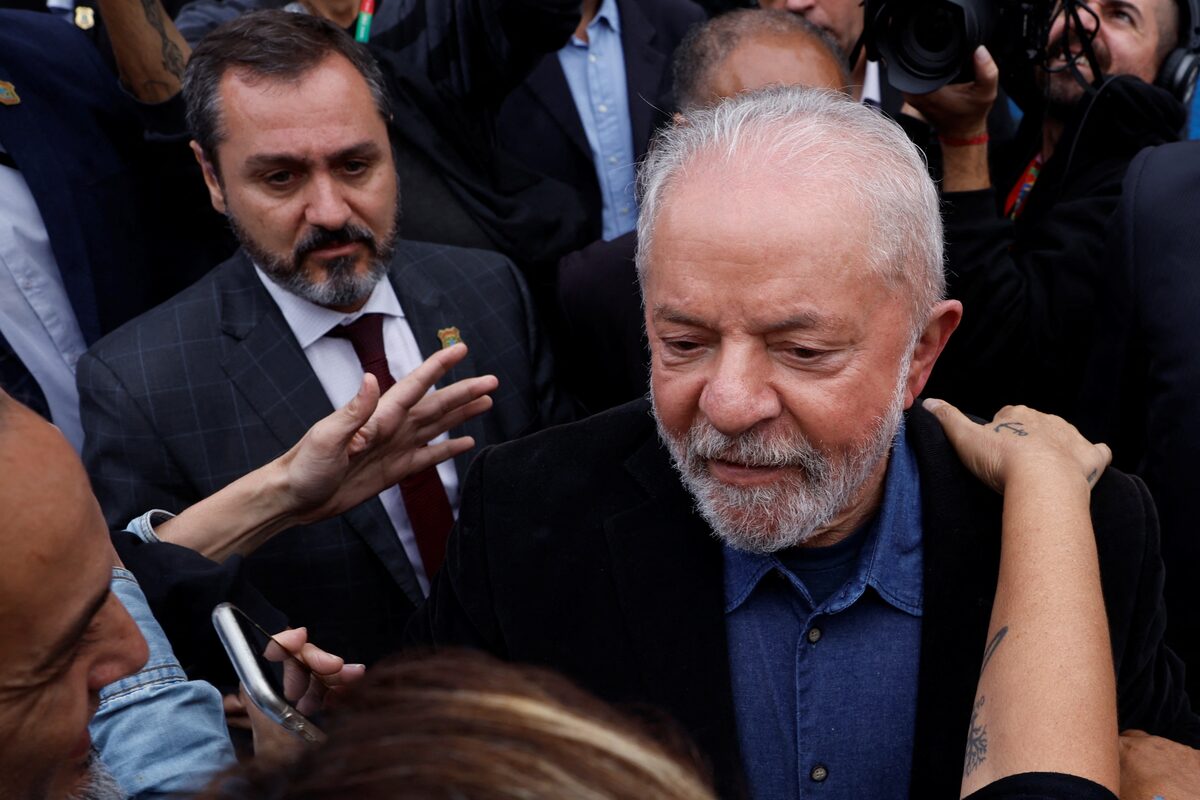
After casting his ballot in São Bernardo do Campo, Lula said, “What is at stake is the future of Brazil.” His campaign has emphasised social programmes, falling unemployment and national sovereignty, while seeking to portray pressure from Washington as interference in Brazilian affairs.
Flávio Bolsonaro has campaigned on tougher security policies, tighter control of public spending and closer relations with the United States and Israel. He has also said he would seek an amnesty for his father.
Jair Bolsonaro is serving a prison sentence of more than 27 years after his conviction over a plot to overturn the result of the 2022 election.
Relations with Washington have become an unusual feature of the race. US President Donald Trump has not formally endorsed Flávio Bolsonaro, but Reuters reported that he hosted the senator at the White House and praised him publicly. Trump also imposed a 50% tariff on Brazil in 2025 and explicitly linked the measure to Jair Bolsonaro's trial.
The campaign has also been affected by legal investigations. Reuters reported in September, citing court documents, that Flávio Bolsonaro was under investigation over alleged corruption and money laundering linked to the failed Banco Master. He has denied wrongdoing.
For Lula, improved employment and reduced inequality have been offset by voter frustration over the cost of living, household debt and crime. Flávio Bolsonaro has sought to turn those concerns into support for a change of government.
The presidential vote is being held alongside elections for state governors, the lower house of Congress and two-thirds of the Senate. The composition of Congress will help determine how much room the next president has to govern, regardless of who wins the presidency.
With the leading candidates separated by only a few percentage points in the final surveys, the first-round count will determine whether either can secure an outright victory or whether Brazil returns to the polls on 25 October.
No comments yet. Be the first to share your thoughts.