
Venus will remain a striking sight in the western sky on Sunday evening, appearing close to the young crescent Moon a day after reaching its greatest eastern elongation from the Sun.
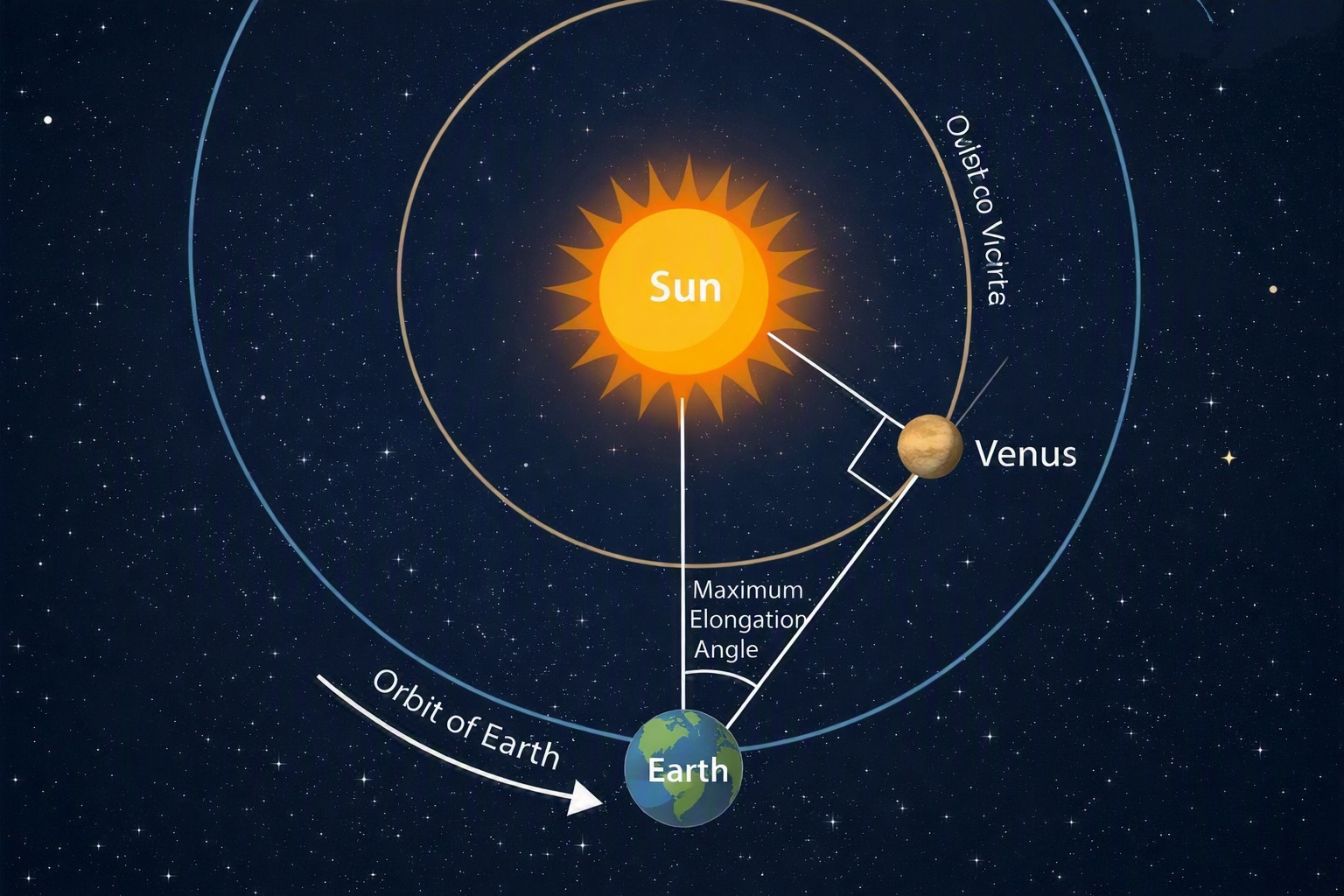
The planet reached greatest elongation at about 06:00 UTC on Saturday, 15 August, when it was roughly 46 degrees east of the Sun as seen from Earth. The event marks the point in Venus's current evening appearance when the planet is farthest from the Sun in the sky.
Venus is particularly easy to identify because it is the brightest planet visible from Earth. It can be seen with the naked eye shortly after sunset, low in the western sky, provided the horizon is clear.
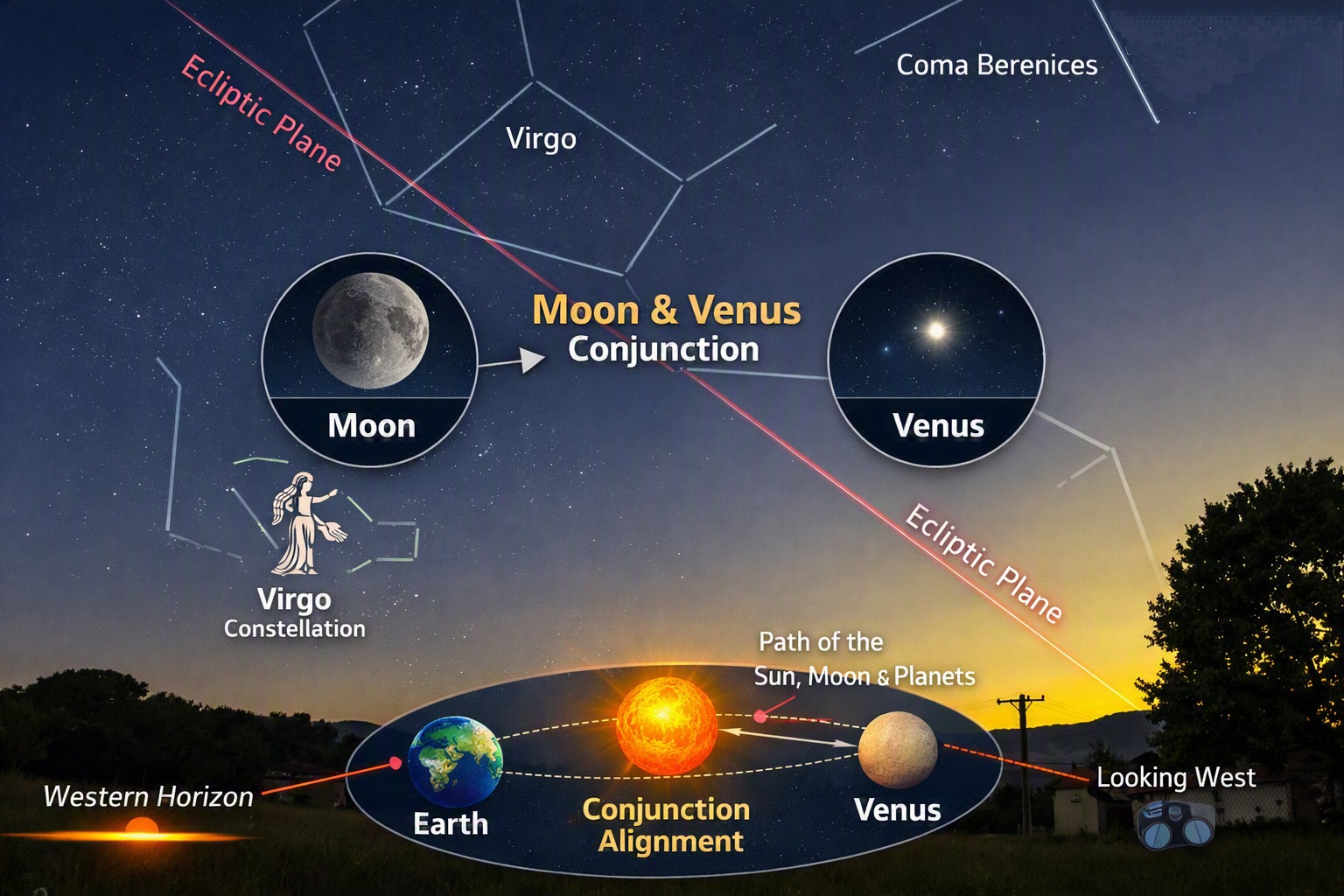
Sunday's pairing with the crescent Moon provides an additional reference point for observers. The Société d'astronomie du Planétarium de Montréal lists a Moon-Venus close approach for the evening of 16 August, after sunset.
The greatest elongation does not mean Venus reaches its highest point above the horizon. Elongation measures the planet's apparent angular separation from the Sun, while its altitude depends on the geometry of the sky at a particular location and time. Venus can therefore be far from the Sun on the sky's dome while still appearing relatively low above the western horizon.
The planet's appearance also changes noticeably through a telescope. Because Venus orbits inside Earth's orbit, observers see different illuminated portions of its disc as the planet moves around the Sun, much like the changing phases of the Moon.
Around greatest elongation, Venus is close to a half-illuminated phase. EarthSky calculates that it will appear about 49% illuminated, with an apparent diameter of roughly 24.5 arcseconds, making its phase visible through a telescope even though the planet appears as a brilliant point of light to the naked eye.
The planet will continue to be visible in the evening sky for the coming weeks. Timeanddate lists 15 August as Venus's greatest eastern elongation in 2026 and notes that it will remain an evening object before eventually moving closer to the Sun's apparent position in the sky.
For Sunday night's observation, the best opportunity is shortly after sunset, looking towards the western sky. A clear horizon and low levels of light pollution will make the pairing easier to see, while a telescope or binoculars can reveal the changing appearance of Venus more clearly.
No comments yet. Be the first to share your thoughts.