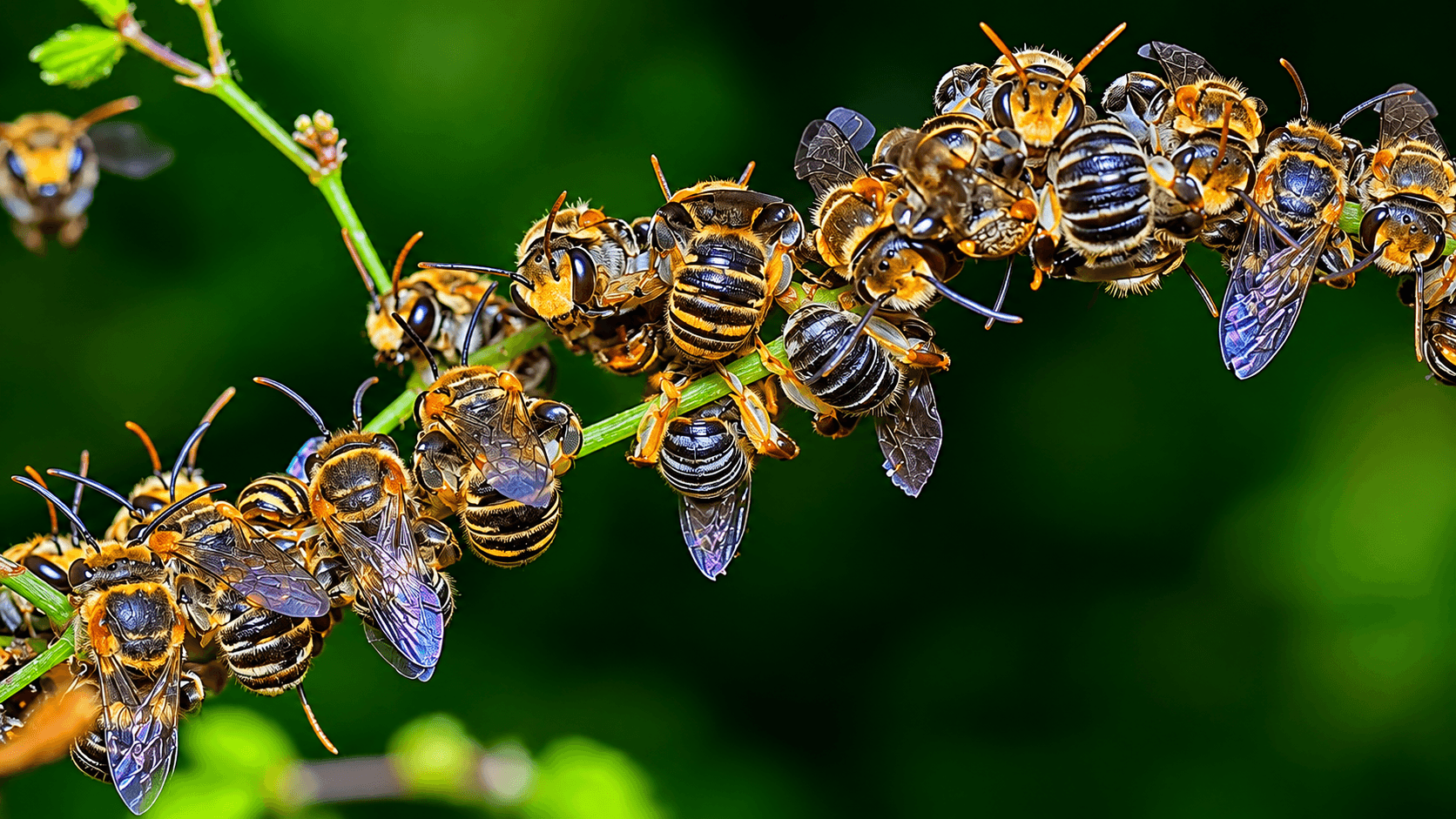
Peru grants legal rights to stingless bees in world first for insects Two municipalities in Peru have recognised the legal rights of Amazonian stingless bees, marking the first time an insect has been granted such recognition anywhere in the world.
The local ordinances, adopted in Satipo and Nauta-Loreto, recognise the bees’ right to exist and thrive, live in a healthy environment and receive legal representation, according to research published in the journal Nature and reporting by environmental news outlet Mongabay.
The decision is part of a wider effort to protect more than 175 native stingless bee species found in Peru. The insects play an important role in pollinating plants, supporting forest regeneration and maintaining the ecological balance of the Amazon rainforest.
The campaign was led by Rosa Vásquez Espinoza, a chemical biologist and founder of the environmental organisation Amazon Research Internacional. She began researching stingless bees in 2020 and later worked with Indigenous communities, environmental groups and legal experts to develop a framework that would give the insects formal protection.
"When we started our project, we learned that stingless bees were nowhere to be found in the law in Peru, yet they are the native species of Peru," Espinoza said, according to a report published on 17 November.
The declaration gives the bees rights that include access to healthy vegetation free from pollution, pesticides and invasive species. It also creates a legal basis for environmental organisations and Indigenous representatives to raise alleged violations before Peruvian courts on their behalf.
The initiative builds on Peru's Law No. 32235, passed in 2025, which recognised native stingless bees as species of national importance. The subsequent municipal ordinances took the protection further by recognising the insects as entities with rights of their own.
Why are stingless bees important?
Despite their name, stingless bees do possess a stinging apparatus, but it is reduced or ineffective and cannot be used effectively for defence. Instead, some species protect their colonies by biting intruders or producing loud buzzing sounds.
Their nests can be found in hollow tree trunks, underground spaces and crevices in different structures. Some species are only a few millimetres long, but their ecological contribution is considerable.
Research cited by Mongabay indicates that stingless bees pollinate around 80 per cent of tropical flora. Their activity helps plants reproduce, supports the regeneration of forests and contributes to the production of crops that local communities depend on, including coffee, cacao and avocados.
A policy brief published in 2026 through the Peruvian Amazon Research Institute also highlights their importance to local economies, food security and the cultural heritage of Indigenous communities.
However, the bees face growing pressure from deforestation, habitat destruction, pesticide use and climate change. Competition from invasive species, including European honeybees, has also been identified as a threat to native populations.
Indigenous knowledge at the centre of the campaign
The legal initiative has also highlighted the relationship between stingless bees and Indigenous communities, particularly the Asháninka and Kukama-Kukamiria peoples.
These communities have cultivated the bees for generations, using their honey in food and traditional medicine. Their knowledge of the insects and their habitats helped shape the campaign, which brought scientific research together with Indigenous perspectives on the relationship between people and nature.
The declaration reflects a broader legal movement known as the "Rights of Nature", which seeks to recognise ecosystems and natural entities as holders of rights rather than treating them solely as resources for human use.
Similar initiatives have been adopted elsewhere. Spain recognised legal personality for the Mar Menor lagoon and its basin in 2022, while Peru recognised rights for the Marañón River in 2024.
Legal recognition is only the first step
Despite the significance of the decision, questions remain about how the new rights will be enforced in practice.
Amazon Research Internacional and its partners are working with local authorities and Indigenous communities to develop implementation measures, including procedures for identifying violations and determining possible penalties for activities that damage protected habitats.
One example under consideration is the destruction of a tree containing a protected bee colony. The proposed framework would need to establish how such an incident could be challenged and what consequences might follow.
The initiative has attracted interest beyond Peru, with organisations in other countries exploring similar approaches to protecting native bee species.
For now, the Peruvian ordinances represent a legal milestone, but their long-term impact will depend on whether the recognition can be translated into effective protection for the bees and the forests they help sustain.