Gazatte
Independent journalism
  • Gold$3,524.850.00%
  • Bitcoin$58,902.64▲ up 0.23%
  • EUR/USD1.09730.00%
  • USD/ILS3.34120.00%
  • Ethereum$1,619.59▲ up 0.07%
  • GBP/USD1.30800.00%
  • USD/EGP53.750.00%
  • Silver$40.990.00%
  • USD/JPY158.550.00%
  • USD/TRY50.520.00%
  • USD/JOD0.70900.00%
  • USD/SAR3.73600.00%
  • Gold$3,524.850.00%
  • Bitcoin$58,902.64▲ up 0.23%
  • EUR/USD1.09730.00%
  • USD/ILS3.34120.00%
  • Ethereum$1,619.59▲ up 0.07%
  • GBP/USD1.30800.00%
  • USD/EGP53.750.00%
  • Silver$40.990.00%
  • USD/JPY158.550.00%
  • USD/TRY50.520.00%
  • USD/JOD0.70900.00%
  • USD/SAR3.73600.00%
Skip to content
Gazatte
Middle EastPalestineWorldPoliticsBusinessCultureOpinionMarkets
Gazatte
Menu
Log in

Sections

Middle EastLebanonSyriaYemenGulfIran-Israel War
PalestineGazaWest BankJerusalemPalestinians of '48
WorldAmericasRussia-Ukraine WarEuropeAsia-PacificAfricaMore world news
PoliticsU.S. PoliticsEuropean PoliticsElectionsDiplomacy & Foreign PolicyInternational Law & Human Rights
Business
CultureCurrent
Opinion
Sports
Travel
Language
GazatteMiddle East & World News
Log in
/
Gazatte
BusinessCultureOpinionMarkets
  1. Culture & Society

When Moroccan Pilgrims Terrified Napoleon’s Army

Pilgrimage in Moroccan culture is a spiritual journey of forgiveness and renewal, transcending geography and embodying resilience, solidarity, and devotion across centuries.

By Gazatte Staff

26 May 2026, 11:19 GMT · Updated 6 October 2026, 12:05 GMT · 2 min read ·

When Moroccan Pilgrims Terrified Napoleon’s Army
Pilgrimage holds a central place in Moroccan collective memory, symbolizing a spiritual transition before a geographical one. Since Islam reached Morocco in the first century AH, historical sources, travelers’ accounts, and works like “al-Mamalik wa al-Masalik” confirm that Moroccans performed pilgrimage on foot, individually or in groups, enduring months or years of hardship, facing dangers of death, hunger, thirst, disease, and bandits, sustained by faith.

The risks of pilgrimage led to organized caravans known as “the Moroccan Hajj caravan,” with names like “the Fassi caravan,” “the Sijilmassi caravan,” and “the Marrakeshi caravan.” The earliest known caravan was the “Salihi caravan,” founded by the Sufi scholar Abu Muhammad Salih al-Majri in the 12th century, who built ribats to protect pilgrims. Some jurists even ruled that pilgrimage was not obligatory for Moroccans due to the dangers, such as Ibn Rushd al-Jadd and Abu Bakr al-Turtushi.

Over centuries, the Moroccan caravan became a social institution uniting all classes—princes, scholars, judges, merchants, and commoners—embodying equality and solidarity. Anthropologist Victor Turner described such rituals as “communitas,” transcending social divisions, while Durkheim emphasized their role in renewing collective strength.

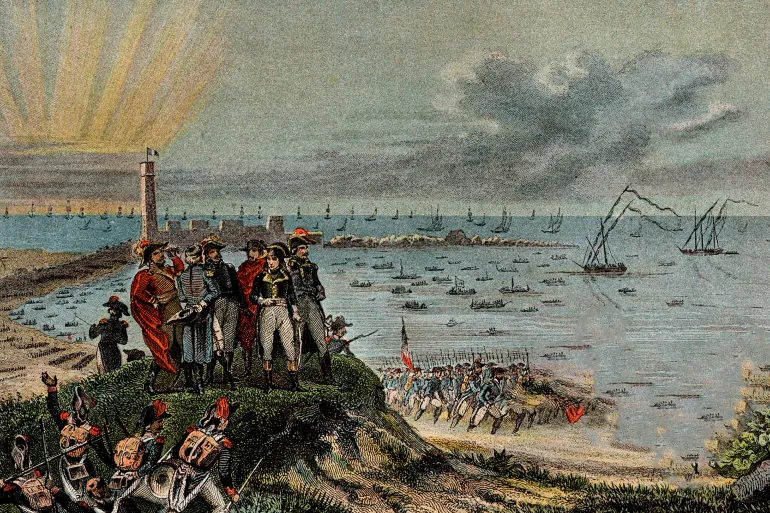
This spirit extended beyond Morocco. Historical sources note that Moroccan fighters joined Salah al-Din’s army at Hattin and in liberating Jerusalem, earning a reputation for bravery. After the French campaign in Egypt, Egyptians looked to Moroccan pilgrims for support against Napoleon’s army. Historian al-Jabarti recounts that in April 1799, rumors spread that 20,000 Moroccan pilgrims had arrived to fight the French, though the caravan numbered only about 700. Still, the fear they inspired was immense.

General Dugua wrote to Napoleon expressing concern that Moroccan pilgrims might incite revolt. The French isolated the caravan, confiscated weapons, and took hostages until they departed for the Hijaz. Napoleon himself ordered strict measures to expel Moroccan pilgrims from Egypt, fearing their influence on local resistance. Yet he also addressed the Sultan of Morocco respectfully, claiming to have treated the pilgrims well.
More in Culture & Society
  • ENVIRONMENTPeru grants legal rights to stingless bees in world first for insects
  • MOROCCAN CULTUREMorocco’s El Mansouri wears traditional caftan at Kremlin reception
  • EUROVISION BOYCOTTNetherlands reverses Eurovision return over Israel's participation
  • CHILDHOOD VACCINATION POLICYUS hepatitis B vaccine policy may leave infants at risk, study warns

Moroccan pilgrims not only performed their religious duty but also contributed to resistance against Napoleon, joining uprisings in the Nile Delta and Upper Egypt under leaders like Sheikh Muhammad al-Kilani. Their presence symbolized solidarity across the Muslim world, reinforcing ties between Morocco and the East.

Thus, Moroccan pilgrimage was more than a ritual—it was a spiritual, cultural, and political journey. Pilgrims exchanged knowledge, strengthened bonds with fellow Muslims, and sometimes became part of the social and intellectual fabric of Egypt, the Hijaz, Palestine, and the Levant. Their journeys embodied patience, humility, solidarity, and devotion, turning pilgrimage into a school of resilience and a bridge between Morocco and the wider Islamic world.

Gazatte follows its Editorial Policy. Spotted an error? Tell us.

Add Gazatte as a preferred source on Google

More in Culture & Society

  • ENVIRONMENTPeru grants legal rights to stingless bees in world first for insects
  • MOROCCAN CULTUREMorocco’s El Mansouri wears traditional caftan at Kremlin reception
  • EUROVISION BOYCOTTNetherlands reverses Eurovision return over Israel's participation
  • CHILDHOOD VACCINATION POLICYUS hepatitis B vaccine policy may leave infants at risk, study warns

More from Culture & Society

  • France education protests draw thousands as Lecornu suspends classes
    STUDENT EDUCATION PROTESTS

    France education protests draw thousands as Lecornu suspends classes

  • Nobel medicine prize honours three pioneers of optogenetics
    NOBEL MEDICINE PRIZE

    Nobel medicine prize honours three pioneers of optogenetics

  • Woman accused of firing 20 rounds at Rihanna’s home indicted
    LOS ANGELES SHOOTING

    Woman accused of firing 20 rounds at Rihanna’s home indicted

  • US returns 36 looted antiquities worth over $5m to Syria
    CULTURAL HERITAGE

    US returns 36 looted antiquities worth over $5m to Syria

  • Ed Sheeran calls Gaza war ‘catastrophic and unjustifiable’ after Macklemore tour dispute
    MUSIC AND GAZA

    Ed Sheeran calls Gaza war ‘catastrophic and unjustifiable’ after Macklemore tour dispute

  • UN backs Equal Earth map to show continents at truer scale
    WORLD MAPS

    UN backs Equal Earth map to show continents at truer scale

Gazatte

Independent news and analysis on the Middle East and the world.

Follow us
Add Gazatte as a preferred source on Google

Sections

  • Latest news
  • Markets
  • Palestine
  • Middle East
  • Politics & Diplomacy
  • Opinion
  • Business & Economy

About Gazatte

  • About Us
  • Our Newsroom
  • Editorial Policy
  • Corrections
  • Ownership & Funding

Contact

  • WhatsApp +44 7488 813779
  • support@gazatte.co
  • Contact Us

© Gazatte. All rights reserved.

  • Privacy Policy
  • Terms of Use
  • Cookie Policy