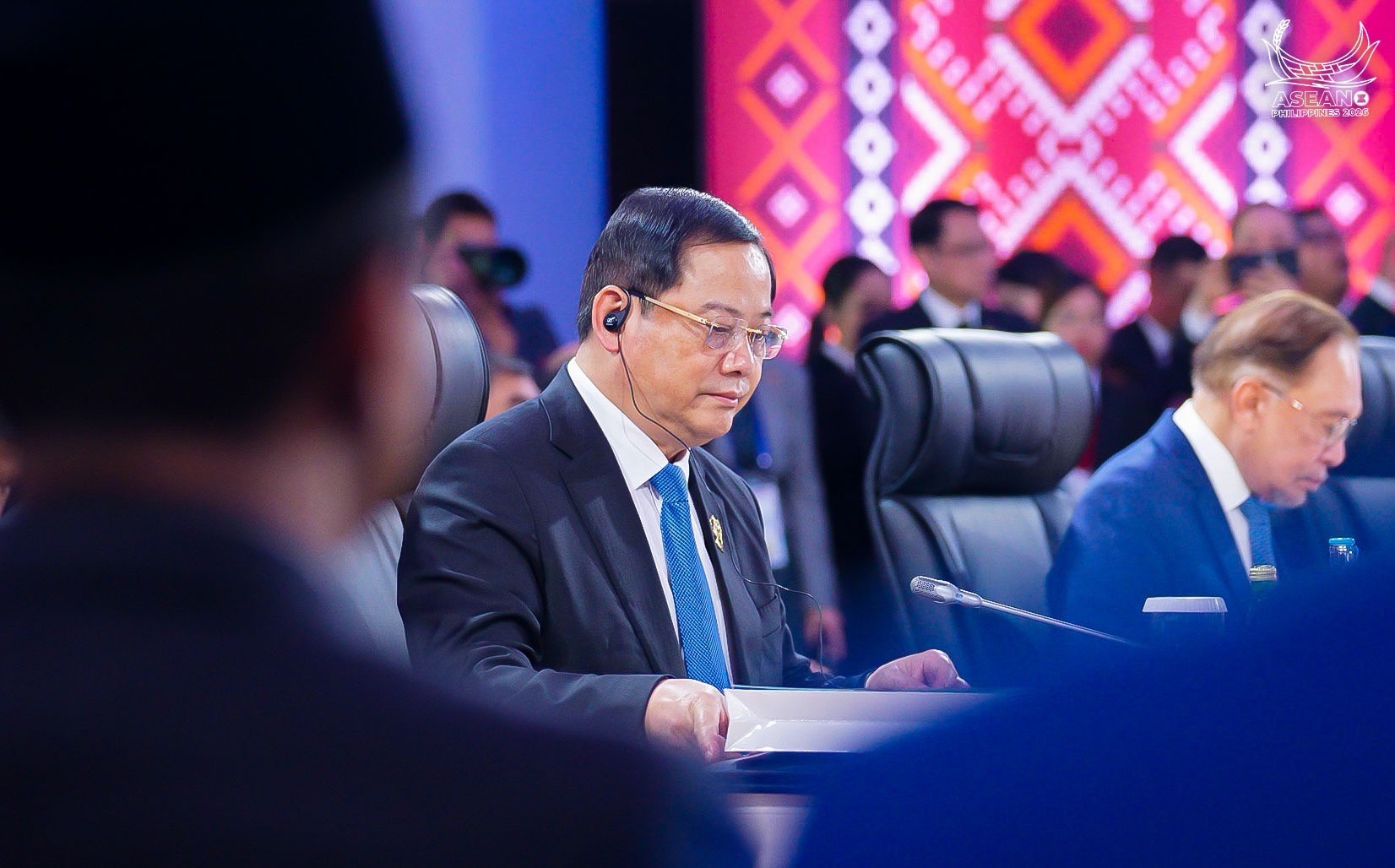
Southeast Asian leaders opened their summit in Manila on 15 November to address trade, energy security and regional conflicts before US President Donald Trump’s arrival, the Associated Press reported.
Trump is expected on 17 November for meetings with regional leaders and the Quad grouping of the United States, India, Japan and Australia, Philippine officials told AP.
Global problems “are reshaping our region faster than any one country can respond to alone”, Philippine President Ferdinand Marcos Jr. said at the opening, according to AP.
The gathering brings the 11-member Association of Southeast Asian Nations together with international partners as governments seek to limit the economic consequences of conflicts and strengthen trade and defence relationships.
Canada announced progress on two trade agreements before the summit opened. Prime Minister Mark Carney’s office said on 14 November that negotiations with the Philippines had concluded and talks with ASEAN had substantially concluded.
Both agreements are being prepared for signature in 2027, the Canadian government said. They are not yet in force.
Australia and the Philippines signed a defence cooperation arrangement on 15 November. Canberra said it would guide cooperation on maritime awareness, information-sharing, training, military interoperability and defence infrastructure.
Australian Prime Minister Anthony Albanese witnessed the signing after visiting HMAS Stalwart in Manila, according to a joint Australian government statement.
The government also announced support for regional maritime partnerships, including drones, secure communications and operator training to improve detection of maritime and cyber threats.
Brazilian President Luiz Inácio Lula da Silva, attending as an invited guest, said US tariffs had encouraged his country to find alternative trading partners, AFP reported.
The summit is also taking place under heavy security. Nearly 20,000 police officers have been deployed around Metro Manila, with progressive organisations planning a larger demonstration against Trump’s visit on 17 November, AFP reported.
Protesters have criticised Pax Silica, a US supply-chain initiative involving semiconductors and rare earths. AFP reported concerns that a proposed 1,620-hectare manufacturing hub north of Manila could displace Indigenous families.
The US Embassy said no major announcement on the project was planned during the summit, according to the state-run Philippine News Agency.
US Ambassador Lee Lipton said decisions would be taken in consultation with the Philippine government and that discussions would examine the effects on stakeholders, the agency reported.
Longstanding disputes over the South China Sea and Myanmar remain on ASEAN’s agenda.
Philippine Foreign Secretary Theresa Lazaro said negotiations on a South China Sea code of conduct were 80% complete, according to Asharq Al-Awsat, citing AFP. A regional diplomat involved in summit preparations told AFP that an agreement was not expected in Manila.
Lazaro also reported no progress on Myanmar, where the military’s overthrow of the elected government in 2021 was followed by continuing civil war, the newspaper reported.
Myanmar’s military leadership has been excluded from high-level ASEAN meetings, although AP identified a Myanmar foreign ministry official among those attending the opening ceremony.
China is represented by Premier Li Qiang, who is expected to meet ASEAN leaders on 16 November and leave before Trump arrives, Philippine officials told AP.
Singapore takes over ASEAN’s rotating chairmanship for 2027. Trump’s scheduled programme includes a special meeting with ASEAN leaders on 17 November, followed by talks with Marcos on 18 November, according to Philippine officials cited by AP.