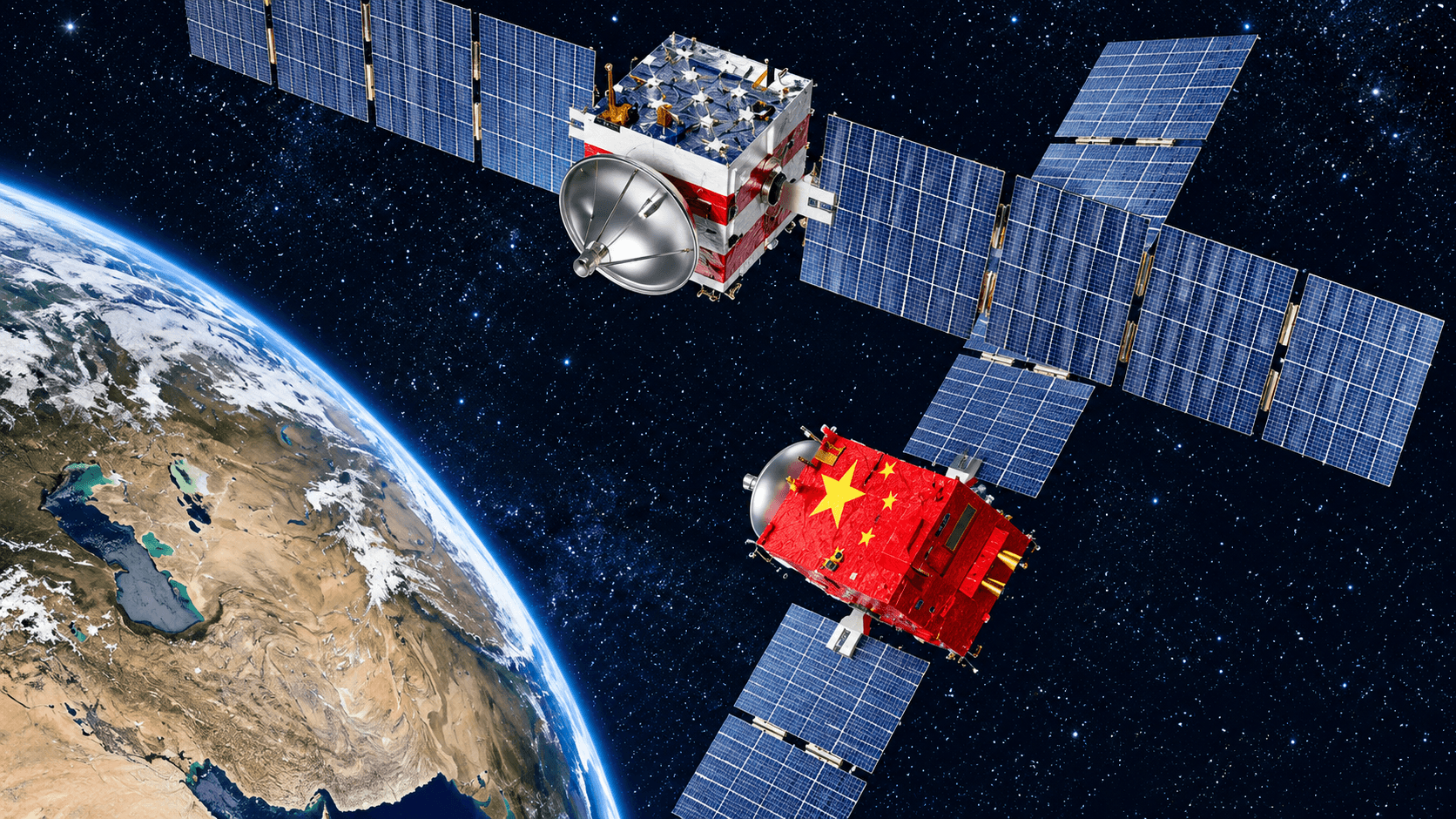
China and Russia are expanding their capabilities to disrupt or destroy satellites, raising concerns about the vulnerability of military operations and essential services that depend on space-based systems, according to a new US intelligence assessment.
The Defense Intelligence Agency (DIA) released the 2026 edition of its report, Challenges to Security in Space, on 26 October. The assessment examines the space programmes, military objectives and potential threats posed by China, Russia and other countries. Its findings reflect information available up to July 2026.
A report by Fox News published on 29 October highlighted the assessment’s warning that Russia is developing a satellite designed to carry a nuclear weapon into orbit. The DIA said such a capability could threaten satellites operated by governments and commercial companies around the world.
Satellites as a military vulnerability
US armed forces rely on satellites for battlefield communications, navigation, missile-launch detection, intelligence gathering and precision targeting. Space-based systems also support civilian activities, including banking, transport, telecommunications and electricity networks.
Clayton Swope, deputy director of the Aerospace Security Project at the Center for Strategic and International Studies, told Fox News that modern military operations depend heavily on satellites. He said the ability to deny an adversary access to space could provide a significant advantage during a conflict.
According to the assessment as described by Fox News, China identifies reconnaissance, communications, navigation and early-warning satellites as potential targets. Beijing could seek to threaten or gradually weaken an adversary’s space infrastructure during a crisis.
China is developing several types of counterspace capability, including electronic jamming, ground-based lasers and satellites able to approach other spacecraft. The report cited the Shijian-17 satellite’s robotic arm and the use of Shijian-21 in 2022 to move a defunct Chinese navigation satellite into a higher orbit.
Such technologies can serve civilian purposes, including satellite maintenance and debris removal, but may also have military applications.
Russia’s orbital activities
The assessment also describes Russian satellites conducting close approaches to US government spacecraft.
Fox News reported that Cosmos 2543 approached a US national security satellite in 2019 before releasing a projectile in what the DIA described as an anti-satellite weapons test. Other Russian spacecraft, including Cosmos 2558, Cosmos 2576 and Cosmos 2588, have also manoeuvred near US government satellites, according to the report.
Russia is also developing additional capabilities intended to interfere with or destroy satellites, including systems designed to operate against spacecraft in low Earth orbit.
Nuclear risks extend beyond military targets
The assessment’s most serious warning concerns a potential Russian nuclear anti-satellite weapon. A nuclear detonation in space could damage or disable large numbers of satellites through radiation and other effects, with consequences extending well beyond the initial explosion.
The DIA warns that radiation belts created by such a detonation could persist for years, potentially damaging satellites that initially survived. The resulting disruption could affect communications, navigation, weather forecasting and national security systems.
US concerns about a possible Russian nuclear weapon in orbit became public in February 2024, when then-House Intelligence Committee Chairman Mike Turner called for the declassification of information about a serious national security threat. In April 2026, US Space Command chief General Stephen Whiting said officials were deeply concerned by reports that Russia might be considering such a capability, while declining to confirm whether Moscow was developing it.
The distinction remains important: the assessment describes a developing threat, not a confirmed deployment of a nuclear weapon in orbit.
As governments become more dependent on satellite networks, the prospect of attacks against space infrastructure raises questions about the resilience of both military systems and services used by civilians worldwide.