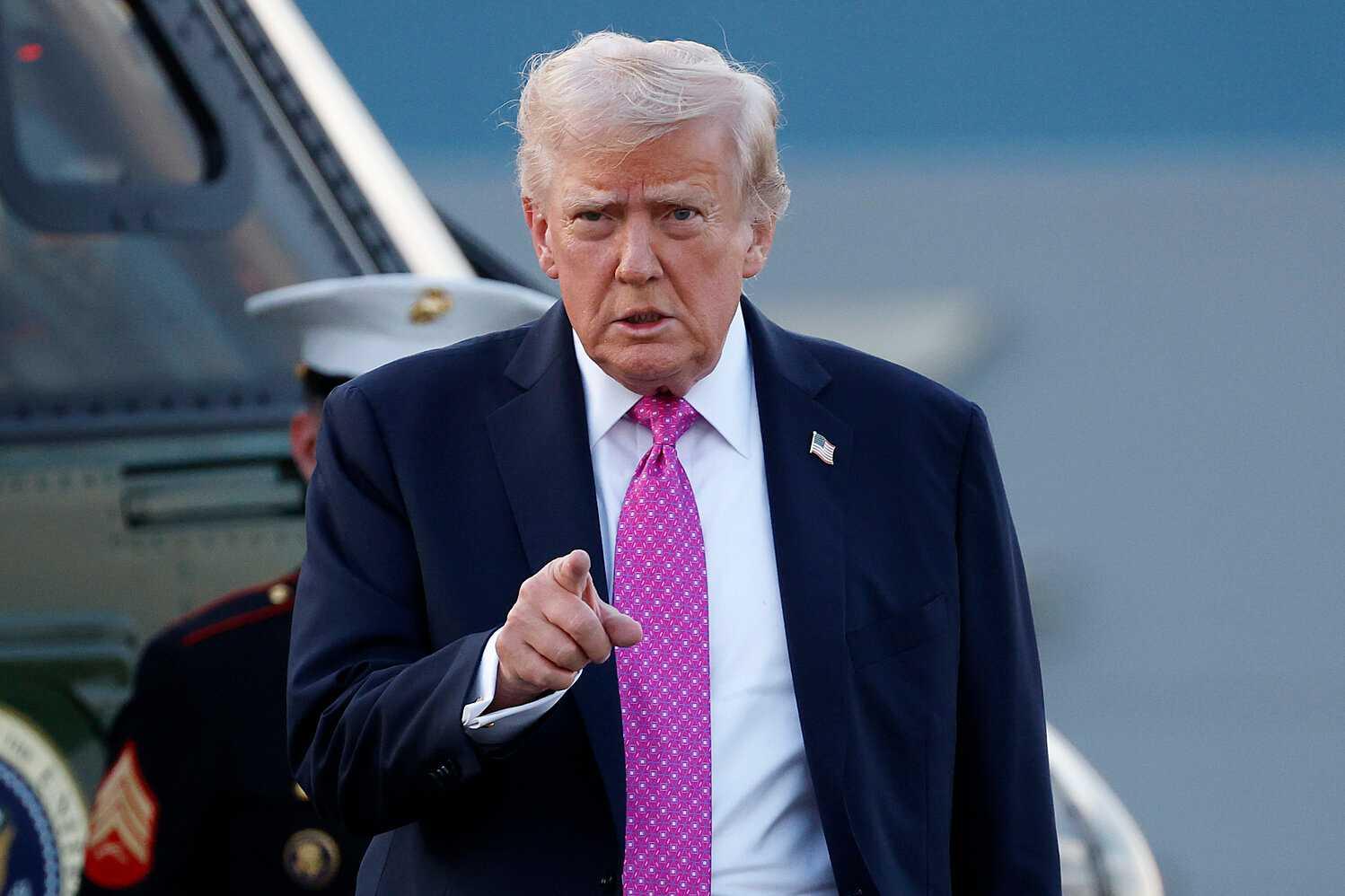
US President Donald Trump has ruled out talks with Iran for now and vowed to punish countries that continue doing business with Tehran, as Iranian officials prepare conditions for reopening the Strait of Hormuz and regional mediators seek a diplomatic breakthrough.
“We don’t want to speak to them. We’re not looking to meet or anything,” Trump told reporters in the Oval Office on Thursday.
The president said Washington was concentrating on economic pressure against Tehran. White House Press Secretary Karoline Leavitt said separately that no negotiations were taking place and that the campaign would continue until Iran was prepared to negotiate “in a meaningful way”.
Trump was asked whether Russia could face penalties for continuing to trade with Iran. He said Moscow had so far “behaved quite well” in relation to the Strait of Hormuz.
Asked whether Chinese banks dealing with Iran could be sanctioned, Trump declined to rule it out, saying he did not have to announce every action taken by his administration.
The comments followed warnings from US Treasury Secretary Scott Bessent that countries should cut financial ties with Iran or risk secondary sanctions. Reuters reported that the Treasury had not, at that stage, imposed the threatened penalties.
The increasingly confrontational US position comes as Qatar, Oman and Pakistan pursue efforts to revive diplomacy between Washington and Tehran.
Qatar's prime minister visited Tehran on Thursday for talks with Iranian officials. Discussions included proposals for a temporary shipping corridor through the Strait of Hormuz and efforts to create conditions for renewed dialogue.
Iran, however, is preparing its own conditions for fully reopening the strategically important waterway.
Mohsen Rezaei, secretary of Iran's Supreme National Security Council, said mediators had asked Tehran to specify its demands and that ending the regional war would be among them.
Rezaei said Iran and Oman had agreed on a proposed shipping corridor running through both countries' waters. Vessels would use a designated central channel if Washington met Tehran's conditions, he said in an interview with Lebanon's Al Manar television.
An Iranian Revolutionary Guards spokesperson has separately said Tehran would not agree to reopen the strait unless Washington lifted what Iran describes as its blockade of Iranian ports, removed sanctions and paid compensation for war damage.
The Strait of Hormuz was one of the world's most important energy corridors before the current conflict, carrying roughly one-fifth of global oil and liquefied natural gas shipments. Maritime traffic through the waterway has since been severely disrupted.
Trump has presented a different account of conditions in the strait, declaring the waterway “open” and saying US forces were continuing to move tankers through it.
Rezaei also escalated his rhetoric towards Israeli Prime Minister Benjamin Netanyahu, threatening in an interview to send him “to hell”.
At the same time, the Iranian security official denied reports that Tehran had planned to assassinate Barron Trump, the US president's youngest son. He described the allegations as fabricated propaganda and accused Netanyahu of using false information to influence the US president.
The denial followed Iranian state television material discussing Barron Trump and publicly known locations associated with him. The US Secret Service has said it was aware of the video, according to CNN.
Despite the increasingly hostile public statements, regional governments continue to push for negotiations. Qatar said its latest discussions in Tehran addressed de-escalation, regional security and efforts to establish a temporary maritime corridor through Hormuz.
For now, however, Washington says no negotiations with Tehran are scheduled, while Iran says practical US concessions must precede a full reopening of the strait.


