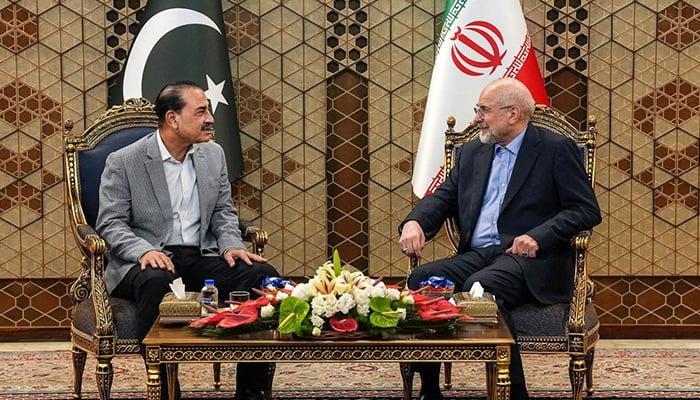
Pakistan said it had made “significant progress” in talks with Iran aimed at preventing further escalation and finding a negotiated route out of the nearly six-month conflict, as the United States launched a sweeping new campaign to isolate Tehran economically.
Pakistan's Interior Minister Mohsin Naqvi announced the progress on Tuesday after accompanying army chief Field Marshal Asim Munir to Tehran, where the delegation held talks with senior Iranian officials.
The discussions focused on preventing further escalation, reopening the Strait of Hormuz and accelerating an end to the conflict, according to a statement from Pakistan's military. The two sides also discussed a negotiated settlement and wider regional security.
“The Iranian President candidly shared his government's perspective and we had a very constructive exchange on the issues involved,” Naqvi said.
Munir had spoken with US President Donald Trump before travelling to Tehran, Reuters reported, citing sources familiar with the contact. Trump had urged Pakistan to use its influence to encourage Iran to return to negotiations.
There were further signs on Tuesday that diplomatic channels remained active.
Oman's Foreign Minister Badr Albusaidi arrived in Tehran and met Iranian Foreign Minister Abbas Araghchi. The discussions covered bilateral and regional issues and followed consultations between Tehran and Muscat over arrangements for shipping through the Strait of Hormuz.
The diplomatic activity is unfolding alongside a sharp increase in US economic pressure.
The US Treasury Department on Monday formally launched “Operation Economic Outcast”, which Secretary Scott Bessent described as an effort to sever Iran's financial connections with the rest of the world.
Washington expanded potential secondary sanctions to five sectors — digital assets, technology, gold, aviation and shipping — and sanctioned nearly 60 people, entities and vessels accused of involvement in Iranian oil revenue, weapons procurement, cyber operations and other activities.
The Treasury said US officials were contacting governments around the world and would give countries a defined period to halt Iran-related activity identified by Washington.
Businesses facilitating Iranian sanctions evasion or money laundering could be excluded from the US financial system, it warned.
Bessent said the administration's objective was to “sever every economic lifeline” sustaining Iran's government until Tehran faced a choice between international isolation and reintegration into the global economy. The description reflects the US government's stated objective rather than an independent assessment of the sanctions' likely effectiveness.
The measures stopped short of Washington's most severe threatened sanctions.
Bessent said countries continuing to trade with Iran could ultimately be excluded from the dollar-based financial system but did not identify which countries would be targeted or when penalties would take effect. He said they would be given time to comply.
Iran responded defiantly but also signalled that negotiations had not been ruled out.
Economy Minister Ali Madanizadeh said Tehran was “fully prepared” for the US sanctions and warned that Iran would not restrict itself to a defensive response.
At the same time, Iranian officials expressed a general willingness to resume peace negotiations during their meetings with the Pakistani delegation, according to a Pakistani government source cited by Reuters. The source said Pakistan told Tehran that Washington could reverse some sanctions before or during renewed negotiations.
That claim has not been publicly confirmed by the US government.
Pakistan's mediation has increasingly focused on the Strait of Hormuz, one of the world's most important energy routes. Traffic through the waterway has fallen sharply during the conflict, contributing to disruption in global energy markets.
The Pakistani delegation's visit and Oman's talks in Tehran suggest multiple diplomatic channels remain active despite the widening US pressure campaign. No new ceasefire or formal agreement between Washington and Tehran had been announced by Tuesday.


