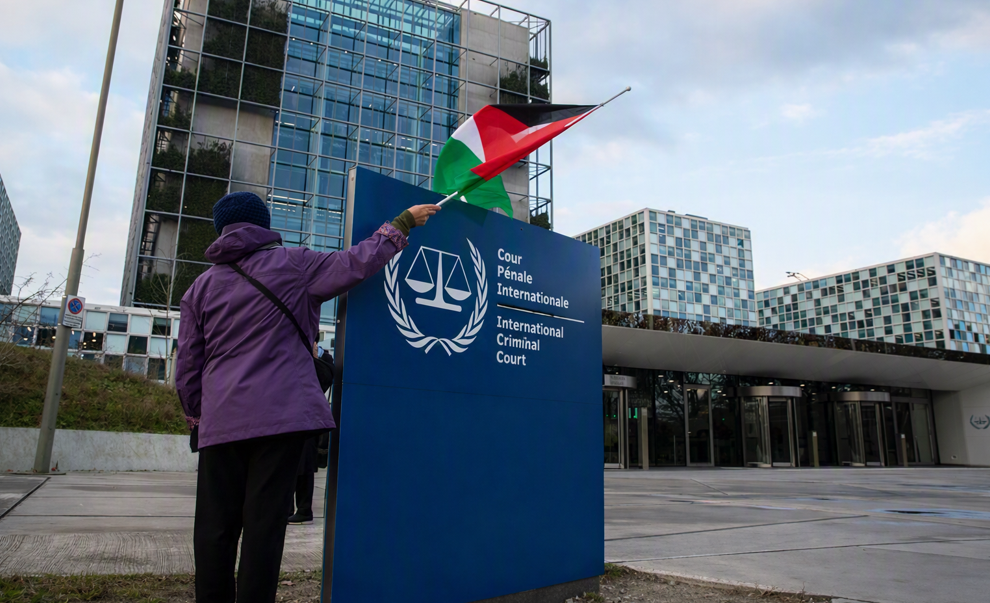
Four major US human rights organisations sued the Trump administration on Tuesday, challenging sanctions imposed on officials and organisations linked to the International Criminal Court and arguing that the measures are restricting their own work on international accountability.
Human Rights Watch, the Open Society Institute, the American Friends Service Committee and the Center for Constitutional Rights filed the case in the US District Court for the Southern District of New York. They are seeking to end the sanctions regime created by an executive order signed by President Donald Trump on 6 February 2025.
“The plaintiffs are seeking an end to this sanctions regime, which transgresses the president’s authority and violates international and U.S. law, including the rights to freedom of expression and religion,” said Andrew Loewenstein, lead counsel for the organisations.
The groups argue that the restrictions have gone beyond targeting ICC personnel. They say the threat of penalties has discouraged US organisations from working with sanctioned individuals and Palestinian rights groups, limiting activities including legal submissions, documentation of alleged violations and advocacy before the court.
Palestine at the centre
The dispute is closely tied to the ICC's investigation into the situation in Palestine. In November 2024, the court issued arrest warrants for Israeli Prime Minister Benjamin Netanyahu and former Defence Minister Yoav Gallant over alleged war crimes and crimes against humanity in Gaza. The court said there were reasonable grounds to believe the two bore criminal responsibility for the alleged crimes.
The United States is not a party to the Rome Statute, nor is Israel. The ICC maintains that it has jurisdiction over alleged crimes in Afghanistan and the Palestinian territories because those territories have accepted the court's jurisdiction under the treaty framework.
The Trump administration has subsequently sanctioned ICC prosecutors and judges, as well as the UN special rapporteur on human rights in the occupied Palestinian territory, Francesca Albanese, and three Palestinian rights organisations: Al-Haq, Al Mezan Center for Human Rights and the Palestinian Centre for Human Rights.
The sanctions can freeze US-based assets and restrict transactions with US persons. Human Rights Watch has said the measures have also created wider difficulties because banks and companies may avoid dealings with designated individuals or organisations.
Legal challenge
The four organisations argue that the executive order and subsequent sanctions violate constitutional protections, including rights to freedom of speech and religion. They also argue that the administration exceeded presidential authority.
The case follows several earlier legal challenges. In June, three sitting ICC judges — Kimberly Prost of Canada, Solomy Balungi Bossa of Uganda and Reine Alapini-Gansou of Benin — filed their own lawsuit against the sanctions in the same federal court.
Two US advocacy organisations, Democracy for the Arab World Now and the Taxpayer Alliance Against Genocide, also filed a separate case in July, arguing that the sanctions restrict Americans' ability to work with the ICC and Palestinian rights defenders.
A similar challenge brought during Trump's first term resulted in a federal judge blocking the 2020 sanctions order after finding that the plaintiffs were likely to succeed on a First Amendment claim. President Joe Biden later rescinded that order in 2021.
The Trump administration has defended its current sanctions policy as a matter of US sovereignty and national security. Secretary of State Marco Rubio said in July that Washington would intensify efforts to pressure ICC member states to leave the court and would target organisations working with it.
The latest lawsuit adds another US court battle to the growing confrontation over the ICC's authority and the ability of rights organisations to cooperate with it.

No comments yet. Be the first to share your thoughts.