Shipping Insurance Surges 150% as Strait Tensions Reshape Global Oil Export Routes
Escalating tensions around the Strait of Hormuz and the Bab al-Mandab have disrupted global supply chains, forcing shipping companies to reroute vessels and driving up transportation and insurance costs.
Rising tensions in the Strait of Hormuz and the Bab al-Mandab have disrupted global supply chains, prompting shipping and energy companies to redraw major maritime routes to avoid high-risk areas.
An analytical report by Al Jazeera, presented by Mohammed Alawna with contributions from Salam Khader and maritime affairs researcher Michelle Bockmann, highlighted a strategic shift in the movement of oil and commercial cargo between Asian and European markets, resulting in sharply higher shipping and insurance costs.
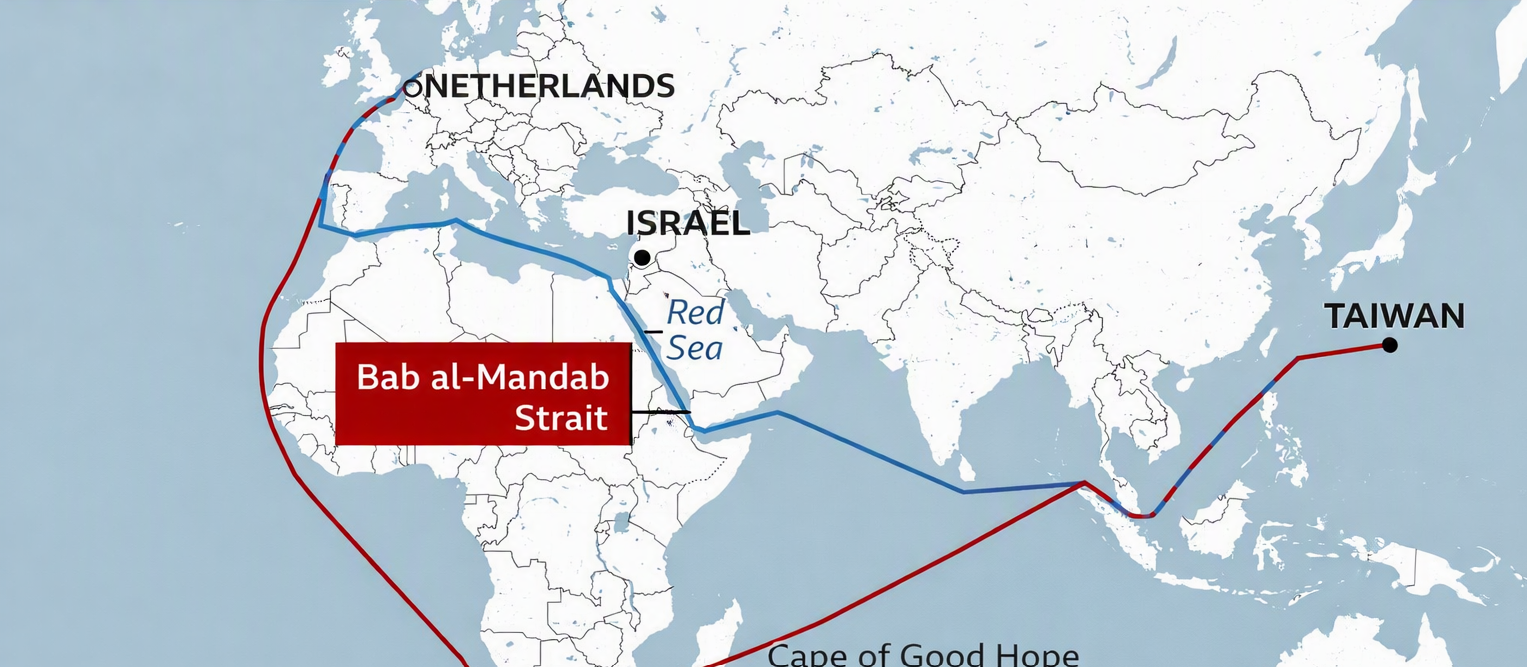
The report explained that security risks in the Red Sea and Bab al-Mandab have forced vessels traveling between Asia and Europe to divert around the Cape of Good Hope instead of using the shorter Red Sea route.
The alternative voyage around Africa adds between two and four weeks to shipping times—up to 30 additional days—increasing fuel consumption and operating expenses while contributing to higher prices for consumer goods and fuel.
Saudi Arabia's Alternative Export Strategy
The report highlighted measures adopted by Saudi Arabia to maintain energy exports while reducing reliance on vulnerable maritime routes.
The East-West Pipeline has enabled crude oil to be transported from oil fields in the Eastern Province to the Red Sea port of Yanbu, which handled exports of approximately 7.2 million barrels per day before the latest escalation.
Using Yanbu has also allowed Saudi oil destined for European markets to travel through the Suez Canal and the Mediterranean Sea while avoiding the Gulf's most vulnerable shipping lanes.
Shipping Cost Differences
The report outlined the significant financial gap in transporting Saudi crude to Asian and European markets.
Saudi oil exports to Asia declined from 5.8 million barrels per day before the crisis to about 3 million barrels per day following attacks on oil tankers.
Shipping crude to Asia via alternative routes now incurs more than $5 million in additional costs per cargo, including around $1.6 million in extra fuel expenses and $1 million in Suez Canal transit fees.
By comparison, the estimated transportation cost for an oil tanker heading to Europe stands at approximately $1.7 million.
As a result, transporting a single barrel of oil to Asian markets now costs about $4.17, compared with roughly $0.88 per barrel for shipments bound for Europe.
Insurance Costs and Broader Economic Impact
Maritime researcher Michelle Bockmann said insurance premiums for commercial ships and oil tankers operating in the Red Sea have increased by 150% following the attacks.
She also noted that vessels linked to China have reportedly experienced fewer disruptions and smoother passage through the Bab al-Mandab, providing Chinese shipping companies with a competitive advantage over many Western operators.
The report added that roughly 10% of globally seaborne oil—around 9 million barrels per day—normally passes through the Red Sea. Avoiding the route increases transportation costs by an estimated $4 to $8 per barrel, adding inflationary pressure to global energy and food prices.


No comments yet. Be the first to share your thoughts.