
Trump’s administration now relies on Section 301 of the 1974 Trade Act, focusing on forced labor and industrial overcapacity. This mechanism allows Washington to investigate foreign practices deemed unfair and respond with tariffs, import restrictions, or binding agreements.
Winners
Philippines: Tariffs drop from 19% to 12.5%, boosting exports worth $7.7 billion in early 2026, up 51% year‑on‑year.
South Africa: Duties fall from 30% to 12.5%, though exports plunged 56% after earlier shocks.
Pakistan: Tariffs cut from 29% to 10%, giving an edge in textiles and apparel.
Myanmar: From 44% to near‑zero, regaining “most‑favored nation” treatment.
Laos: Returns to low tariffs, opening space for light manufacturing.
Lesotho: Gains competitiveness with reduced duties on limited exports.
Losers
Singapore: Faces 12.5% labor‑related tariffs plus possible industrial surplus duties, hitting its re‑export model.
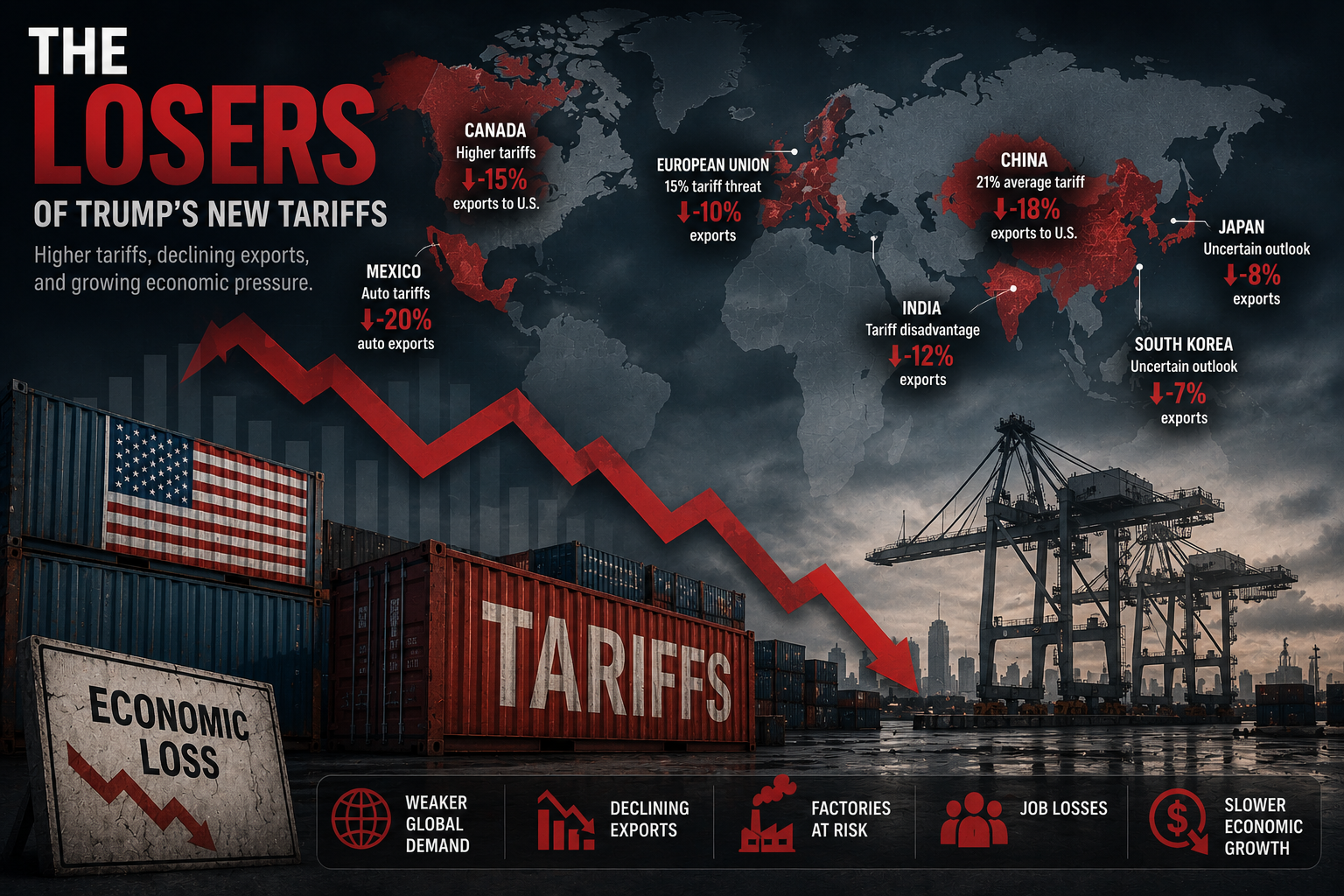
Canada: Exemptions under USMCA offset by sectoral tariffs on metals; uncertainty remains.
Mexico: Auto tariffs higher than rivals; pressured to meet 50% U.S. content rule.
European Union: Threat of 25% auto tariffs if trade deal not finalized; Germany faces drug pricing probe.
China: Effective tariffs at 21%, lower than Trump’s campaign pledge of 60%, but Beijing counters with rare earth restrictions.
India: Seeks relative advantage over competitors, not full exemption.
Japan, South Korea, UK: Agreements in place but vulnerable to new sectoral probes or exceptions.
Between Gain and Loss
Canada, Mexico, and the EU remain caught between exemptions and new investigations, while China and India navigate shifting rules. Smaller economies like Myanmar and Pakistan gain relief, but major partners face renewed pressure. Analysts say Trump’s tariff regime reflects a more complex protectionism, linking trade duties to political and economic leverage.
No comments yet. Be the first to share your thoughts.