
These experiences expose the other side of the continuous events of the Israeli war on Gaza: people who have lived through displacement, killing, and slow starvation, without oversight or accountability.
Both the American newspaper The New York Times and the British newspaper Financial Times reveal different aspects of the ongoing humanitarian catastrophe in Gaza. Yet they converge on one conclusion: the war has not been limited to direct killing and destruction, but has reshaped Palestinian daily life through hunger, disease, displacement, and the collapse of basic services.
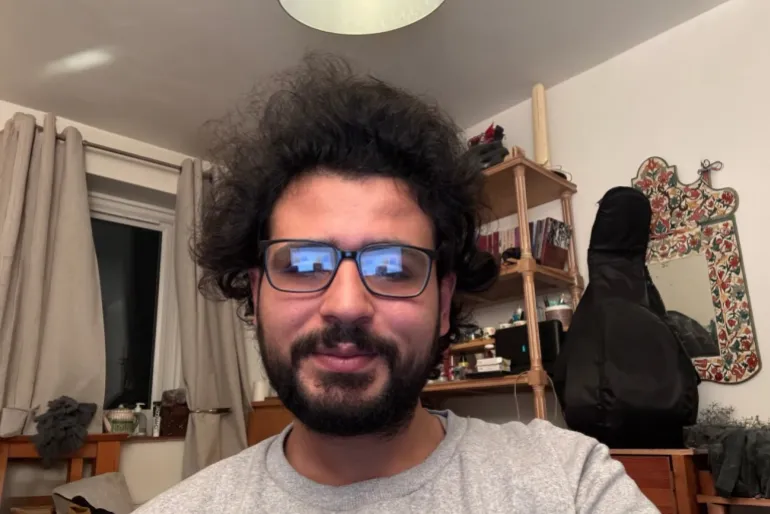
In a report titled “The Cost of Staying Alive in Gaza,” New York Times correspondent Emma Goldberg and investigative journalist Emily Kassi tell the story of Palestinian Saleh Abu Shamala, who spent more than $250,000 in London in desperate attempts to keep his family in Gaza alive.
Meanwhile, journalist Heba Saleh, the Financial Times correspondent in Egypt, published a detailed report titled “The Rodent Plague Terrorizing Gaza,” highlighting a crisis inside displacement camps where destruction, rubble, waste accumulation, and the collapse of water and sewage systems have led to the spread of rodents and insects among hundreds of thousands of displaced people.
Between London and Rafah
Palestinian Saleh Abu Shamala has not lived a normal life since the outbreak of war on Gaza on October 7, 2023. His days turned into a daily race to save his besieged family, while debts accumulated, savings were lost, and from his exile in London he followed scenes of death, hunger, and displacement affecting his closest relatives.
According to the The New York Times, Saleh is 34 years old and lives in Britain, while his parents and siblings—Saleh, Rashad, Raji, Abdul Rahman, and Shima—remained in Gaza.
Over more than two years of war, Saleh spent over $250,000 trying to keep them alive, before finding himself drowning in debts exceeding $125,000.
But the financial burden was only part of the tragedy. The man, who left Gaza in 2022 seeking a safer future, soon found himself from afar watching his entire world collapse under Israeli bombardment.
Before October
Saleh recalls that his first major trauma occurred as a child when his sister Shima was killed near the family home in Rafah by Israeli tank fire during the Second Intifada. He was only 10 years old at the time.
He remembers the shocking scene when his father carried the eight-year-old girl and ran to the hospital, returning later covered in blood and grief.
Saleh says the trauma of losing his sister stayed with him for years, but it was only the beginning of a series of later tragedies. In 2021, an Israeli airstrike destroyed his apartment, after which he reluctantly traveled to London to pursue a master’s degree at the University of Exeter.
With the start of the latest war, communication with his family was cut for days. When his brother Rashad finally reached him, Israeli airstrikes had already begun killing civilians and forcing mass displacement.
Saleh sent his brother a message saying anxiously: “They will leave no stone unturned.”
From that moment, his life turned into a constant operations room—following news and social media, sending requests to embassies and humanitarian organizations, and trying to raise and transfer money to Gaza.
An Impossible Life
According to the report, Saleh’s family faced an extreme economic crisis worsened by the blockade and Israeli restrictions on goods entering the Strip.
The newspaper states that Israel allowed only a limited number of Palestinian traders to obtain import permits, leading to monopolized trade, lack of competition, and the emergence of layers of intermediaries and heavy fees for every shipment entering Gaza.
A shipment originally worth 100 shekels (about $28) could rise to more than 20,000 shekels (around $5,700) upon arrival.
With rising coordination and transport fees, the head of Gaza’s Chamber of Commerce said total fees paid since the start of the war exceeded $1.5 billion, while a massive black market for smuggling goods emerged.
The result was catastrophic: flour rose from $0.50 per kilogram before the war to $27, eggs from $2.50 to $130 per kilogram, and cooking gas from $2 per kilogram to about $190.
In this situation, Saleh resorted to informal money transfer networks to send aid to his family, with some intermediaries charging up to 60% commission—meaning only $40 reached his family from every $100 sent.
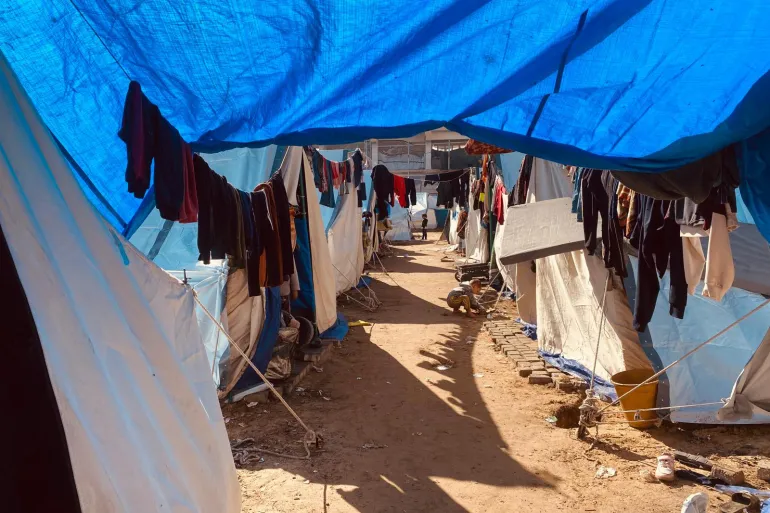
As military operations escalated, the family was forced to leave Rafah and move to the al-Mawasi area near Khan Younis, where they lived in makeshift tents amid shortages of food, water, and medicine.
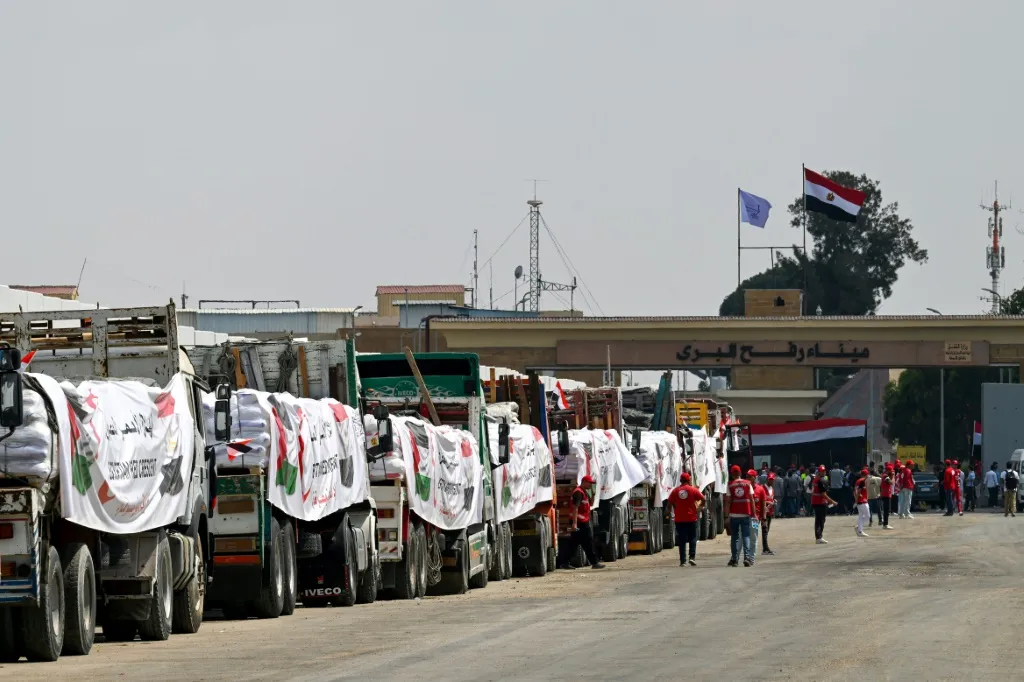
Despite Saleh’s persistent attempts and large payments to evacuate them, his efforts failed after the Rafah crossing was closed in 2024, ending hopes of leaving after months of attempts.
A Series of Strokes
Saleh’s father, Kamal Abu Shamala, suffered from multiple sclerosis and relied on a pacemaker, making access to treatment a matter of life and death.
In late 2024, he suffered a stroke and was taken to Nasser Medical Complex in Khan Younis—one of the few hospitals still operating. However, medications were scarce and expensive amid collapsing medical supplies.
In May 2025, he suffered additional strokes, and shortly afterward the Israeli forces bombed the hospital’s surgical wing, killing two people and causing severe damage.
He was then forced to leave the hospital and return to a tent, where his children cared for him under extremely harsh conditions.
Farewell to Raji
The most painful blow came in June 2025 when Rashad was at the hospital handling his father’s treatment, while his brother Raji (27) was helping their mother prepare food in the camp.
While lighting a fire for lunch, Raji was killed in a direct Israeli airstrike in front of his mother.
In London, Saleh woke up to a call from Rashad: “We lost Raji.”
The mother, Rim, fell into severe psychological distress, suffering repeated tremors and spending nights crying and screaming.
Yet there was “no time for grief,” as survival needs dominated everything.
The Death Trap
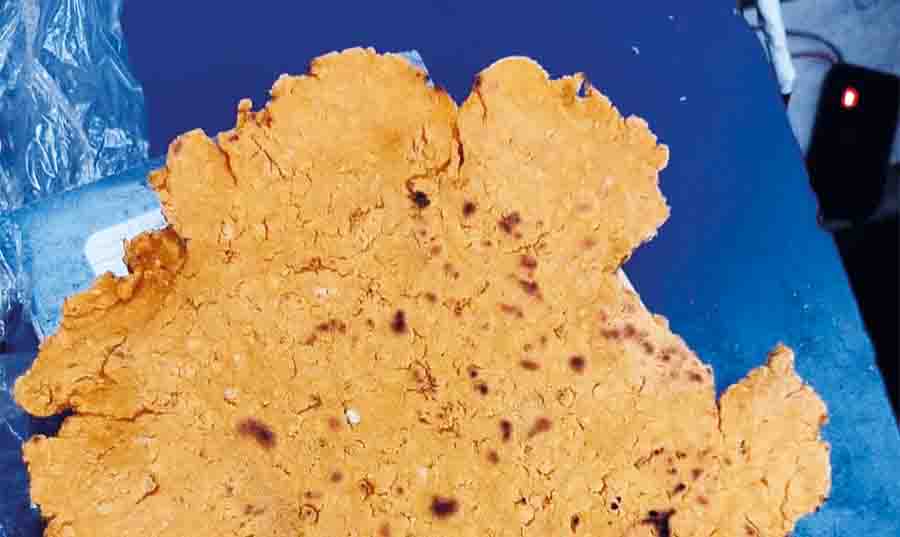
In 2025, the crisis worsened after a complete blockade of aid and goods. Famine spread, and the family began grinding grains and lentils to make bread.
A new aid system backed by the United States, called the “Gaza Humanitarian Foundation,” replaced traditional aid mechanisms. According to the UN, around 1,000 people were killed near aid distribution sites, mostly by Israeli fire.
In one incident, Rashad witnessed a child being shot in the head near a food distribution center in Rafah.
He described the sound of the bullet penetrating the child’s skull as resembling “a watermelon splitting.”
Exile and Psychological Collapse
In London, Saleh experienced a different kind of war. Sleep became nearly impossible; he woke at night to news and calls from Gaza, suffered jaw pain from grinding his teeth, and lost focus in daily life.
Survival guilt consumed him. Every meal reminded him of his family’s hunger, and every normal activity deepened his sense of guilt.
Despite everything he spent and borrowed, he still fears for his family’s future: his father’s health is deteriorating, his mother remains traumatized, and his siblings continue to suffer the consequences of war and displacement.
He says: “I can recognize that the person in the mirror is me, but the face has completely changed.”
Environmental Collapse
The Financial Times reports that thousands of families living in tents amid rubble face increasing danger from rats and insects, which invade shelters, spoil food, and attack children.
Writer Malik Shanbari, living in a tent in al-Mawasi with his family, describes how five men had to work together to kill a large rodent that entered their tent.
He says rats, “the size of rabbits,” have multiplied due to the rubble across Gaza.
Sanitation Breakdown
More than two million Palestinians now live in a small part of the Strip after Israel took control of around 60% of Gaza. Over 80% of the population lives in tents or partially destroyed buildings.
Waste accumulates near shelters, sewage flows between tents, and clean water is scarce.
According to UN data, around 80% of sewage pumping stations have stopped working, causing wastewater to flow into residential areas and camps.
In Jabalia, residents use primitive pits as toilets due to the collapse of sewage networks.
A Daily Reality of Survival
Residents say rats and mosquitoes have become part of daily life.
Experts link the crisis directly to the destruction of infrastructure and the collapse of sanitation and healthcare systems.
Thus, both reports paint a picture of a society under continuous humanitarian pressure: one where survival itself has become a costly daily struggle, and where hunger, disease, and environmental collapse define everyday existence.
No comments yet. Be the first to share your thoughts.