What Are Washington’s Options for Reaching a Resolution in Its War with Iran?
As the US war with Iran continues, questions remain over Washington’s strategy for ending the conflict, with analysts pointing to military escalation or a diplomatic settlement as the main possible paths forward.
With the US war against Iran continuing, the strategic vision behind Washington’s plan to end the conflict remains unclear, according to members of the US Senate who questioned Defense Secretary Pete Hegseth during a congressional hearing this week.
Lawmakers raised questions about the administration’s plan to end the war and reopen the Strait of Hormuz. However, Hegseth and officials from President Donald Trump’s administration focused their responses on further strikes aimed at ending the conflict. Trump told Axios on Thursday that he was considering launching a massive attack, larger than any previous operation, to force Iran to sign an agreement. However, assessments suggest that additional strikes are unlikely to force Tehran to accept Trump’s demands.
New Military Escalation
Military and political analyst Jason H. Campbell, a researcher at the Middle East Institute in Washington, said that the Trump administration has only two possible paths to reach a resolution, though neither is guaranteed.
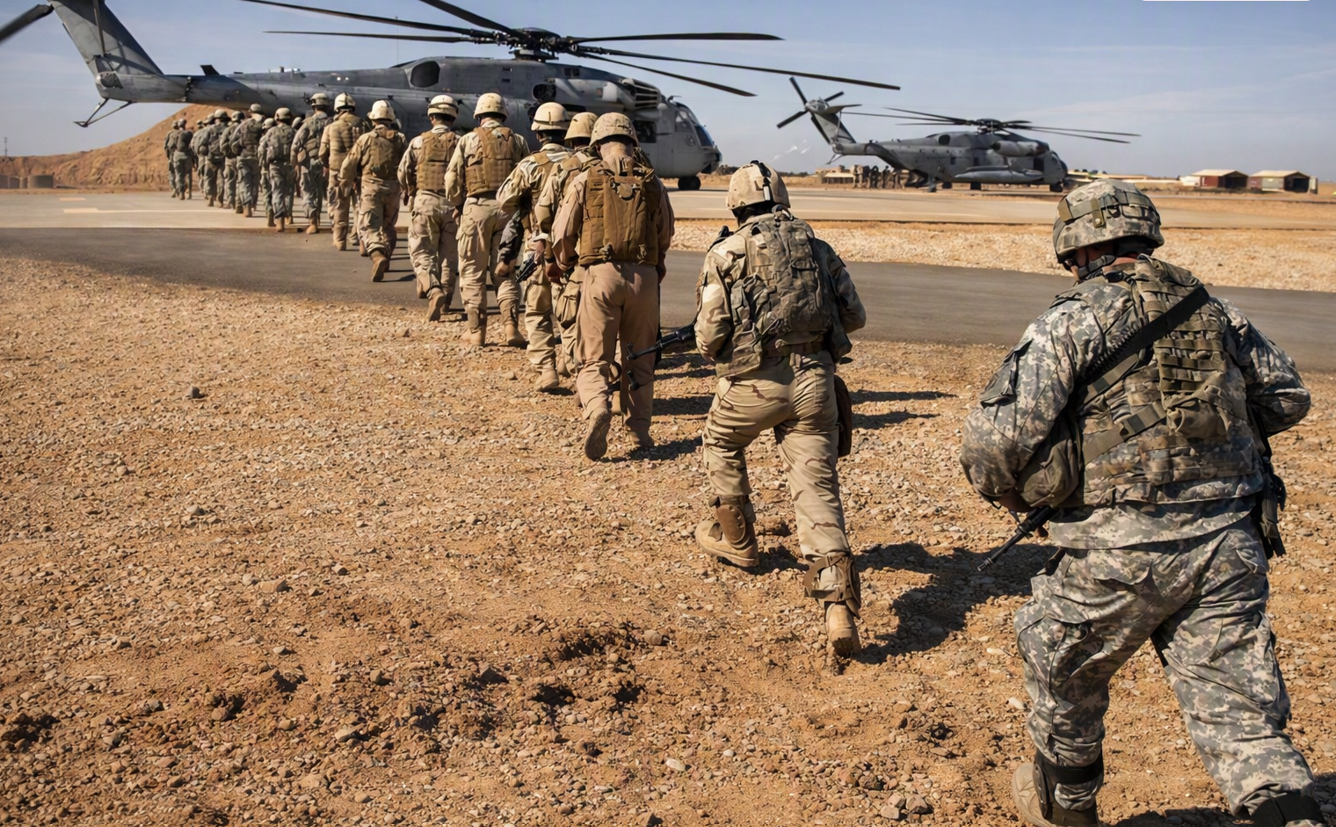
“The first is to significantly escalate the war by deploying tens of thousands, or even hundreds of thousands, of ground troops to seize and hold enough Iranian territory to secure the Strait of Hormuz, which extends for more than 600 kilometers,” Campbell said.
He added that such an operation would require advancing roughly 50 kilometers into Iranian territory to reduce the threat from anti-ship missiles, while also engaging in a highly active and potentially open-ended war.
Campbell described this option as practically impossible at this stage for several reasons.
The second option, according to Campbell, is reaching a political solution and negotiating an agreement with Iran under certain conditions. However, he said any agreement at this stage would likely be “far worse” than the nuclear deal signed during Barack Obama’s presidency, which the Trump administration has strongly criticized for years.
“The White House, understandably, does not want either of these options,” Campbell said. “Instead, it is searching for an alternative path that would allow the United States to exit this situation without officially acknowledging the scale of the current strategic disaster. But it cannot do so as long as the Strait of Hormuz remains fully under Iranian control. That is why, in practical terms, it is facing a major deadlock.”
Airstrikes Unlikely to Change the Strategic Situation
Campbell said that new rounds of airstrikes would not change the strategic balance in Washington’s favor, arguing that the administration appears to have some hope that military action could achieve results but has not clearly explained what it aims to accomplish.
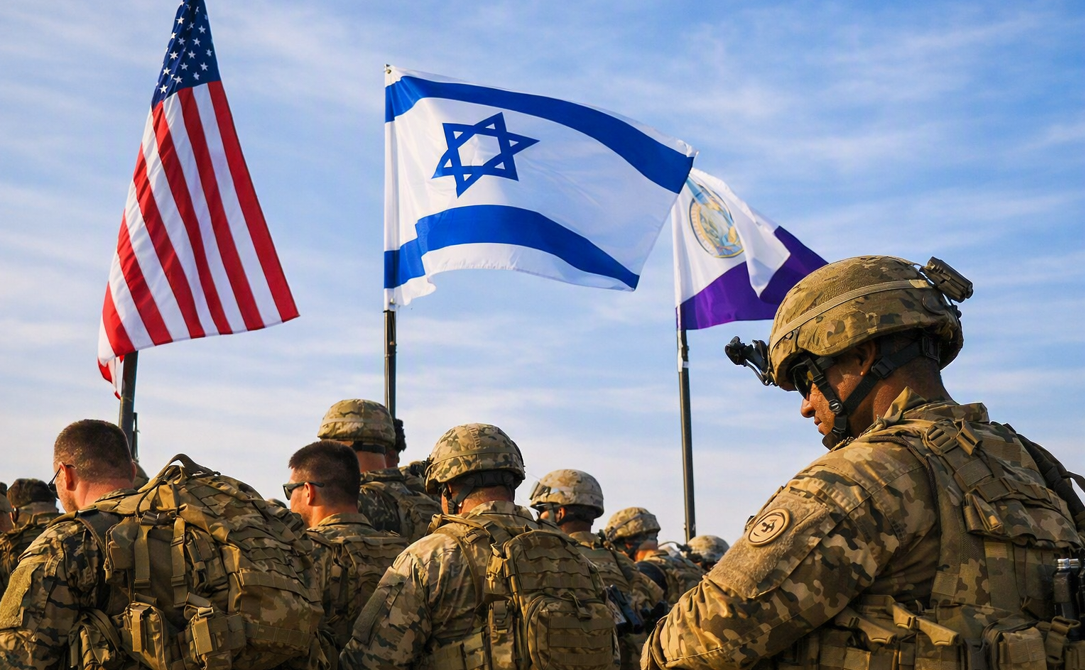
“We are seeing clear indications that the Trump administration and Israel are preparing for something, or at least positioning themselves in a way that suggests this,” he said.
He pointed to the buildup of military forces in Israel, saying it sends a message, though it remains unclear whether the reason is severe damage to US bases in the Gulf, a worsening situation in regional countries, or preparations for a new round of strikes against Iran and further escalation.
Campbell recalled that when US forces were previously deployed in Israel, accompanied by global travel warnings for American citizens—especially regarding the Middle East—along with other indicators, Washington moved toward military escalation.
“Now the evidence is accumulating that preparations are underway for something,” he said. “We have seen how this war began in the middle of Friday night, and we know that President Trump monitors the US stock market. Similar operations have previously been carried out during weekends when markets are closed.”
Lack of a Policy-Making Strategy
Campbell stressed that there is currently no clear strategy guiding policymaking, saying that only a small number of officials are involved in decision-making.
“There is no coordination between agencies, and there has been no executive-level or technical work throughout this war,” he said. “Most of the staff at the National Security Council and other relevant government bodies have been dismissed, including officials from the Defense Department, State Department, intelligence community, USAID, and the Treasury Department.”
He added that none of these institutions appear to have teams with an influential voice or an effective role in monitoring developments, proposing ideas, or providing advice.
“We are all waiting to see what is actually decided by five or six individuals: Trump and a small group of people who have no diplomatic background and do not understand the Middle East,” Campbell said.
He noted that some officials are handling multiple responsibilities simultaneously, citing Jared Kushner, Trump’s son-in-law and adviser, and Steve Witkoff, the US Middle East envoy, who travel around the world negotiating deals and attempting to resolve some of the most complex geopolitical issues.
“Trump talks about seeking revenge for the lives of American soldiers who died. Revenge is not a strategy. This is not a strategy,” Campbell said. “Iran is already prepared to endure much more suffering than any side in the United States can tolerate.”
He emphasized that the military remains highly capable in operational planning but has little influence over the current decision-making process.
Campbell concluded that the only way out of the current deadlock is for the Trump administration to recognize the need for a diplomatic solution, even if it is an unpopular one.
“However, the Trump administration has not reached that conclusion yet,” he said, warning that more casualties are likely and that the United States may continue to spend resources that are already strained. “We simply have to wait.”

No comments yet. Be the first to share your thoughts.