Watch: Gaza Artists Turn Rubble from Destroyed Homes into Mosaic Art
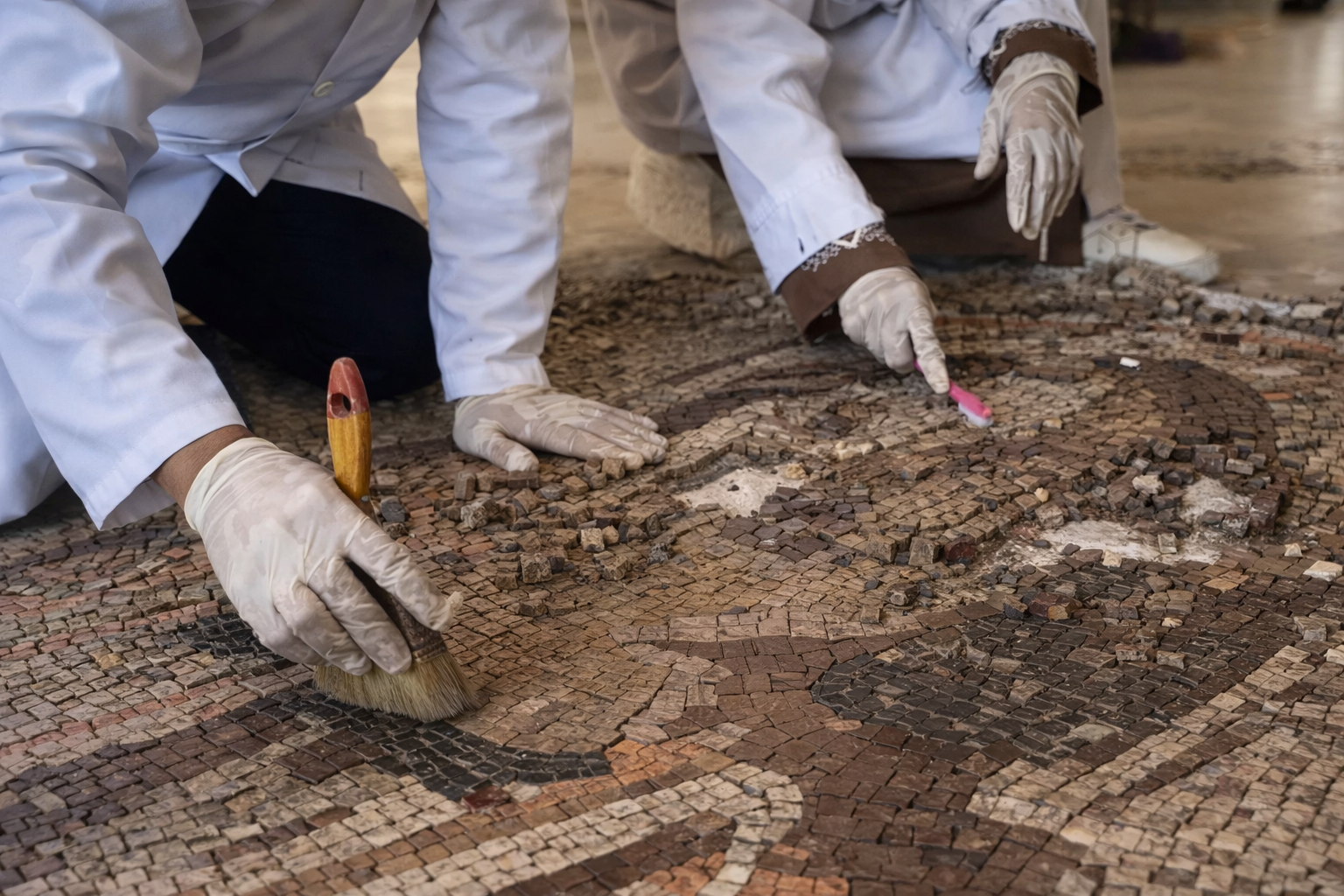
Amid the destruction left by the war, a cultural association in Gaza has revived mosaic art using stones and debris from demolished homes, giving children and young people a space to express creativity and preserve Palestinian heritage.
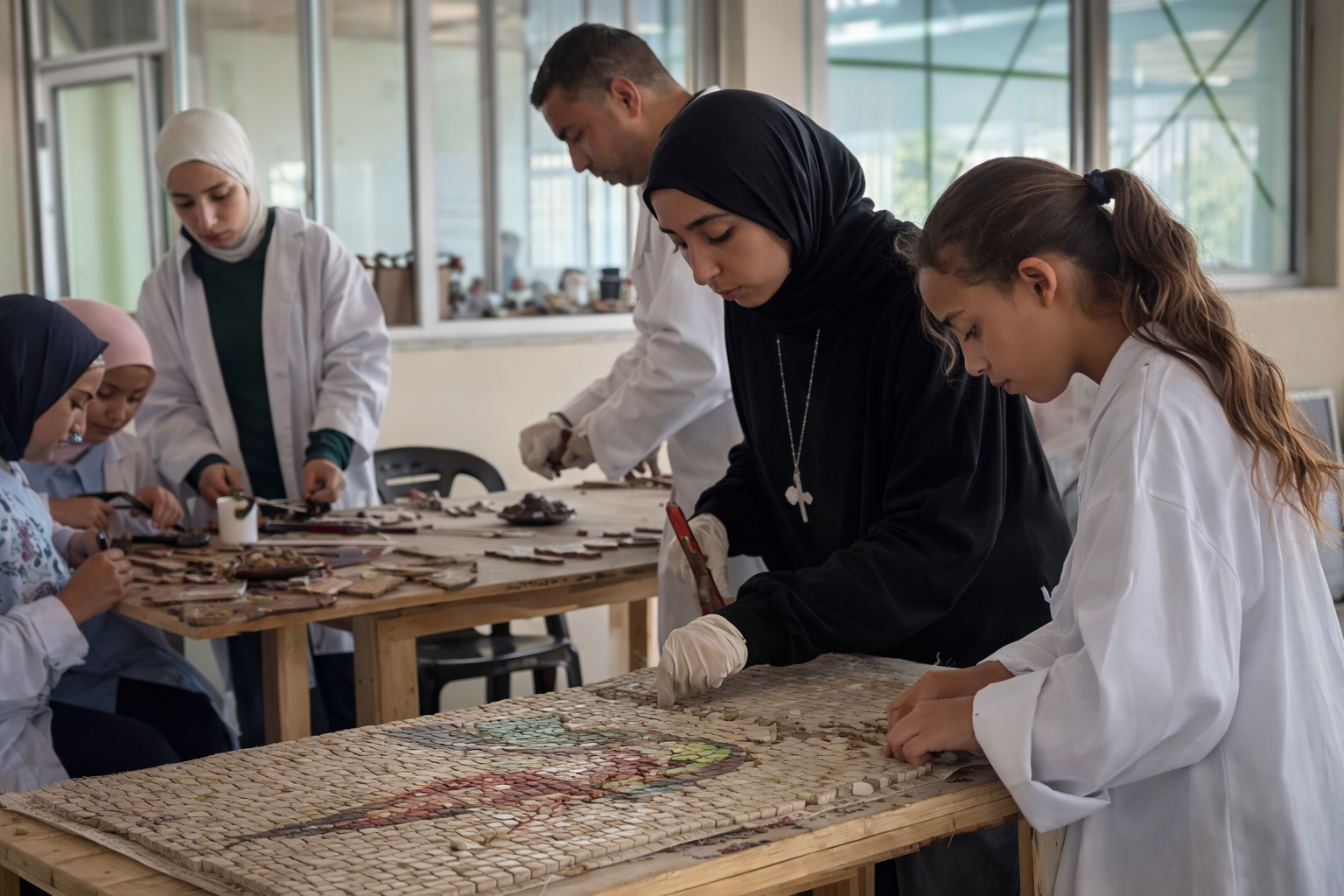
The Culture and Free Thought Association in the Gaza Strip has resumed activities at its mosaic workshop after it was halted during the Israeli war on Gaza.
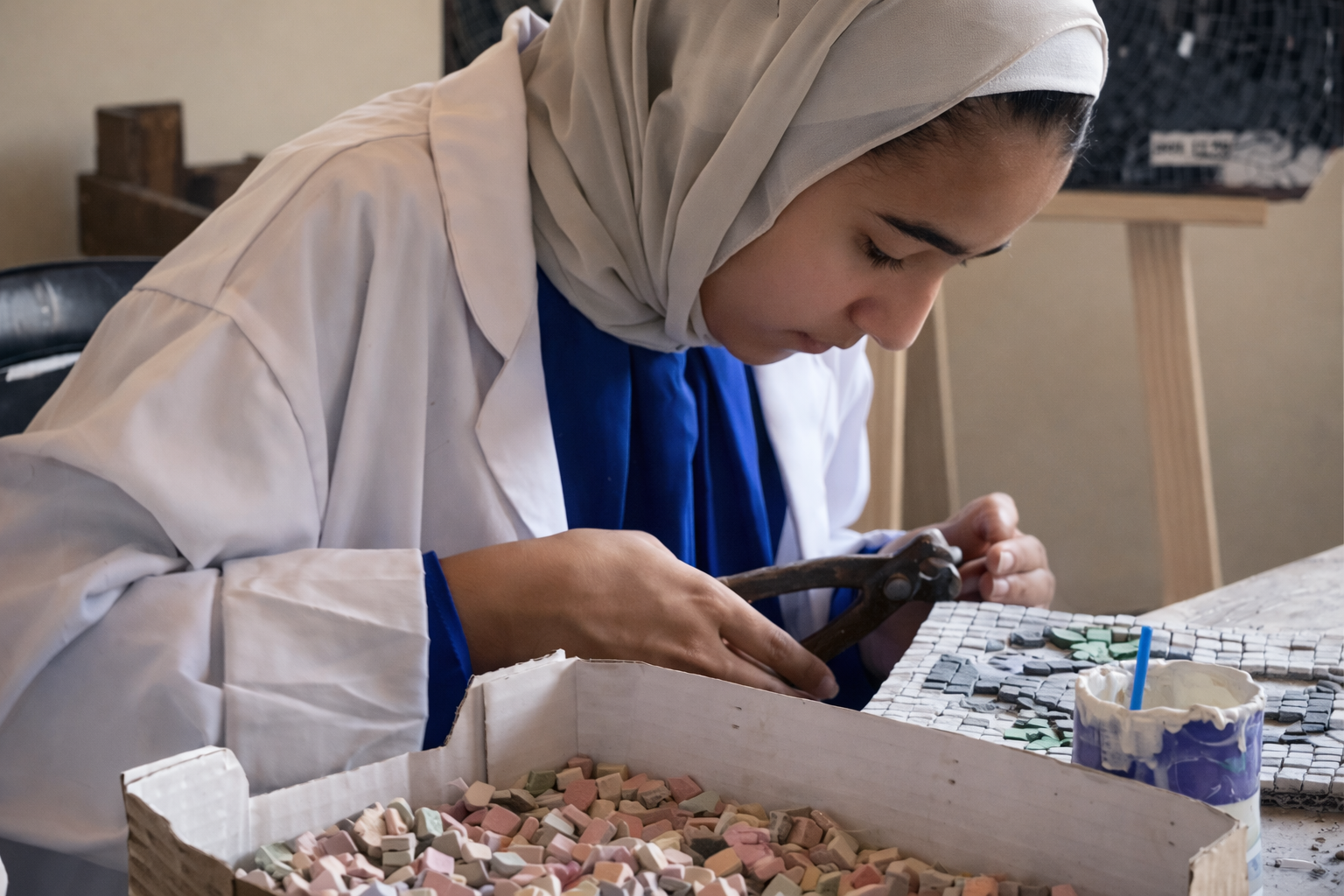
The initiative targets children and teenagers, seeking to encourage them to discover their creative abilities and transform them into artistic works through mosaic, one of the oldest forms of visual art that has survived across different eras.
What stands out is that the art is being taught and produced using the limited resources that survived the war. However, the main foundation of the work is the rubble of destroyed homes and the stones recovered from the ruins.
Inspired by Heritage
Visual artist at the association, Mohammed Abu Lahiya, told Al Jazeera that the program begins by training participating children through specialized and intensive courses focused on mosaic techniques.
He explained that working in this field requires time, precision, and attention to detail, adding that preparing children to work patiently and carefully can take several months.
According to Abu Lahiya, Palestinian cultural heritage is a central element in the workshop’s training process.
Children create mosaic artworks inspired by traditional Palestinian scenes, particularly those from before the Nakba in 1948, including images of Palestinian women, farmers, olive trees, and the sea.
These scenes are studied and explained to the children before they receive practical training on the correct techniques of designing and producing mosaic artworks.
Mosaic is considered both an ancient and contemporary art form, and one of its key features is sustainability through artistic murals.
“This art remains beautiful and maintains its character despite the passage of time, different historical periods, or exposure to natural erosion,” Abu Lahiya said.
Challenges and Shortages
The biggest challenge facing the workshop is the shortage of raw materials, forcing specialists to rely on alternatives during different stages of production, including cutting, assembling, and securing finished artworks.
Abu Lahiya said artists are struggling due to the lack of cement, a key material used in mosaic production, making it difficult to complete artworks in the required manner.
As a solution, they use crushed bricks mixed together as an alternative, while stones are extracted from beneath the rubble, recycled, and then assembled and fixed onto walls.
Art as Healing and Learning
For 14-year-old Kenan Mustafa Ramadan, mosaic art has become a way to release psychological pressure and channel her energy into learning a new skill.
She meets with her friends at the workshop, where they learn how to create new artworks.
Speaking to Al Jazeera, Kenan said Israeli forces bombed her family’s home in the Al-Mawasi area of Khan Younis less than a year ago, leaving her with physical and psychological injuries.
“I stayed for six months after my injury and could not move because of the metal implants in my body. Now my hand is deformed and my leg has a medical device,” she said.
Like Kenan, 15-year-old Inaya Abu Hadrous turned to mosaic art as a way to cope with the pressures of the war, develop her abilities, and preserve Palestinian heritage.
She said participants create new artworks and restore older pieces by previous artists, while facing a lack of proper tools and colors.
Despite these difficulties, they use whatever materials are available to produce acceptable artworks, even when some pieces remain incomplete due to shortages of raw materials.

No comments yet. Be the first to share your thoughts.