
Equity markets remained volatile after heavy selling in technology and semiconductor shares, boosting demand for the dollar and US bonds as safe havens. Expectations of tighter monetary policy grew as Fed officials adopted increasingly hawkish tones, citing the resilience of the US economy.
Geopolitical tensions also played a role, with disagreements between Washington and Tehran over key aspects of their framework agreement driving investors toward safe assets.
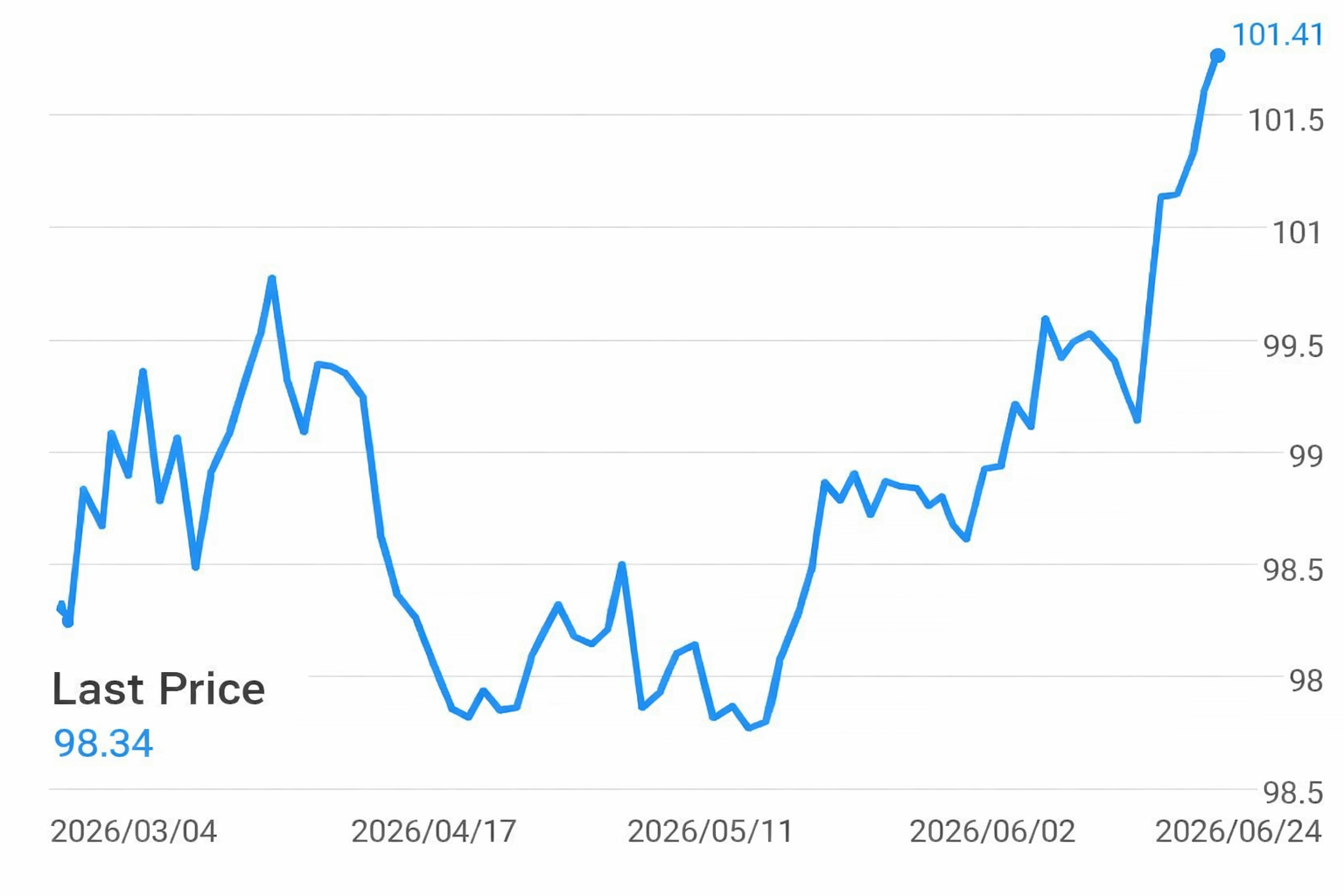
The dollar index rose to 101.69, its highest since May 2025, gaining 0.2% on the day. “The US dollar remains the preferred safe haven,” said Ray Attrill, head of FX research at National Australia Bank. “Momentum is clearly in its favor right now.”
CME’s FedWatch tool showed markets pricing a 36% chance of a July rate hike, up from 9% a week earlier, and over 70% odds of a September increase compared to 29% previously.
The euro fell 0.3% to $1.134, its weakest in more than a year. Sterling eased to $1.319, with Bank of England policymaker Alan Taylor saying holding rates steady longer was the right response to inflation pressures. The Australian dollar slipped 0.3% to $0.689, its lowest since April, amid mixed inflation data.
The yen traded at 161.69 per dollar, close to its weakest since 1986 if it breaches 161.96. Japanese officials’ verbal warnings this week did little to ease pressure, prompting the government to consider new strategies for managing its $1.3 trillion in FX reserves.
A summary of Bank of Japan’s June policy meeting revealed some members advocating another rate hike to bring the benchmark closer to neutral levels for the economy.
No comments yet. Be the first to share your thoughts.