
From Izmir to Fethiye
Turkey’s western coast along the Aegean Sea extends in a long geographical arc, beginning in the north near Çanakkale and continuing south toward the outskirts of Antalya, covering nearly 2,800 kilometers. It is considered one of the most diverse coastlines in the Eastern Mediterranean, where vibrant cities stand alongside peaceful villages, and turquoise bays are scattered between mountains and forests.
Across this vast stretch, major cities and regions shape the tourism map of the area, starting with Izmir and its surrounding towns such as Çeşme and Alaçatı, passing through historic destinations including Selçuk and Kuşadası, reaching Bodrum in the southwest, then extending toward Marmaris and Göcek, before ending in the Fethiye region, the gateway to the southern Lycian coast.
This coastline is not merely a geographic area overlooking the sea; it is an interconnected network of secluded bays, peninsulas, mountain villages and historic ports shaped over centuries by the interaction between humans and nature. Together, they create a tourism destination that combines natural tranquility with cultural heritage.
The region was once one of the major centers of ancient civilizations in Anatolia, where philosophy, medicine and the arts flourished. Its landscape is filled with remarkable historical landmarks, including the Mausoleum of Halicarnassus in Bodrum and the Temple of Artemis in Ephesus, listed among the Seven Wonders of the Ancient World, in addition to the ancient cities of Pergamon and Troy in the wider Western Anatolia region. This makes the coastline an open record of human history spanning thousands of years.
Within this geographical and historical setting, tourism experiences vary along the coast, with each area offering its own distinct character, from the urban energy of the north to the peaceful isolation of the south.
Çeşme Peninsula and Izmir: The Starting Point
Izmir is Turkey’s third-largest city and the main gateway to the Aegean coast. It represents an ideal starting point for exploring the region, combining a modern atmosphere and active urban life with its proximity to historical sites and traditional markets that reflect the spirit of the old city.
A short distance west lies the Çeşme Peninsula, one of Turkey’s most prominent holiday destinations, where quiet villages coexist with modern resorts, allowing visitors to move between rural landscapes and lively beaches within a short distance.
The Urla route passes through hills dotted with small vineyards and rural restaurants offering a “farm-to-table” experience, reflecting the area’s gradual shift toward more sustainable tourism.
Alaçatı combines water sports with vibrant nightlife. Its steady winds have made it a center for windsurfing, while its stone houses decorated with flowers give its narrow streets a distinctive charm.
The cities of Pergamon and Ephesus, located near Izmir, are among the most prominent sites listed on the UNESCO World Heritage List. Both are about an hour’s drive from the city center and offer a fascinating glimpse into the prosperity of ancient Anatolian civilizations.
In Selçuk, the main gateway to Ephesus, visitors can take a day trip to Birgi, considered one of the world’s best tourism villages thanks to its traditional architecture and its heritage in silk production and handmade textiles.
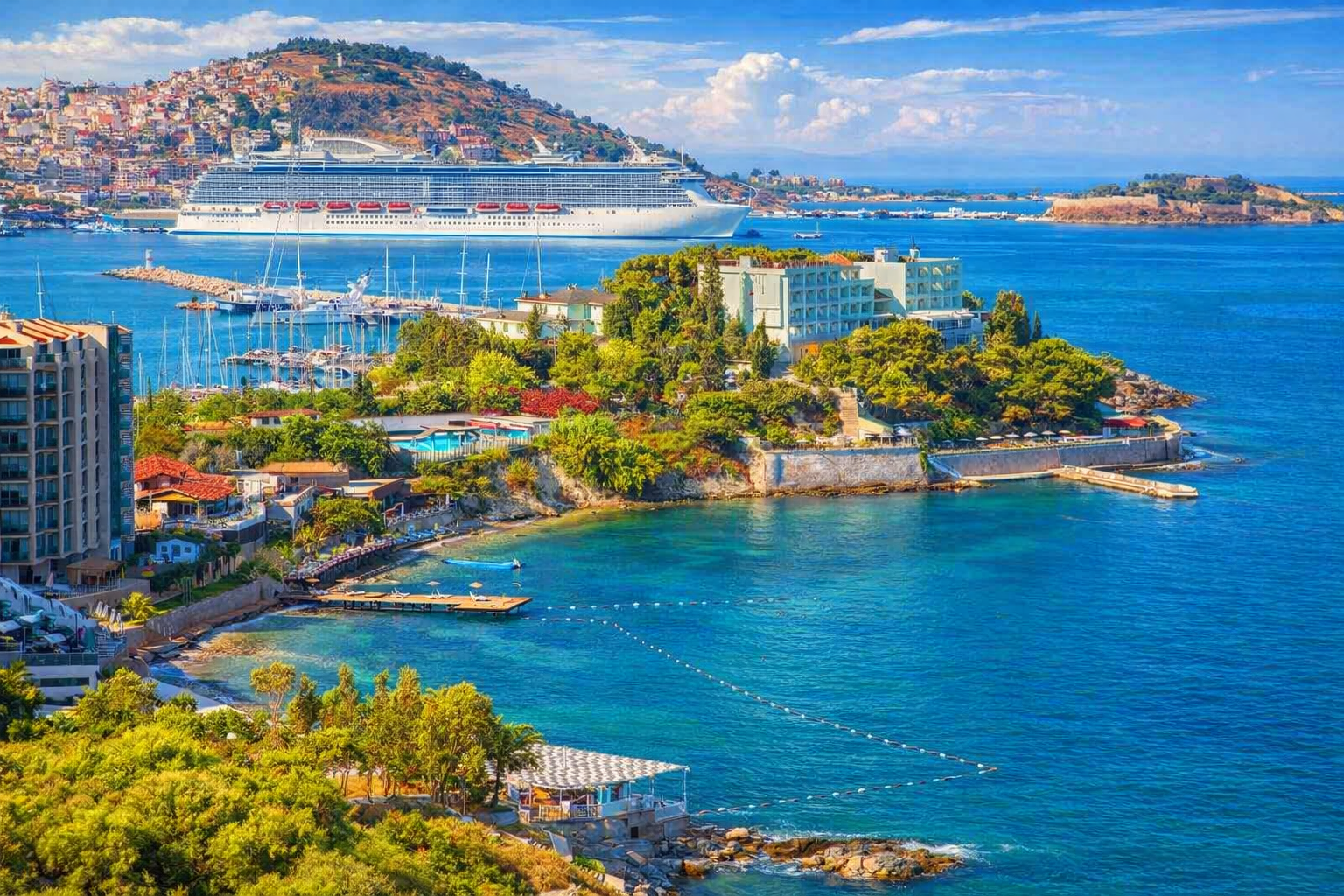
Around 20 kilometers south of Selçuk lies Kuşadası, the coastal city that houses a historic castle dating back to the 14th and 16th centuries and serves as a major departure point for luxury cruise journeys.
Kuşadası is also a gateway to exploring the ancient cities of Miletus and Priene, which flourished in the Meander River delta and became major centers of philosophical thought based on the observation of nature. Miletus was known as the birthplace of Anatolian philosophers, including Thales, while Priene was famous for one of the earliest examples of urban planning based on an organized street grid.
Bodrum: The Most Famous Destination
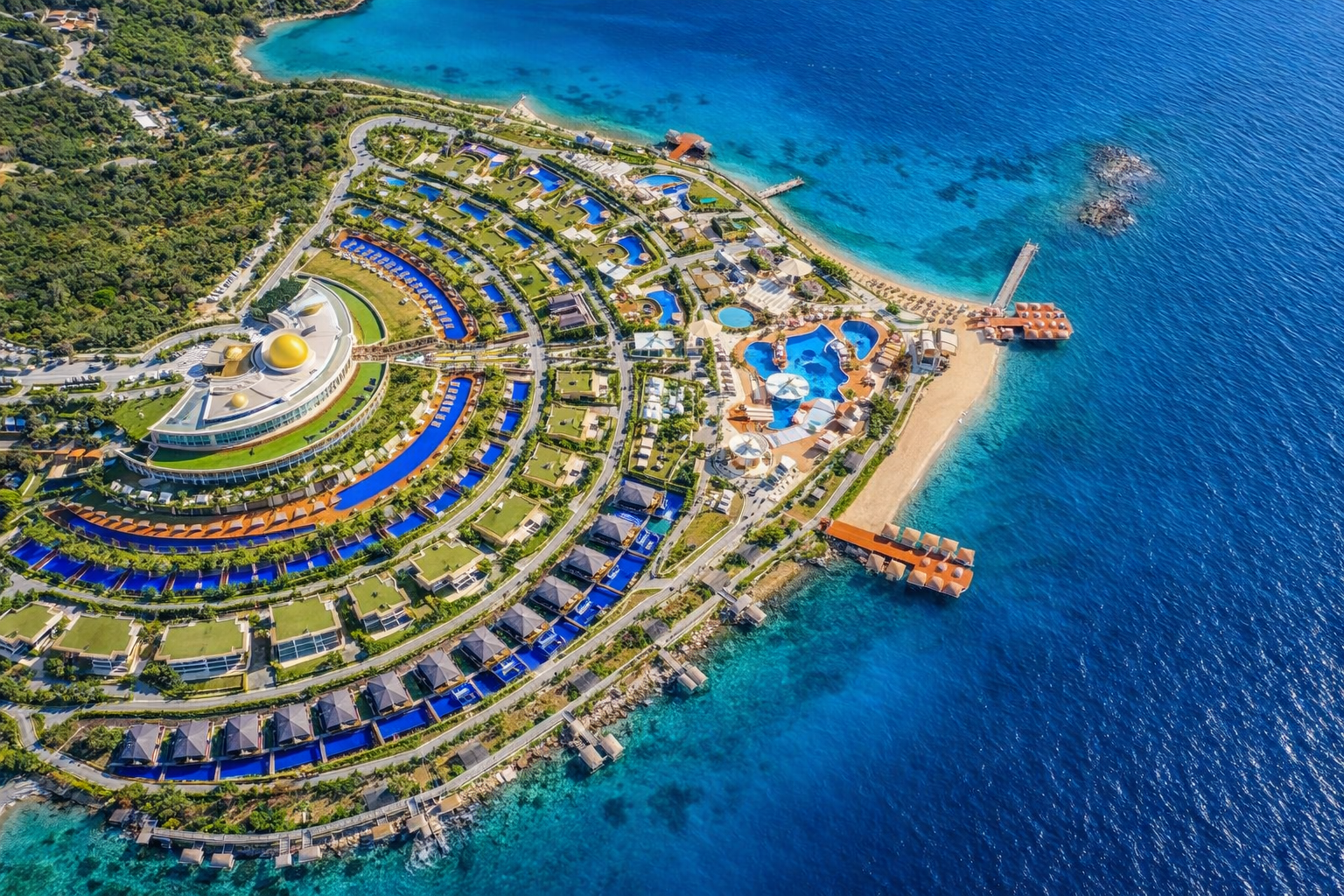
Bodrum is one of the Aegean’s most prominent destinations, embodying coastal life at its finest with white villas scattered across hills overlooking the sea, marinas hosting luxury yachts, and upscale restaurants that give the city a character combining elegance and tranquility. Its mild climate has made it a year-round destination.
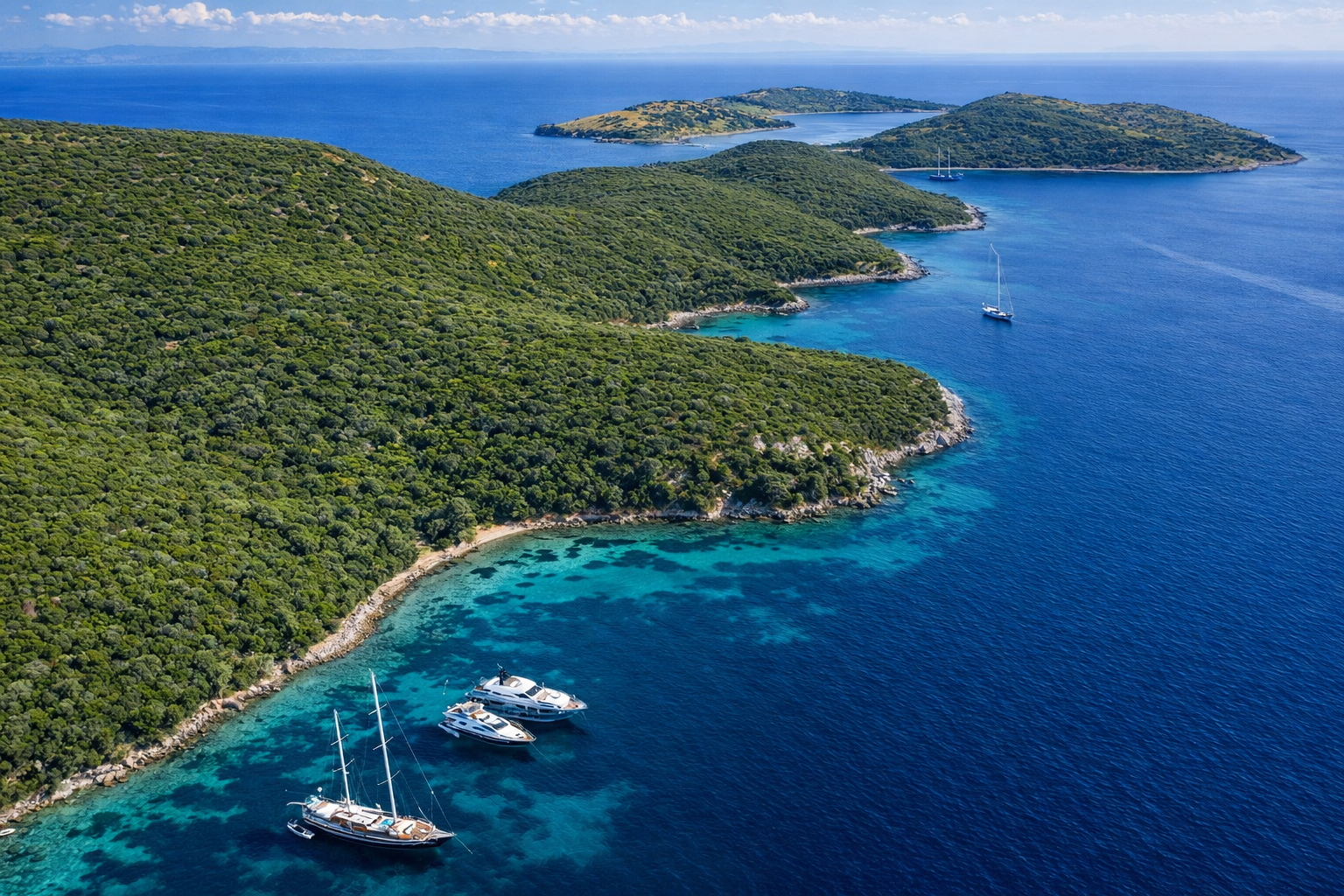
The “Blue Voyage” is one of Bodrum’s most famous experiences, with traditional sailing boats setting out on journeys between secluded bays and small islands, offering visitors the chance to connect with nature away from crowded areas.
The peninsula’s appeal extends beyond its coastline, as its towns are known for their luxurious atmosphere. In Gölköy, Türkbükü and Yalıkavak, luxury resorts, beach clubs and modern marinas are widespread, while Gümüşlük maintains a quieter character with seafood restaurants along the shoreline and simple cafés reflecting a slower pace of life.
In central Bodrum, the historic bazaar remains lively, with shops selling local products and handmade jewelry. As evening arrives, the waterfront transforms into a complete visual scene, with sunset colors reflected on the bay’s waters while Bodrum Castle stands prominently in the background as one of the city’s most recognizable landmarks.
A visit to Bodrum Castle is considered essential, as it houses the Bodrum Museum of Underwater Archaeology, which contains a rare collection of artifacts, including the remains of one of the oldest shipwrecks discovered in the region.
The city also hosts cultural and musical events, including the Bodrum Ballet Festival and theatrical performances at the ancient theater, as well as sailing competitions during the annual Bodrum Cup held in October, bringing together elite sailing boats in a remarkable maritime spectacle.
Marmaris and Göcek: A World of Secluded Bays
South of Bodrum begins a different landscape stretching between Marmaris and Göcek, home to one of Turkey’s most beautiful sailing areas, with clear bays accessible only by sea, giving the region a sense of isolation and tranquility.
The Bozburun and Datça peninsulas lie between the Gulf of Gökova and Marmaris, extending into the sea and creating landscapes that combine untouched nature with peaceful coastal life.
The region can be reached through Milas and Dalaman airports and forms a key part of sailing routes that reveal successive bays hosting small restaurants accessible only by boat, serving fresh seafood in open natural surroundings.
Along this coastline are several notable stops, including Akyaka, known for its peaceful environmental character; Bördübet, famous for its forests and streams; and Datça, with its old town and seaside harbor.
Bozburun and Selimiye preserve a simple and quiet lifestyle, while Turunç offers a luxury stay experience in a secluded bay surrounded by mountains and overlooking small hotels and private villas.
Marmaris remains the region’s most prominent port. The city developed around its historic medieval castle and today maintains the energy of its old market and streets filled with cafés and bars.
Further south, Dalyan offers a peaceful natural experience along the riverbanks, where the rocky cliffs of Kaunos overlook tombs carved into the mountains dating back to the ancient Carian civilization.
The area is home to endangered sea turtles, including loggerhead turtles (Caretta caretta) and green turtles, which nest along İztuzu Beach between May and August. The sandy beach stretches for five kilometers.
Inland, Köyceğiz has transformed from an ancient gulf into a calm lake surrounded by orange orchards and aromatic forests. It offers dedicated cycling trails and is known for its fish resources, especially mullet, whose roe is used to produce a traditional local caviar.
About half an hour away lies Göcek, a favorite destination for sailing enthusiasts, where private yachts can be rented to travel between islands or dock at modern marinas attracting visitors from around the world.
Datça is also known for its almond season in February, when blossoms create a scene celebrated annually through the “Badem Çiçeği” Festival. Meanwhile, Knidos, located at the far end of the peninsula, remains a major archaeological site that was once one of the region’s most important ports and centers of art and culture.
Fethiye: The Land of Light and the Lycian Coast
Fethiye preserves a rich heritage dating back to the Lycian civilization, which left behind remains extending to around 1500 BC, including large public buildings, rock-cut tombs carved into mountains, and passages stretching from the coast to the hillsides. These landmarks remain present within the modern urban landscape.
Fethiye offers a vibrant experience, particularly at its popular fish market, where visitors can choose their preferred seafood and have it cooked fresh in front of them.
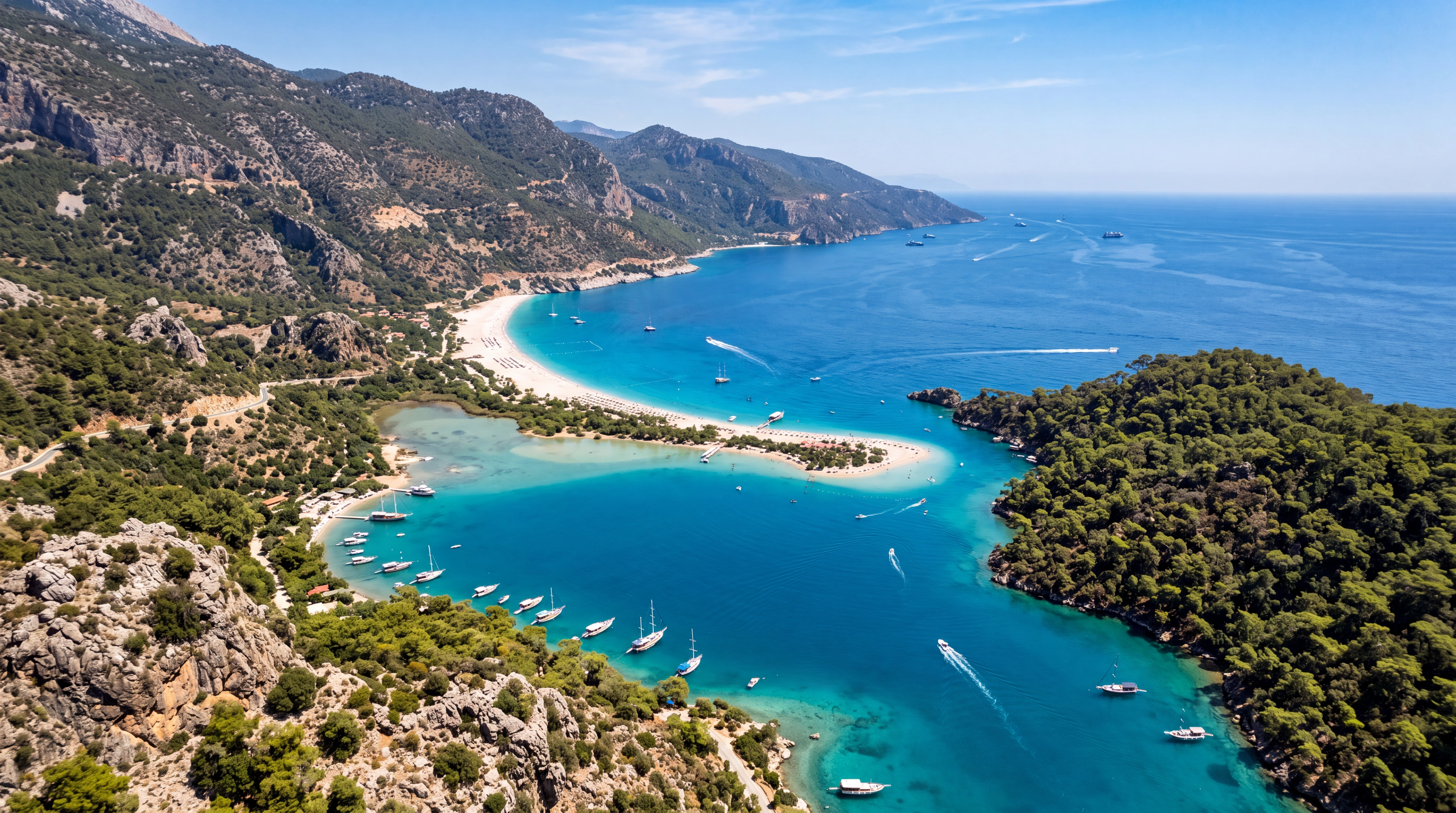
However, the region’s most famous attraction remains Ölüdeniz Beach, where white sands meet a turquoise lagoon at the foot of Babadağ Mountain, offering one of the coast’s most spectacular panoramic views.
Ölüdeniz has been transformed into a national park attracting nature and adventure lovers. Paragliding from Babadağ’s summit provides an aerial view of the coastline, while a cable car offers easy access to the peak, especially during sunset.
The Lycian Way is one of the world’s most famous long-distance hiking routes, stretching 540 kilometers from Ölüdeniz to Antalya. The trail includes easy, moderate and challenging sections and can be completed in around a month or explored through shorter segments.
Along the route, Butterfly Valley and Kabak Valley stand out as two neighboring natural destinations offering eco-friendly accommodation experiences ranging from luxury camping to complete isolation in nature.
Faralya provides peaceful retreats away from city noise, with camps and safari tents overlooking secluded rocky beaches.
With this north-to-south stretch, Turkey’s Aegean coast reveals a complete geographical and tourism landscape, where lively cities blend with quiet villages, and ancient history meets untouched nature, creating a travel experience unlike any other.
No comments yet. Be the first to share your thoughts.