
Concerns and warnings have increased in recent days over the potential risks posed by locusts reportedly arriving in Turkey from Balkan countries, with claims that they could affect agricultural seasons and even human life. Some media outlets and social media users described the phenomenon as a “mass locust invasion” before the Ministry of Agriculture and Forestry issued a clarification on Tuesday.
The ministry said in a statement: “No locust invasion threatening agricultural production has been detected, and there is no mass locust invasion from the Balkans or Africa,” stressing that there is no threat to agricultural production and that the locusts shown in circulating images are local species that naturally exist in the country.
Responding to reports published by local media, the ministry said that inspections and monitoring carried out by its teams found no locust invasion threatening agricultural production or any locust تجمع causing economic damage in the Marmara region, particularly in Istanbul and Tekirdag.
The ministry said that identifying the locust species appearing in the circulated images showed that all of them belong to local groups naturally found in Turkey, adding that there is no locust invasion in the form of swarms arriving from the Balkans, Africa, or any other region as claimed.
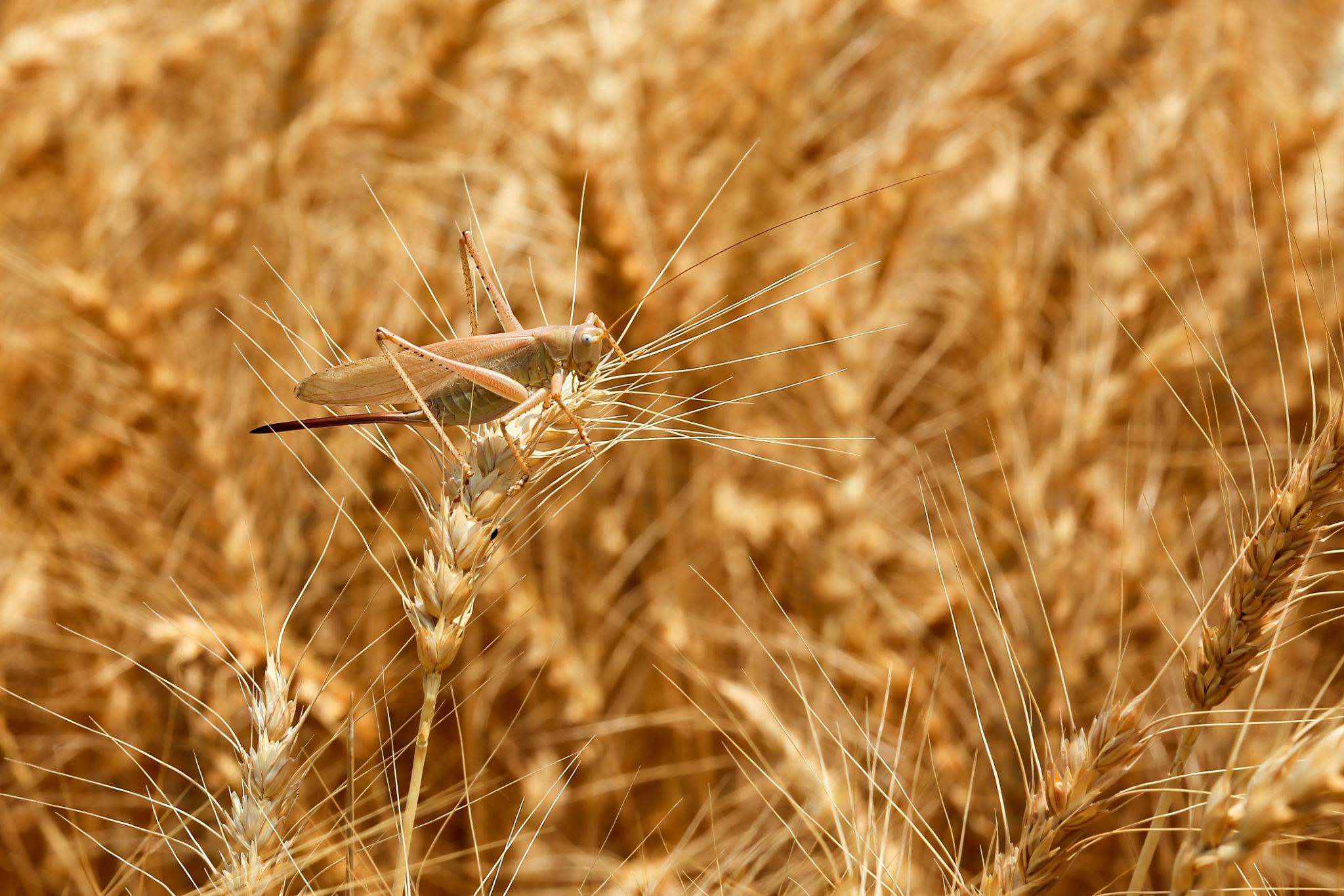
It also said that the species observed in Istanbul is not a crop-damaging locust, but rather the white-faced bush locust, which feeds on agricultural pests and contributes to biological balance.
Regarding the increased appearance of locusts in areas around the Sea of Marmara and Istanbul province in particular, as well as their movement into residential areas, the ministry said many locust species naturally live in Turkey. Their numbers may increase seasonally depending on weather conditions, especially during breeding periods, and they may move toward residential areas due to winds. Residents often notice them because they are attracted to light during hot weather.
The ministry emphasized that “this process is natural and does not indicate an invasion,” adding that its technical teams operating in all 81 provinces regularly monitor locust populations as part of the annual plant health protection program.
The Turkish Ministry of Agriculture and Forestry also said it has intensified monitoring and preparations in case species that could harm agricultural production reach an economic damage threshold, at which point necessary control measures would be implemented without delay.
It clarified that the current situation does not require such measures and said it “will continue monitoring, surveying, and control operations to protect plant production in accordance with scientific principles, while informing the public with respect.”
Agricultural sector specialist Erhan Beyoğlu said that the locusts appearing in some Turkish provinces are a natural seasonal phenomenon linked to reproduction, rising temperatures, and wind patterns.
He added that the locusts observed, including in some residential areas, do not pose a threat to human health because they do not transmit diseases or bite. They could only affect some crops if their numbers increase significantly and they form swarms.
Beyoğlu confirmed that agricultural crops remain safe and that no damage has been detected. He explained that the locust species found in Istanbul and Tekirdag are local “white-faced tree locusts,” meaning they did not come from outside the country. He added that this specific species does not feed on agricultural crops and may even provide environmental benefits by contributing to ecological balance.
Turkey has not experienced a major locust invasion in recent decades, except for some cases associated with rising temperatures, such as in 2021 and 2022, when larger-than-usual numbers appeared and reached residential areas in Istanbul and Mount Tekirdag.
Concerns also emerged in 2022 in Turkey’s southern and eastern provinces, including Mardin, Diyarbakir, and Sanliurfa, during a major desert locust outbreak that affected East Africa and Saudi Arabia.
Turkey has not witnessed destructive locust swarms since the end of World War I in 1918, when swarms invaded parts of the Levant and southern Anatolia, damaging agriculture in the provinces of Adana and Antakya near Syria.
Earlier, during the late Ottoman period, locust invasions affected provinces including Izmir, Aydin, and Adana, with desert and Moroccan locusts damaging crops and fruit trees.
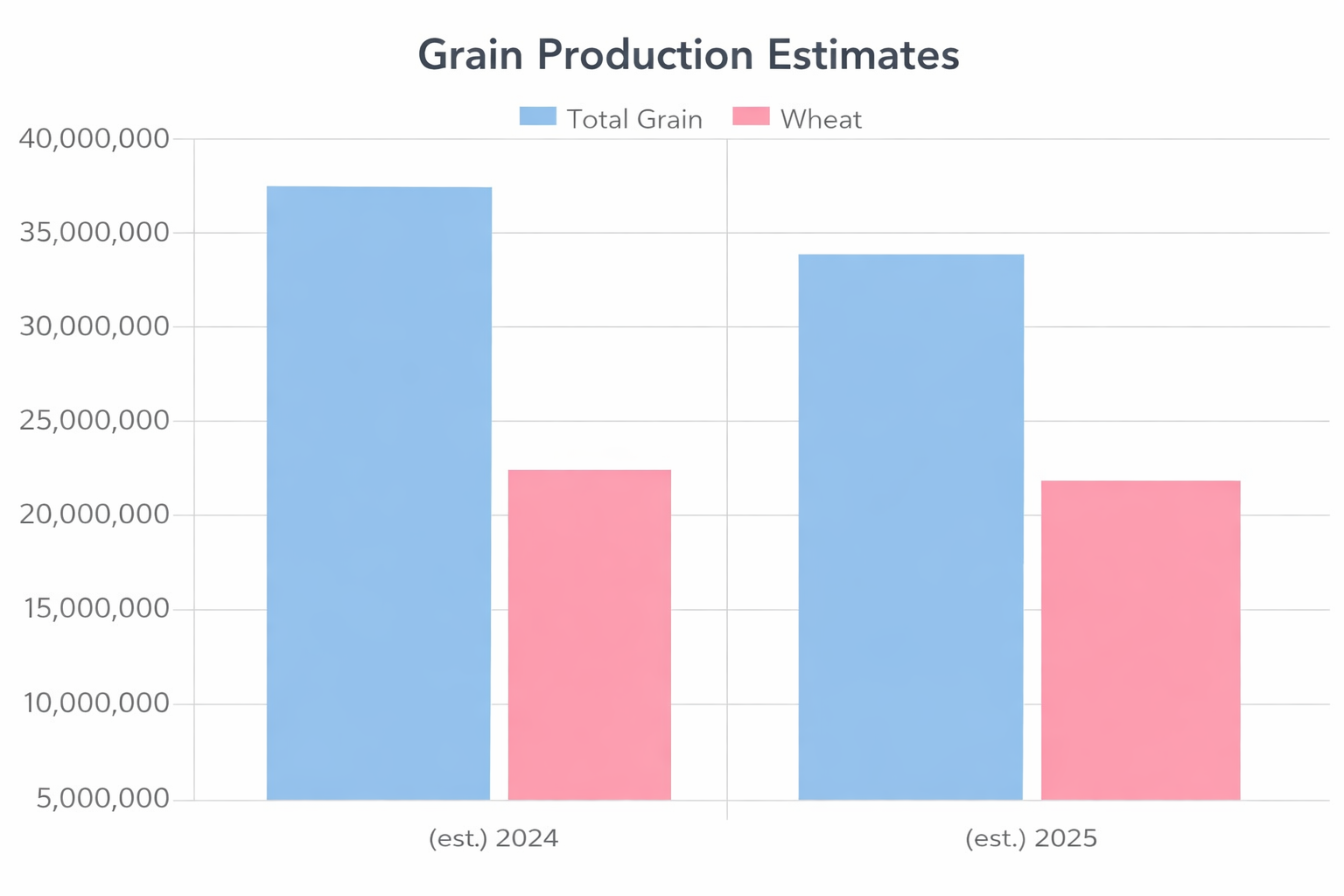
Turkey is experiencing a strong agricultural season this year after 2025 was described as the worst in five decades. Official estimates indicate that grain production has increased by 21% to more than 40 million tons, including 22.8 million tons of wheat, a quantity exceeding domestic consumption and increasing export capacity.
Fruit production has also seen a significant recovery after last year’s frost wave, which led to lower output, higher prices, and reduced exports. This year’s fruit production is estimated to reach around 30 million tons.
No comments yet. Be the first to share your thoughts.