
Port of Spain — Trinidad and Tobago announced an agreement with British energy giant Shell to develop and exploit natural gas from Venezuela’s offshore Loran field. Energy Minister Rudal Moonilal said the deal allows Shell to export all production from the first phase of Loran to Trinidad, where it will be processed at the Beach Field facility before re-export.
The agreement follows Venezuela’s decision to grant Shell a license to explore and export gas under a new hydrocarbons law designed to attract foreign investment by reducing direct state involvement in oil and gas. Official data show the first phase of Loran contains 48.14 billion cubic meters of gas earmarked for export, making it one of the Caribbean’s most significant new projects.
Moonilal stressed the deal, pending final government approval, will have “a major impact on our energy sector and economy,” as Trinidad seeks to offset declining domestic gas production and strengthen its role as a regional hub for energy processing and exports.
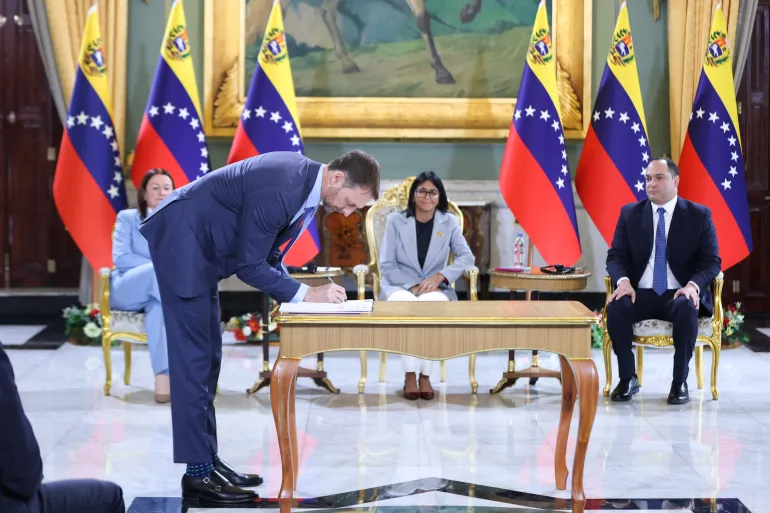
Venezuelan Vice President Delcy Rodríguez hailed the move as “a very important step forward” in developing the country’s natural gas sector and reinforcing its position as a gas supplier. Rodríguez opened the energy sector to foreign investment in January after passing reforms in the legislature under U.S. pressure, following the arrest of former President Nicolás Maduro during a U.S. military operation in Caracas.
The project builds on existing cooperation between Venezuela, Trinidad and Shell. In 2023, the three parties signed a deal to develop the Dragon offshore field, estimated to hold 120 billion cubic meters of gas, though production was hampered by U.S. sanctions imposed on Venezuela’s oil sector since 2019. Venezuela is believed to hold the world’s largest oil reserves and is also rich in natural gas.
**Economic and Regional Significance**
The Loran agreement goes beyond developing a single field. It reflects Venezuela’s growing push to attract global companies after recent legal reforms, while offering Trinidad the chance to leverage its advanced LNG infrastructure. Loran’s importance is heightened by its seven gas reservoirs, six of which straddle the maritime border between Venezuela and Trinidad, making bilateral cooperation essential to maximize economic benefits.
Trinidad and Tobago, located in the Caribbean north of Venezuela, covers 5,128 square kilometers. Its key natural resources are oil and natural gas, underpinning its role as a strategic energy player in the region.
No comments yet. Be the first to share your thoughts.