
New satellite imagery has documented extensive destruction in the southern Lebanese city of Tyre after a series of Israeli airstrikes. The strikes coincided with repeated evacuation warnings issued by the Israeli army as part of its ongoing escalation in southern Lebanon, including ground incursions and the construction of what Israel calls the “yellow line,” a 10-kilometer buffer zone barring residents from returning. Tyre lies just beyond this zone, about 11 kilometers from the border.
Analysis of satellite images comparing January 4 and June 4 revealed demolitions and bulldozing in populated areas and around civilian facilities. The images show massive devastation concentrated around residential buildings, most of which were reduced to rubble. Damage was spread across multiple parts of the city, including housing complexes, indicating the destruction was not confined to a single site. The scenes recall the widespread devastation Tyre suffered during the 2006 war, with similar patterns of civilian displacement and casualties.
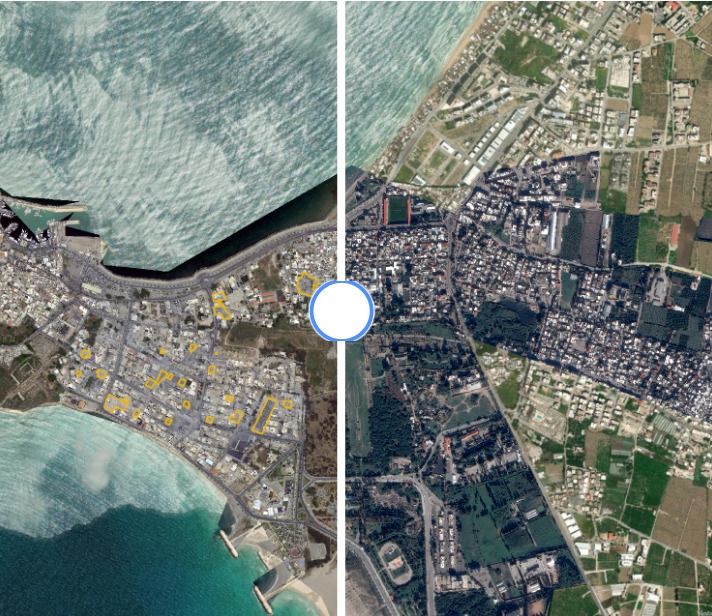
The strikes also damaged areas near Tyre’s UNESCO World Heritage archaeological site. Lebanon’s Ministry of Culture warned that repeated Israeli attacks have endangered the ancient city, inscribed on the World Heritage List since 1984 and granted “enhanced protection” under the 1954 Hague Convention and its 1999 Protocol. The ministry stressed that Tyre’s 5,000-year-old heritage is a global responsibility, not Lebanon’s alone.
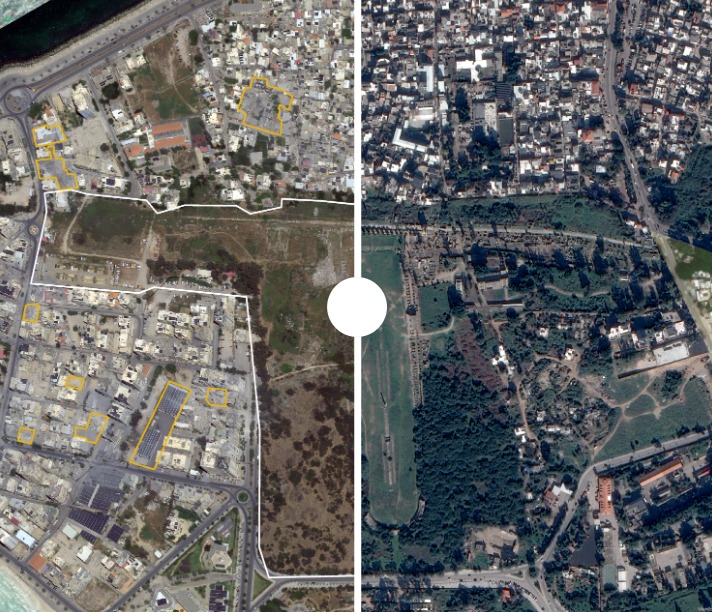
Satellite imagery further revealed destruction inside the Palestinian refugee camp of Al-Bass, officially recognized by UNRWA, along with damage to a public secondary school. Lebanon’s National News Agency reported that Israeli warplanes also struck near the Islamic University in Tyre, causing widespread damage and panic. Local footage showed thick smoke rising after two Israeli raids.
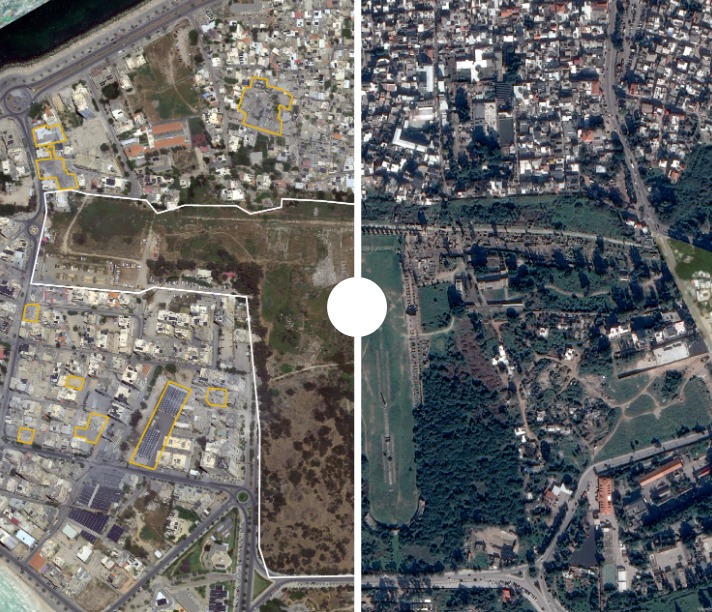
Tyre, located about 20 kilometers from Israel’s border, is one of the Mediterranean’s oldest coastal cities, dating back to the Phoenicians and later ruled by successive civilizations. Its archaeological sites, spread across two areas, are listed as UNESCO World Heritage for their exceptional historical and cultural value.
No comments yet. Be the first to share your thoughts.