One Excavator for 8,500 Bodies: Gaza Struggles to Recover Victims of Genocide
Civil defense teams in Gaza, with only one excavator, face the daunting task of retrieving 8,500 bodies buried under rubble from Israel’s war, highlighting the dire lack of resources and humanitarian urgency.
Twelve-year-old Mohammed Riyad Ghboun waits not for a new home but for the remains of his family, buried under the rubble of their house in Gaza’s Sabra neighborhood for eight months. Civil defense crews resumed recovery operations Saturday, supported by the International Committee of the Red Cross, but with only one excavator available, progress is painfully slow.
Spokesman Mahmoud Basal said around 8,500 bodies remain trapped beneath destroyed homes across Gaza. He warned that at the current pace, recovery could take years, urging international actors to provide heavy machinery. “With proper equipment, the work could be finished in three months,” he noted.
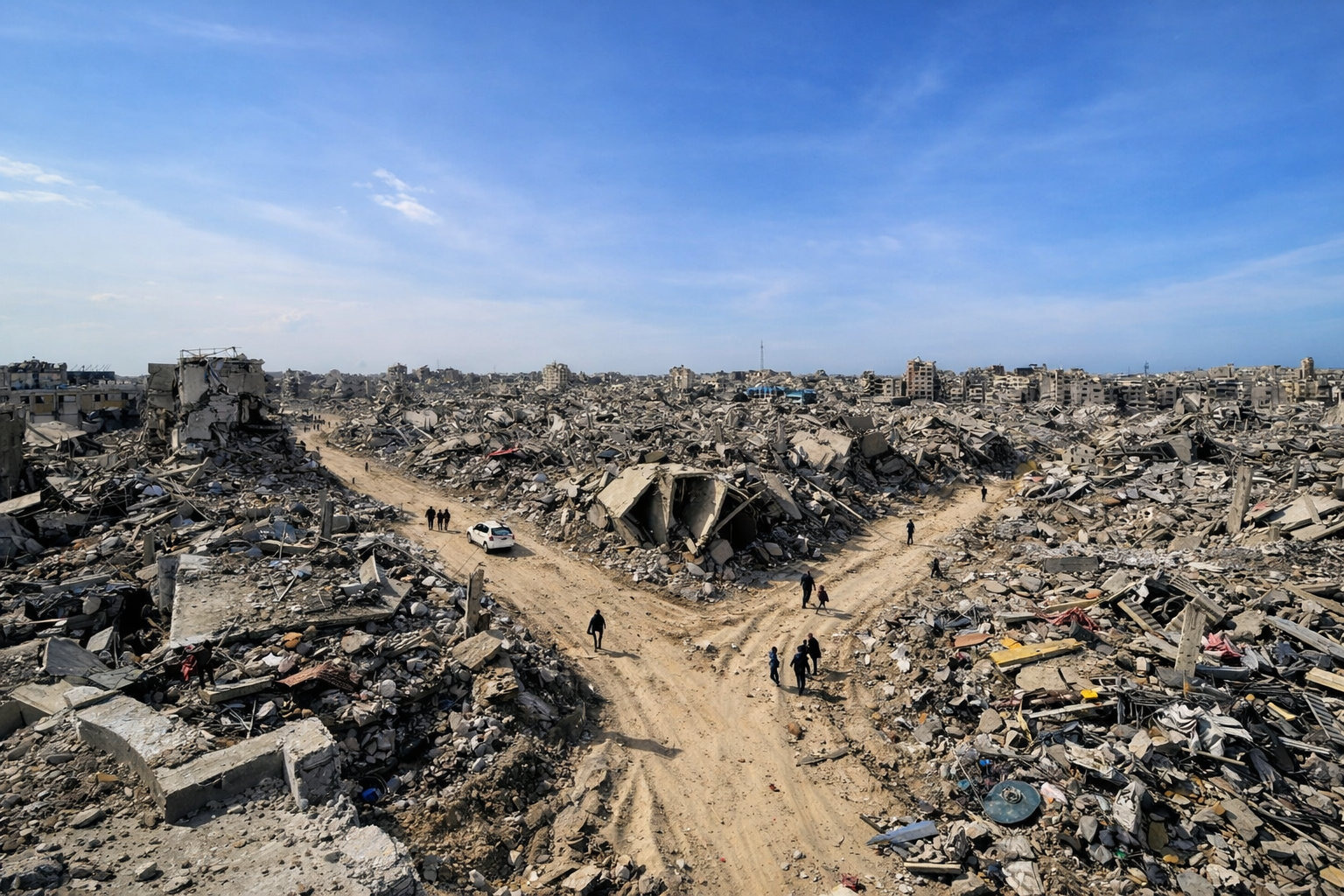
Operations have repeatedly stalled due to fuel shortages and lack of machinery. Under the October 2025 ceasefire agreement, Israel was supposed to allow heavy equipment into Gaza, but that has not happened. The devastation—estimated at 50 to 68 million metric tons of rubble—covers vast residential areas, making recovery efforts extremely complex.
Families endure agonizing waits. Mohammed, himself a survivor pulled from the rubble, said: “I hope to see my relatives’ remains and bury them properly.” Elderly resident Youssef al-Zaharna recalled losing three sons when his home sheltering 45 displaced people was bombed. Two bodies were recovered as fragments; the third remains missing. “All I want is a grave to visit,” he said.
The genocide in Gaza left more than 73,000 dead and 173,000 injured, with 90% of civilian infrastructure destroyed. Civil defense teams, stripped of capacity, rely on rudimentary methods and human chains to clear debris. Without urgent international support, the mission to recover the dead risks stretching into years, prolonging the grief of thousands of families.

No comments yet. Be the first to share your thoughts.