On International Day, UN Honors Nelson Mandela’s Legacy in Fighting Racism and Poverty
The United Nations marked Nelson Mandela International Day by highlighting the South African leader’s legacy in combating racism, poverty, and inequality, while renewing calls for social justice and equal opportunities worldwide.
United Nations Secretary-General António Guterres said that honoring Nelson Mandela and his legacy serves as a reminder that the former South African president was also a visionary advocate for ending poverty and achieving equality.
Guterres said Mandela understood that eliminating poverty was not an act of charity, but rather a matter of justice and a responsibility shared by everyone.
He noted that the world today is facing growing inequality, with wealth increasingly concentrated in the hands of a few, while millions struggle to meet their basic needs, including access to food, water, shelter, and education.
The UN chief called for greater investment in decent work, universal healthcare, quality education, and social protection systems through increased funding and reforms to the international financial system, allowing developing countries to access the resources they need and reduce their debt burdens.
The United Nations designates July 18 each year as Nelson Mandela International Day, encouraging individuals and communities to create positive change through acts of service.
In November 2009, the UN General Assembly officially recognized the day to honor the legacy of the South African leader and his role in the struggle against apartheid, while promoting the values of freedom, justice, reconciliation, and peace.
Who Was Nelson Mandela?
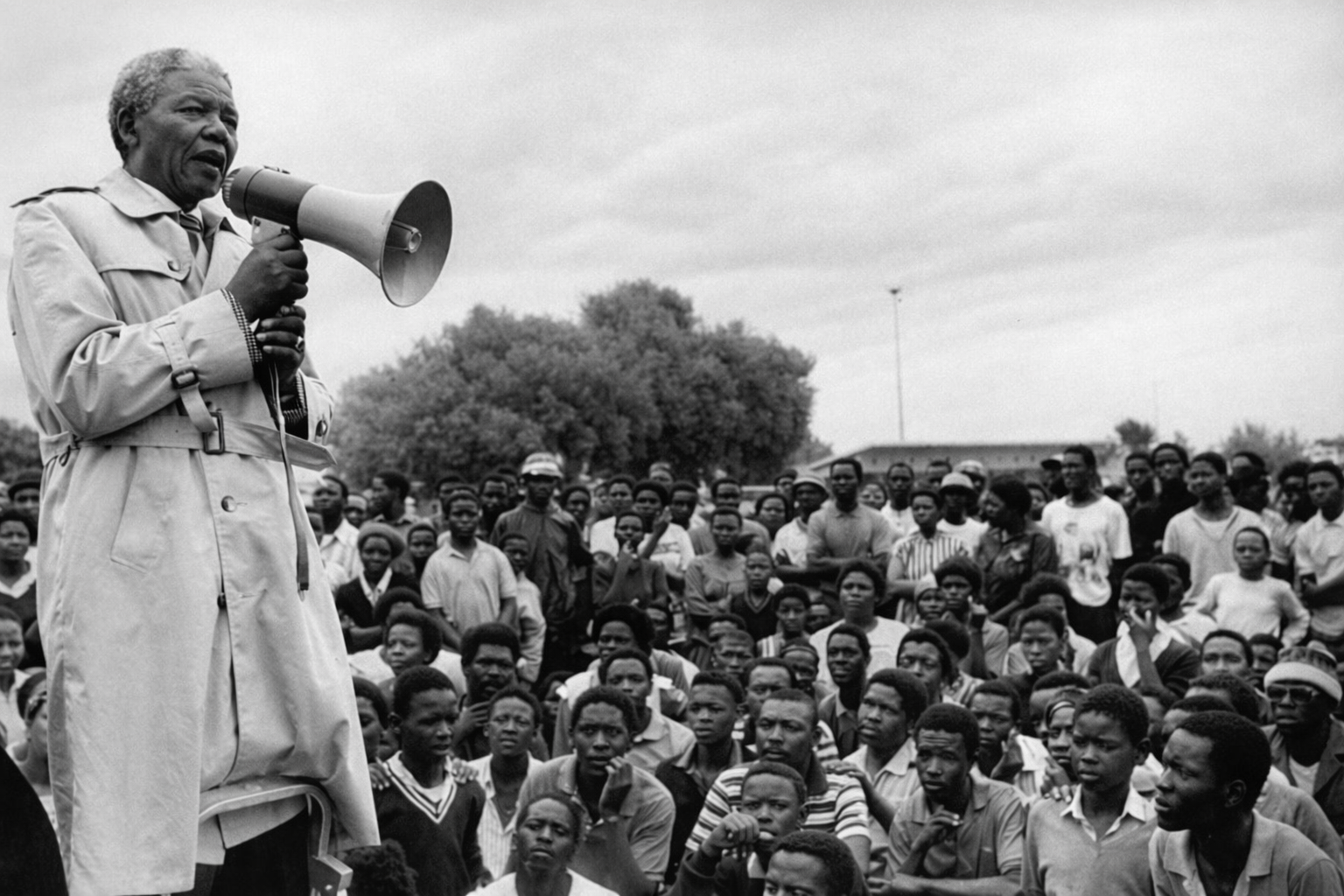
Nelson Mandela was a South African politician and anti-apartheid activist who became the country’s first Black president. He fought against racial injustice, spent more than 27 years in prison, and later emerged as a global symbol of forgiveness and reconciliation by advocating unity rather than revenge against those who had imprisoned him.
Among South Africans, Mandela is widely known as “Madiba,” a name referring to the clan he belonged to.
Mandela was born on July 18, 1918, in South Africa. His father named him “Rolihlahla,” a word meaning “troublemaker” in the Xhosa language, but his teachers at a missionary primary school gave him the English name “Nelson” because they could not pronounce his original name.
His father died when Mandela was nine years old. He was among the few African children who gained access to primary education at the time.
However, he was expelled from university in 1940 after participating in student protests against racial discrimination policies. Unable to continue his studies regularly, he later completed his education through correspondence courses in Johannesburg and earned a law degree.
The Fight Against Apartheid
Mandela joined the African National Congress (ANC) in 1942, becoming involved in the struggle against apartheid, South Africa’s system of institutionalized racial segregation.
After the ANC was banned following the Sharpeville massacre in 1960, Mandela led resistance campaigns and underground activities, while also coordinating military training for party members in Algeria.
Authorities arrested him on charges of incitement and leaving the country illegally, and he was sentenced to life imprisonment in 1964.
During his 27 years in prison, Mandela became an international symbol of freedom and resistance, refusing to compromise his principles or abandon the struggle of his people in exchange for conditional release.
Under growing international pressure, the South African government released Mandela in 1990. He immediately began historic negotiations with white President Frederik Willem de Klerk to end apartheid and establish a democratic constitution.
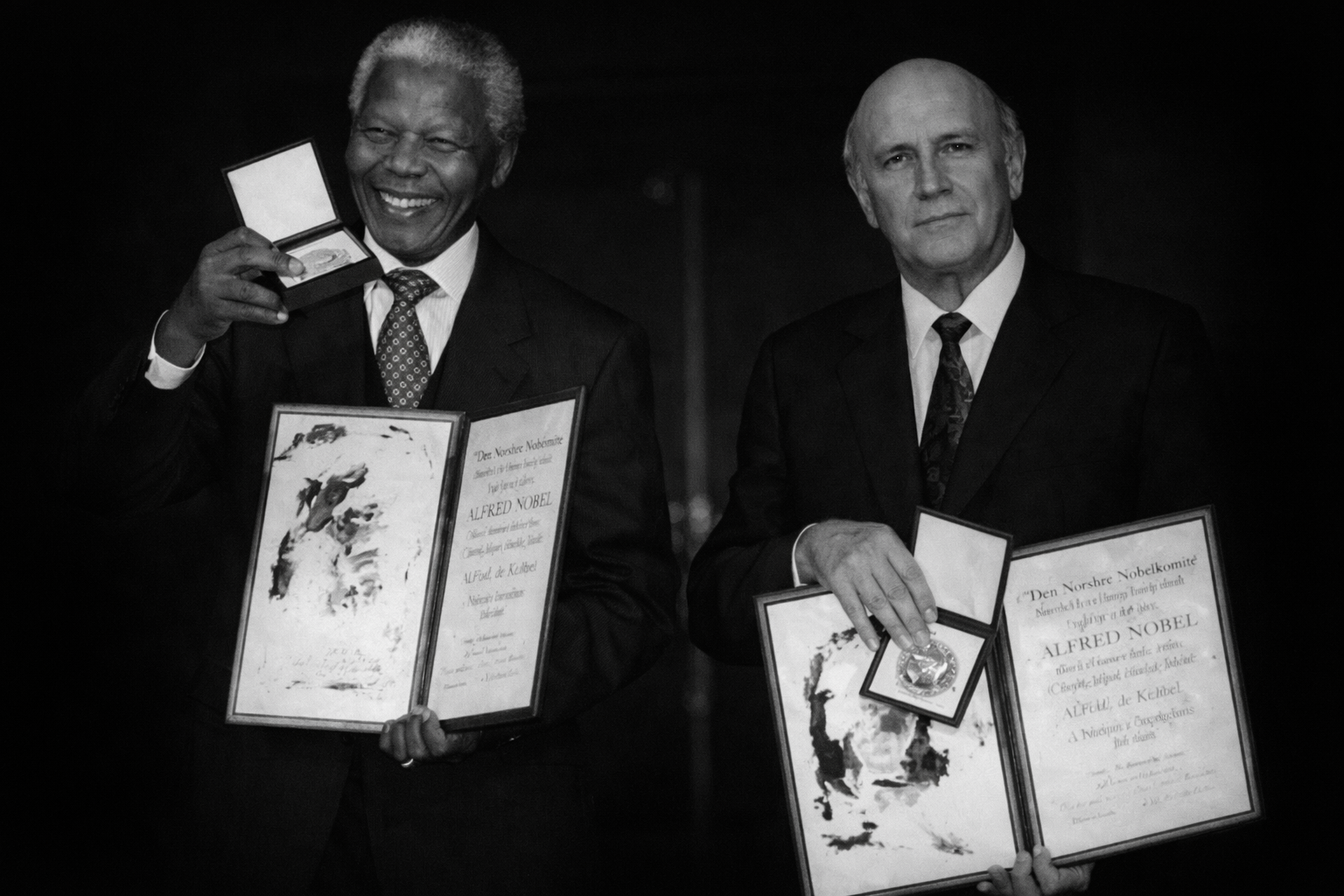
Their efforts led to both leaders receiving the Nobel Peace Prize jointly in 1993.
In 1994, Mandela was elected South Africa’s first Black president, fulfilling his vision of liberating “both the oppressed and the oppressor.”
He voluntarily stepped down in 1999 and dedicated himself to humanitarian work, combating HIV/AIDS, and supporting children’s welfare. The United Nations appointed him a goodwill ambassador in 2005.
Mandela died on December 5, 2013, after a long illness. He was honored with a historic funeral attended by dozens of world leaders, reflecting his status as a global symbol of justice, reconciliation, and human dignity.
The UN’s commemoration of Mandela continues to represent more than an inspiring memory, as his legacy has become a guiding political and moral reference in South Africa’s efforts to confront systems of oppression and racial segregation.
Nelson Mandela’s Most Notable Quotes
“Our march towards freedom is irreversible, and we must not allow fear to stand in our way.”
“It is not beyond our power to create the world we want.”
“No one is born hating another person because of the color of his skin, or his background, or his religion.”
“I hate racial discrimination, and my hatred is shared by the overwhelming majority of humanity.”
“The true meaning of equality before the law is the right to participate in making the laws that govern us.”
“A winner is a dreamer who never gives up.”
“It is easy to break and destroy. Heroes are those who make peace and build it.”

No comments yet. Be the first to share your thoughts.