Nine Months After Gaza Ceasefire Deal: What Has Been Achieved and What Lies Ahead?
Nine months after the Gaza ceasefire agreement was signed, a widening gap remains between the commitments outlined in the deal and the harsh reality on the ground, as the agreement remains stalled while military and humanitarian crises continue.
A significant gap continues to grow every day between the provisions outlined in the Gaza ceasefire agreement signed in October and the difficult reality on the ground.
For nine months, since the signing of the Sharm el-Sheikh agreement aimed at ending Israel’s two-year war in the Gaza Strip, the deal has remained stuck in its first phase, without progress toward the second phase, which includes clear obligations for Israel.
Instead, Israel has announced plans for expansion and a return to settlement activity inside the Gaza Strip.
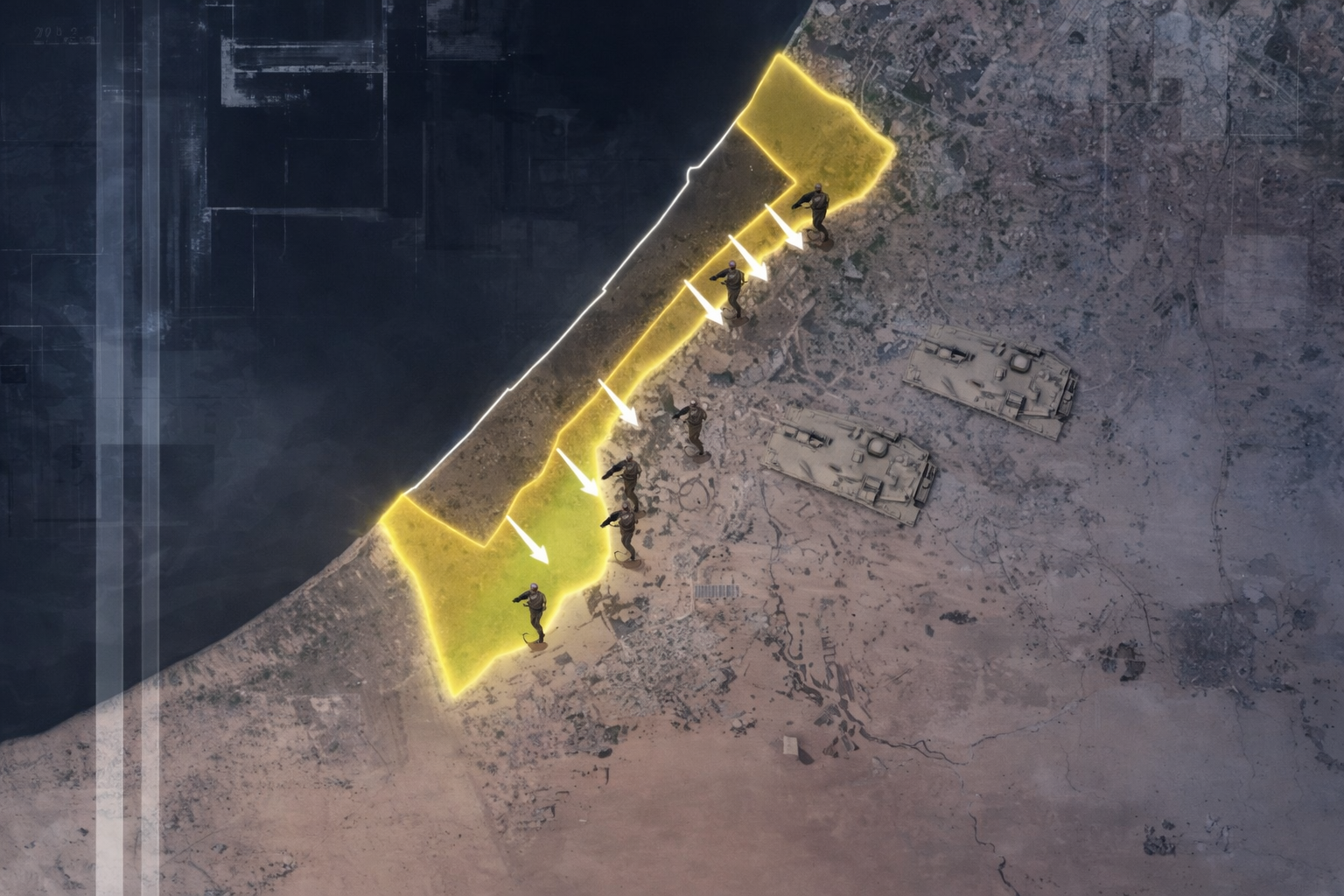
Alongside what have been described as near-daily violations of the agreement, refusal to fulfill its commitments, and continued military actions, Israel has also continued shifting what is known as the “Yellow Line” westward.
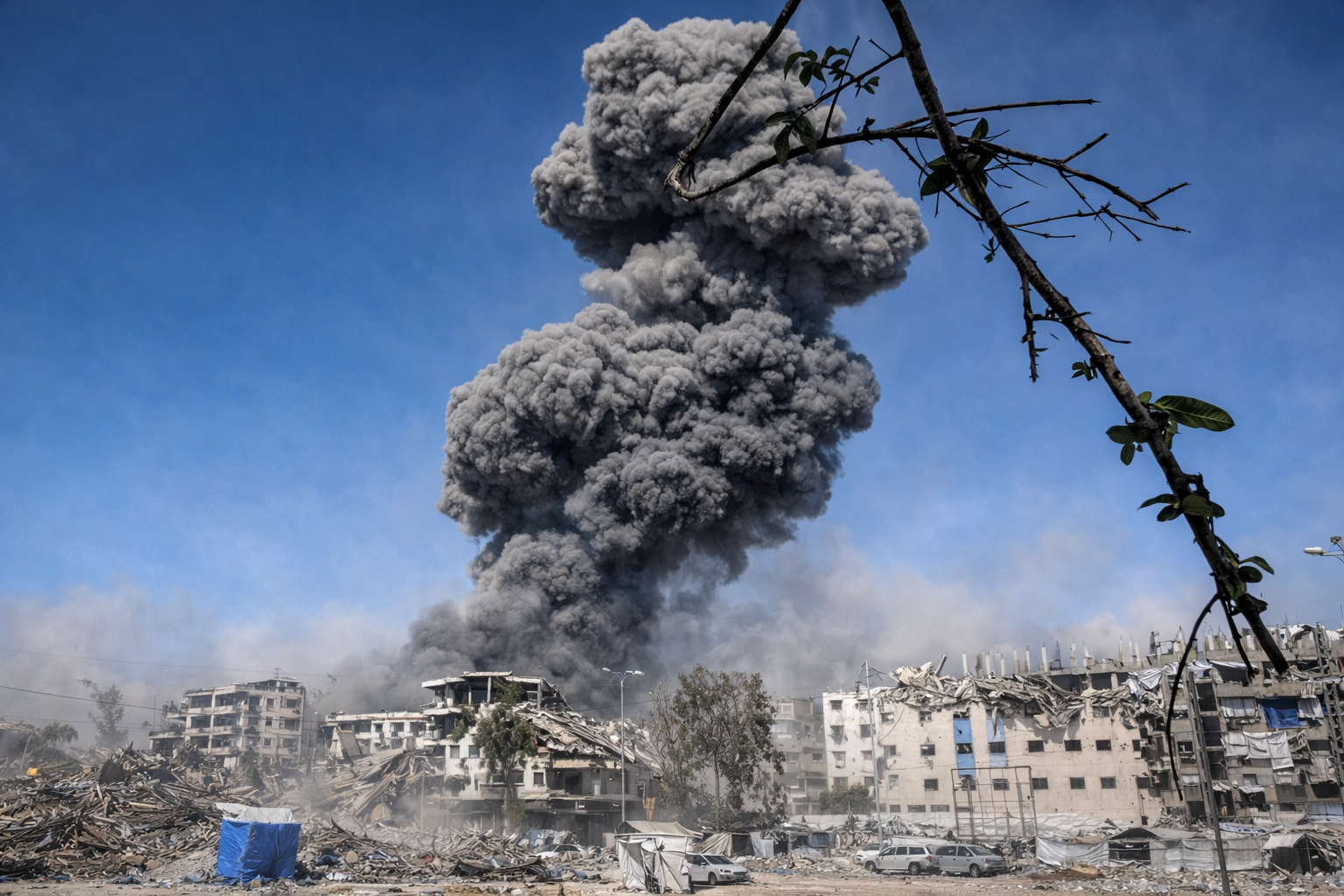
The move has allowed Israel to control an estimated 70% of Gaza’s territory, while the agreement had outlined a complete Israeli withdrawal from the Strip and pledged reconstruction efforts.
Since the beginning of the ceasefire — which Hamas says it has fully honored — Israel has killed 1,122 Palestinians and wounded 3,599 others through airstrikes and gunfire, according to data from Gaza’s Ministry of Health.
What Did the Agreement Include?
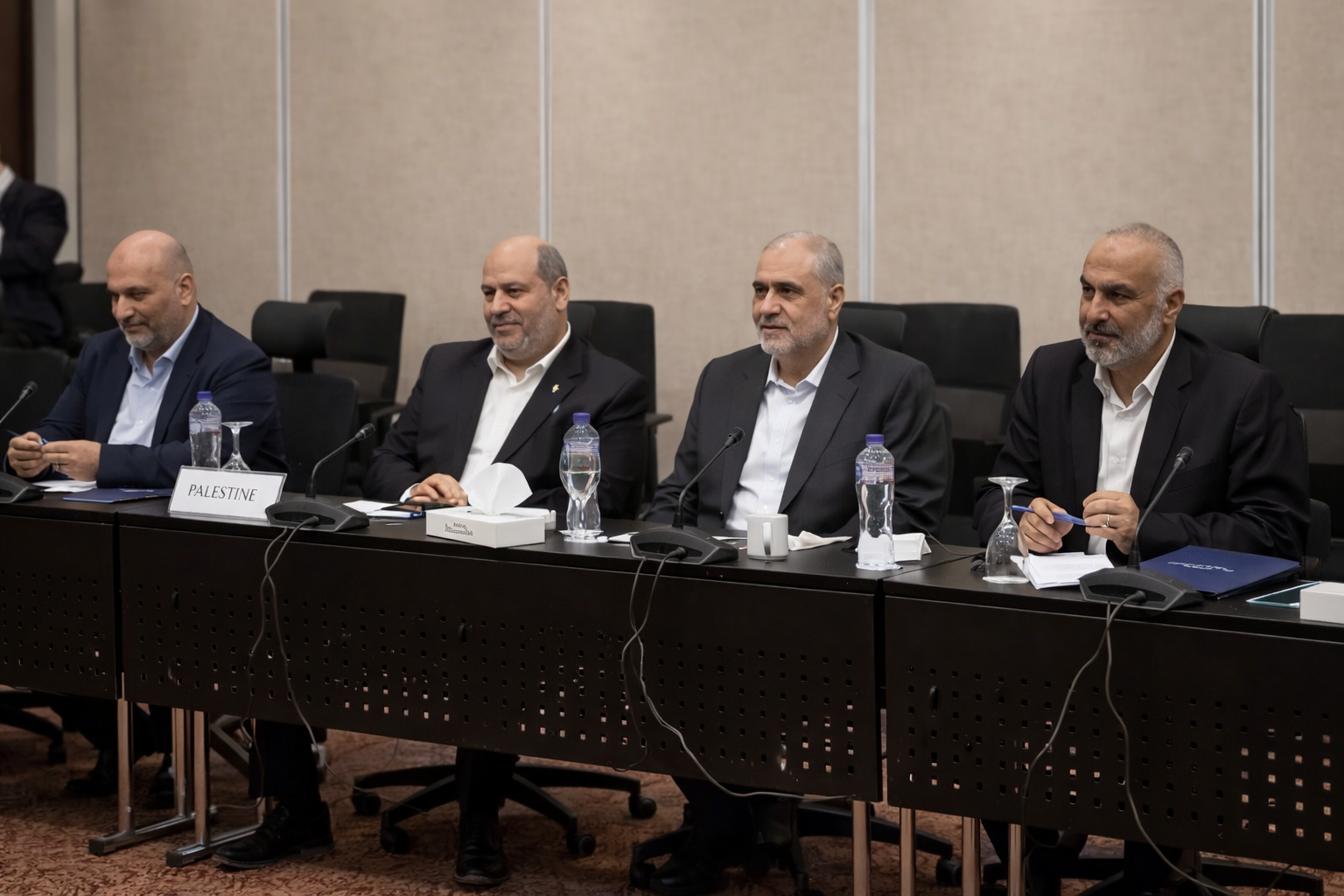
The first phase of the agreement, announced by U.S. President Donald Trump after days of indirect negotiations between Israel and Hamas in Sharm el-Sheikh, with participation from delegations from Turkey, Egypt, and Qatar under U.S. supervision, included the following:
First Phase:
A ceasefire.
The entry of humanitarian aid into the Gaza Strip.
The release of living Israeli captives and the handover of deceased captives.
Israel’s release of Palestinian prisoners and the transfer of the bodies of deceased prisoners.
The withdrawal of Israeli forces to what is known as the “Yellow Line.”
Second Phase:
On January 14, U.S. envoy Steve Witkoff announced the start of the second phase of the agreement, which addresses key issues related to the future of the Gaza Strip.
The objective of this phase was to begin transitioning from a military truce toward long-term political and security arrangements.
The second phase includes:
Establishing a transitional administration.
Creating a technocratic governing system.
Beginning reconstruction efforts.
Disarmament.
A complete withdrawal of Israeli forces from Gaza.
Continued Violations and Restrictions
Hamas fulfilled the requirements of the first phase, releasing all Israeli captives and recently moving to dissolve its government emergency committee in preparation for transferring administrative control of Gaza to the Palestinian National Committee for Gaza Administration and accelerating the transition to the second phase.
However, Israel has narrowed the agreement’s focus to the issue of Hamas’s disarmament.
With continued Israeli restrictions on the entry of equipment, essential materials, and humanitarian supplies, the gap between residents’ daily needs and available resources has widened, further worsening the humanitarian situation.
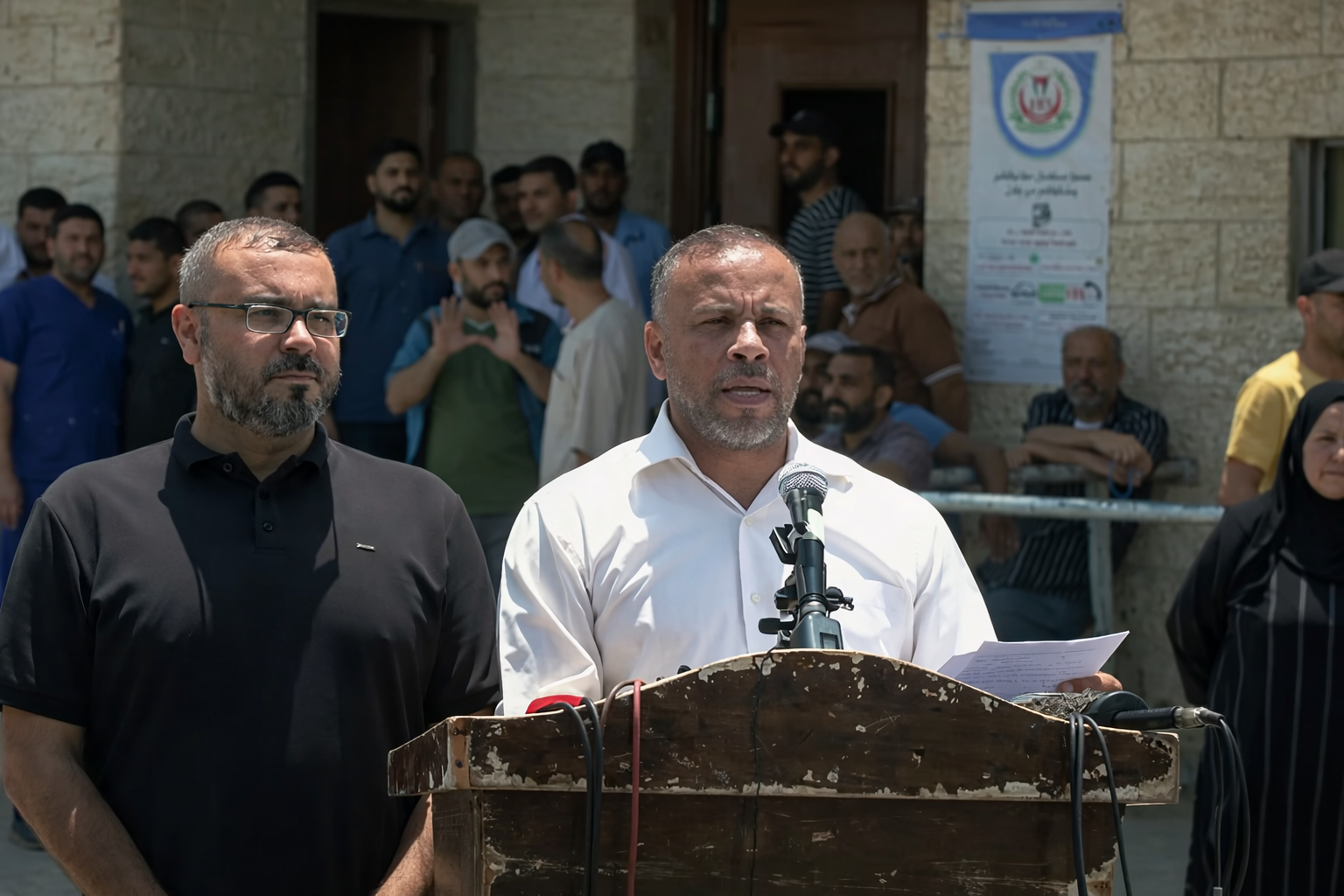
On Tuesday, Gaza’s Government Media Office said Israel had committed 3,689 violations of the ceasefire agreement. It added that only 58,664 trucks had entered Gaza out of 165,000 trucks that were supposed to enter by this point, representing a compliance rate of no more than 35%.
Nine Months of Key Developments
The past nine months have witnessed several critical developments that were expected to advance the process and pave the way toward the second phase.
January 16, 2026: The Peace Council
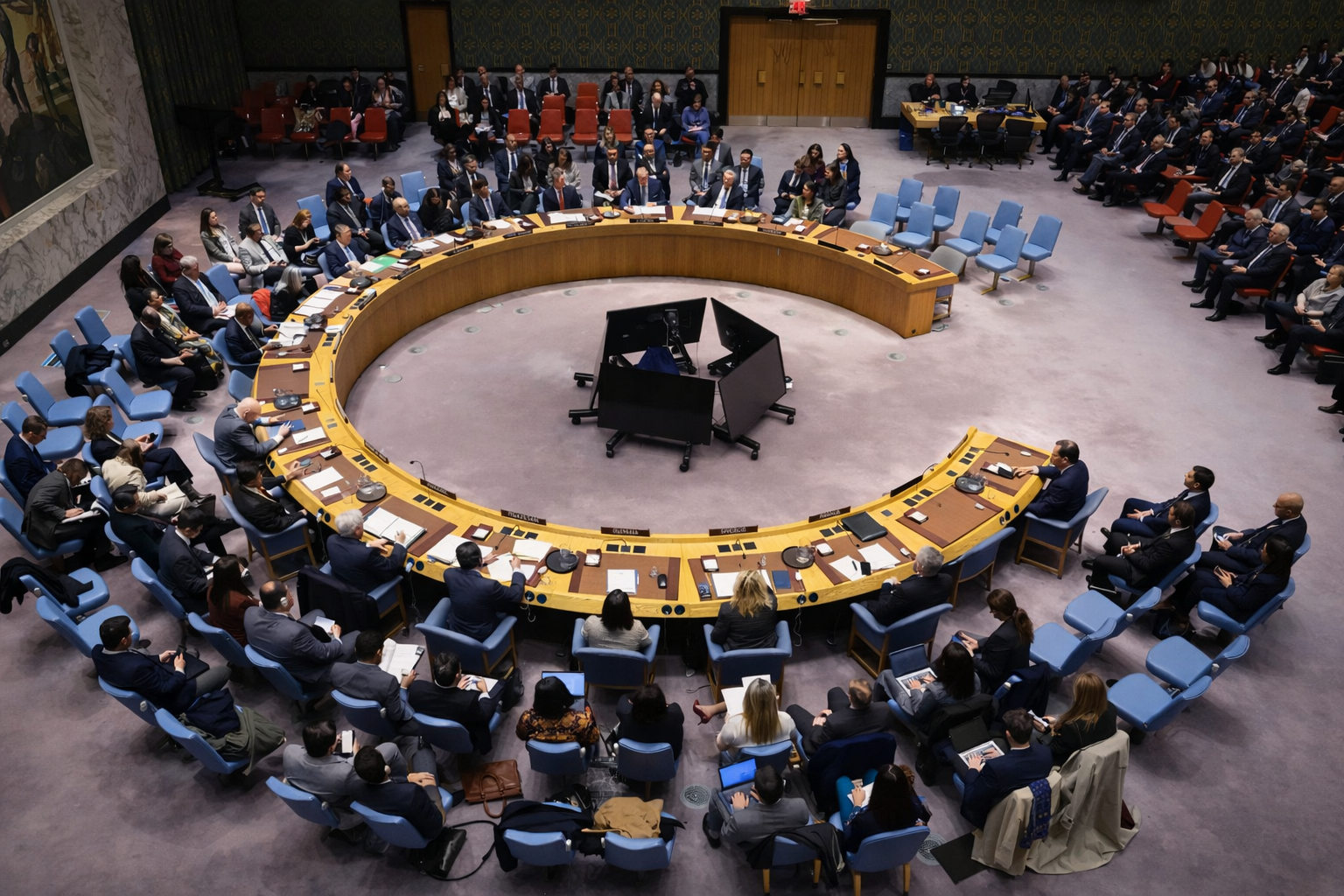
The Peace Council is one of the structures responsible for managing the transitional phase in Gaza, launched by U.S. President Donald Trump. It is expected to establish a framework for reconstruction efforts and coordinate funding for the rebuilding of the Strip.
Israeli media recently reported that the Peace Council would begin a pilot project to manage humanitarian shelter centers in parts of Gaza.
The reports said residents would undergo screening by a U.S.-backed Palestinian technocratic committee, known as the Palestinian National Committee for Gaza Administration, which would also oversee management of the area.
Security would be provided by a trained police force working alongside a multinational international stabilization force supported by the United Nations.
However, regarding its overall performance, The Wall Street Journal quoted a U.S. military official and other sources as saying that the Peace Council has struggled to deploy around 20 personnel out of the 20,000 expected to be stationed in Gaza.
The personnel were supposed to be transferred from Gaza to Israel for training before being stationed near the Kerem Shalom crossing.
Paolo von Schirach, president of the Global Policy Institute and professor of political science and international relations at Bay Atlantic University in Washington, said the Peace Council has so far failed to carry out the tasks for which it was established.
He explained that the council was expected to gradually take over administration of Gaza, oversee the deployment of a peacekeeping force, and supervise the withdrawal of Israeli forces, but none of these steps have been achieved.
May 21: Mladenov Roadmap
The executive director of the Gaza Peace Council, Nikolay Mladenov, presented a 15-point “roadmap” to implement Trump’s proposed plan for Gaza.
The roadmap outlines mechanisms for handling issues related to Gaza’s future, including reconstruction, disarmament, Israeli withdrawal, the role of an international stabilization force, and rebuilding the police force.
June 18: Resistance Shows Flexibility
While Israel continued violating the agreement and attempting to undermine its substance, Palestinian resistance groups recently showed positive engagement with one of Mladenov’s proposals, which analysts say largely reflects the Israeli narrative and perspective.
Hamas announced “broad agreements and significant convergence” in discussions with mediators and representatives of the international Peace Council regarding completing the ceasefire agreement and entering its second phase.
At the time, Hamas spokesperson Hazem Qassem said discussions addressed the entry of the national committee into Gaza, international forces, and the issue of Palestinian weapons “within a logical approach acceptable to all parties.”
However, Israel did not respond to the revised proposal presented by Mladenov, with analysts saying that Tel Aviv instead discussed presenting a new proposal that would return negotiations to the starting point.
July 6: Hamas Dissolves Emergency Committee
In a significant development, Gaza’s government office announced the official dissolution of the government emergency committee, the resignation of its head Mohammed Jawad al-Farra, and the completion of all administrative and legal arrangements for transferring authority.
Reactions to the move varied, with some viewing it as a strategic step that puts pressure on Israel and removes its arguments for resuming the war, while Tel Aviv sought to question its credibility.
The Yellow Line and Calls for Settlement Expansion in Gaza
Previous efforts, however, continued to face Israeli actions on the ground, as Israel maintained control over areas in Gaza through the continued movement of the Yellow Line — a security zone imposed by Israel inside the Strip that prevents Palestinians from reaching areas near it.
Reuters reported that Israel used global attention on the war with Iran to quietly issue new maps of Gaza, confining thousands of displaced Palestinians inside an expanding restricted area whose boundaries, according to the Israeli military, can change at any time.
Initially, the Yellow Line divided half of the Gaza Strip. But two months after the ceasefire agreement was signed, the area under Israeli control increased from 53% to 58%, and the expansion has continued since then.
Late last month, Israeli Prime Minister Benjamin Netanyahu said the army currently controls around 70% of Gaza, a statement indicating the continued expansion of the area occupied by Israeli forces inside the Strip.
With the remaining area available for residents reduced to only 110 square kilometers, around 2.13 million Palestinians are now concentrated in extremely overcrowded conditions exceeding 19,000 people per square kilometer, amid massive destruction and an almost complete lack of shelter and basic services.
At the beginning of this month, the United Nations said Palestinians in Gaza face a shrinking amount of safe space as Israel’s military control expands, warning that increased Israeli control has worsened humanitarian risks and obstructed aid delivery.
The issue does not stop at the movement of the Yellow Line, as calls for settlement construction and establishing Israeli settlements in Gaza continue to grow.
On June 29, Israeli Finance Minister Bezalel Smotrich said Israel had prepared plans for three settlements in Gaza that would require Netanyahu’s approval.
Israeli Defense Minister Israel Katz also praised the destruction in northern Gaza during a tour on Tuesday, revealing plans to establish three military-style settlement outposts in the Strip.
What About the Future?
Academic and Israeli affairs expert Dr. Muhannad Mustafa said Israel is seeking in the short term to obstruct Trump’s Gaza plan, while its long-term objective is maintaining occupation of the Strip and expanding its presence there.
Mustafa said Tel Aviv relies on three main policies to achieve this goal: normalizing daily attacks despite violating the ceasefire agreement, expanding territorial control alongside systematic destruction, and preventing any political transition by obstructing the entry of the national committee, humanitarian aid, and reconstruction efforts.
Political analyst Ahmed al-Tannani said Hamas had announced the end of its political control over Gaza’s administration and opened the way for a technocratic committee to remove obstacles to implementing the agreement, noting that there is consensus in Cairo over most of Mladenov’s proposals.
He stressed that moving to the second phase of the ceasefire agreement requires real U.S. pressure on the Israeli government to translate statements into practical steps that end the humanitarian catastrophe and ensure implementation of the ceasefire.
However, with Israel apparently exhausting its justifications, the U.S. Strategic and Security Studies Center Stratfor did not rule out the possibility of Israel launching a large-scale attack on Gaza.
The center said such an operation could help Netanyahu improve his declining popularity ahead of elections, particularly if he succeeds in presenting it as a “defensive operation” against Hamas.

No comments yet. Be the first to share your thoughts.