
In recent years, numerous international media outlets (including The Guardian, BBC, The Washington Post, and Haaretz) have documented an increase in violence by Israeli settlers in the West Bank, often coinciding with the ongoing genocide in Gaza and with the weakening of institutional control in some Palestinian areas.
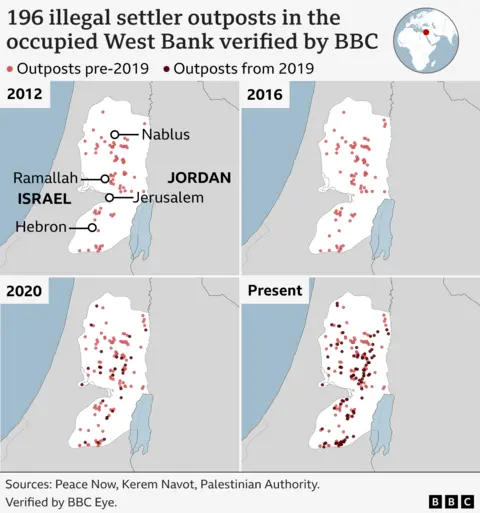
In particular, some journalistic investigations describe a recurring pattern, namely attacks on Palestinian villages, where settlers burn houses of the natives, destroy their agriculture, kill animals, carry out intimidation, and progressively expel Bedouin and rural farming communities. Many reports emphasize how these actions contribute to a form of "gradual displacement" of the Palestinian population. An investigation by The Guardian describes the forced flight of an entire village in the Jordan Valley, depicting a combination of violence, intimidation, and progressive occupation of territory by settler groups, with a direct impact on the daily lives of Palestinian residents in their own communities.
According to the BBC and other outlets, settler attacks, which include property damage, physical assaults, and blocking access to agriculture, water, and land, have significantly increased, contributing to a climate of widespread fear and a rise in internal displacement. The occupation of Palestinian territories in the West Bank has also involved the takeover of homes of the natives by Israeli settlers.
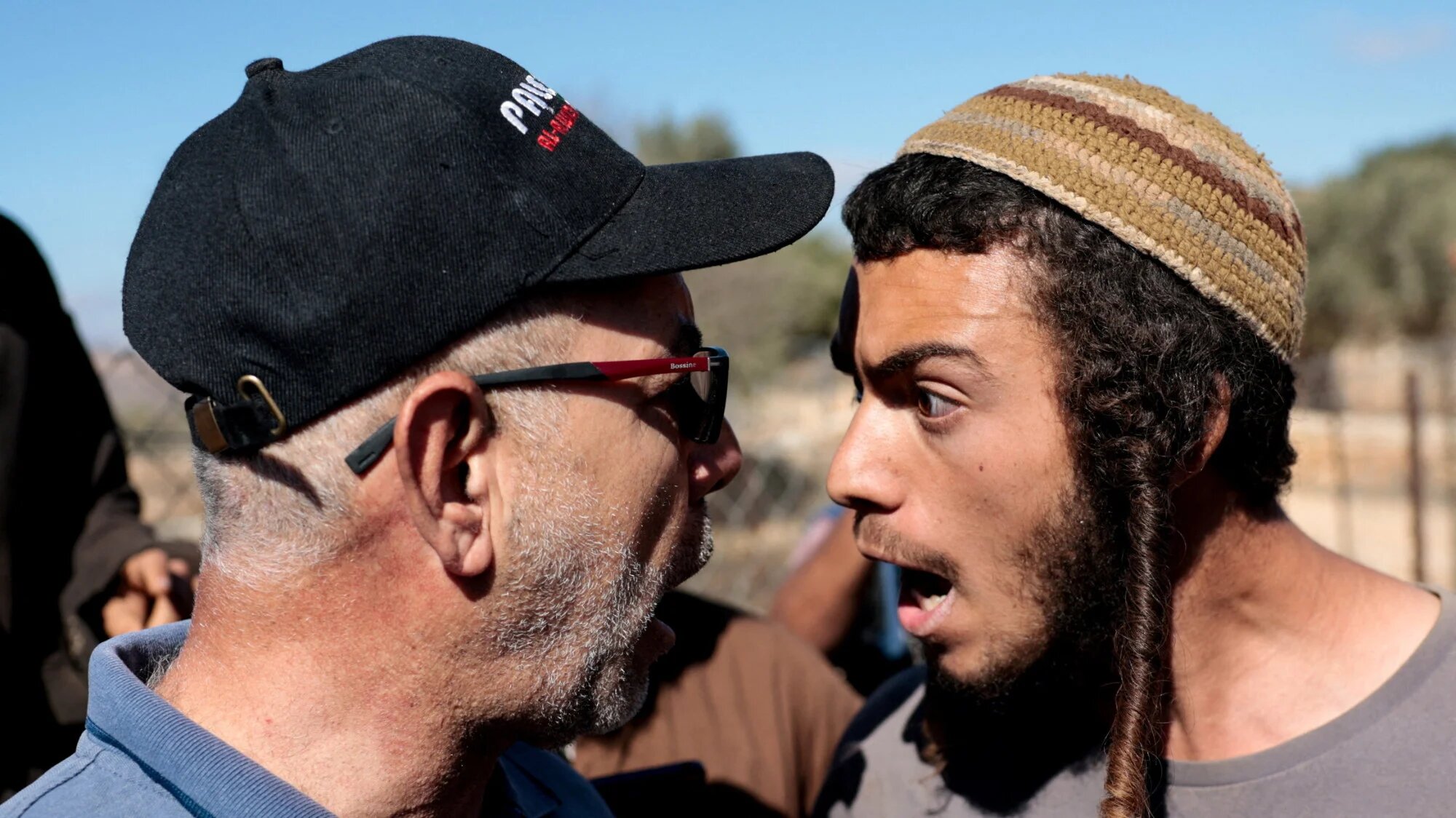
Analyzing some sources from newspapers, a fairly common element emerges: the representation of Palestinians in the West Bank often oscillates between two poles, "collective victims," such as displaced families, affected residents, and ongoing attacks (for example in Masafer Yatta), or subjects absent from direct storytelling, with few individual testimonies reflecting the complexity of everyday life. This narrative framing can contribute, according to various media scholars, to an effect of indirect dehumanization, where people are not denied outright but become less visible as individuals, with personal stories, territory, politics, and especially with the power and propaganda within the international communities.
At the same time, many articles attempt to counter this effect by giving space to direct Palestinian testimonies, in which natives describe fears, loss of land, and family members and acquaintances, and especially constant pressure to leave their homes, making the human impact of the violence more tangible. In fact, in recent years, the West Bank has returned to the center of international attention due to the increase in violence by Israeli settlers and its consequences for the Palestinian natives.
Major international media outlets describe a situation marked by attacks on villages, arson of property, and constant pressure on rural communities, often forced to leave their land. In several investigations published by The Guardian and echoed by other European and American media, the dynamic of gradual displacement emerges, where Bedouins and farming families abandon their own homes after months of intimidation and assaults, in a context where institutional protection is often absent, insufficient, or functions only on one side in favor of the settlers.
The representation of Palestinians often remains "collective and impersonal," reducing the visibility of individual stories. This risk of "abstraction," according to some analysts, contributes to an indirect form of dehumanization, even when suffering is still reported. Overall, the news coverage oscillates between denouncing the violence and the difficulty of fully conveying the daily human dimension of the conflict in the West Bank, where the territorial issue continues to be intertwined with the question of the civil survival of Palestinian communities.
WHAT DOES MEAN THE TERM DEHUMANIZATION?
Dehumanization is a process where a group of people is described or perceived as "less human," "non-human," or even as "animals." This means taking away qualities such as dignity, empathy, or rights from someone and treating them as objects, animals, or even a threat. Dehumanization is used in political propaganda, wars, genocides, and conflicts to justify violence and to say, "We are not like them." It is also used in racism and discrimination to make all this accepted in society. Lastly, it is also used in social conflicts to increase hate and distance between groups, communities, and societies.
Why is knowing this very important? Because when a group is being dehumanized, it is easier for others not to feel empathy, to accept injustices or violence, and to justify violent and extreme behavior.
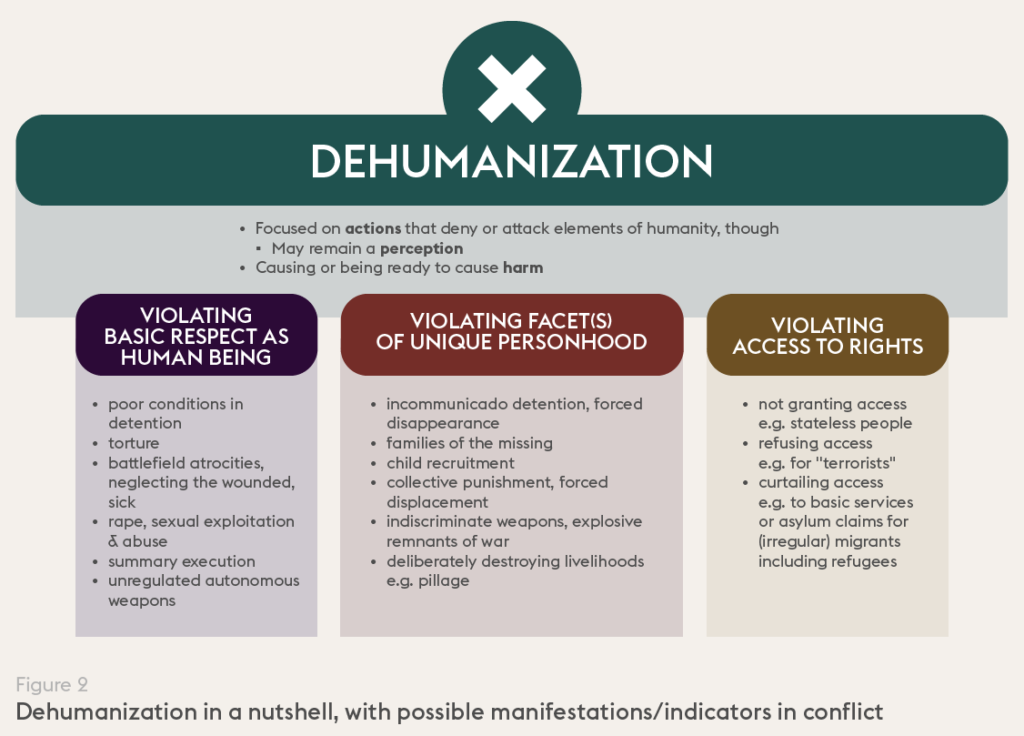
But now, how is Israel dehumanizing the natives of the land? When we talk about the "dehumanization of Palestinians by Israel," we do not refer to a single action but to ways of communicating or framing the conflict that critics say can create this effect. We mention, in general, security or war language, where Palestinians are mainly described as a "threat" or linked to "terrorism," without always distinguishing civilians from armed groups; collective generalizations that make an entire population seem uniform; a focus on the enemy rather than civilian suffering; and polarized media and political narratives that simplify the conflict into "us vs. them." In this case, Israel uses all platforms for dehumanizing natives, from houses to schools, from schools to social media.
No comments yet. Be the first to share your thoughts.